Home / Blog / Stack The F*ck Up
STACK THE F*CK UP
What Is a No-Spend Challenge, and Does It Actually Work?
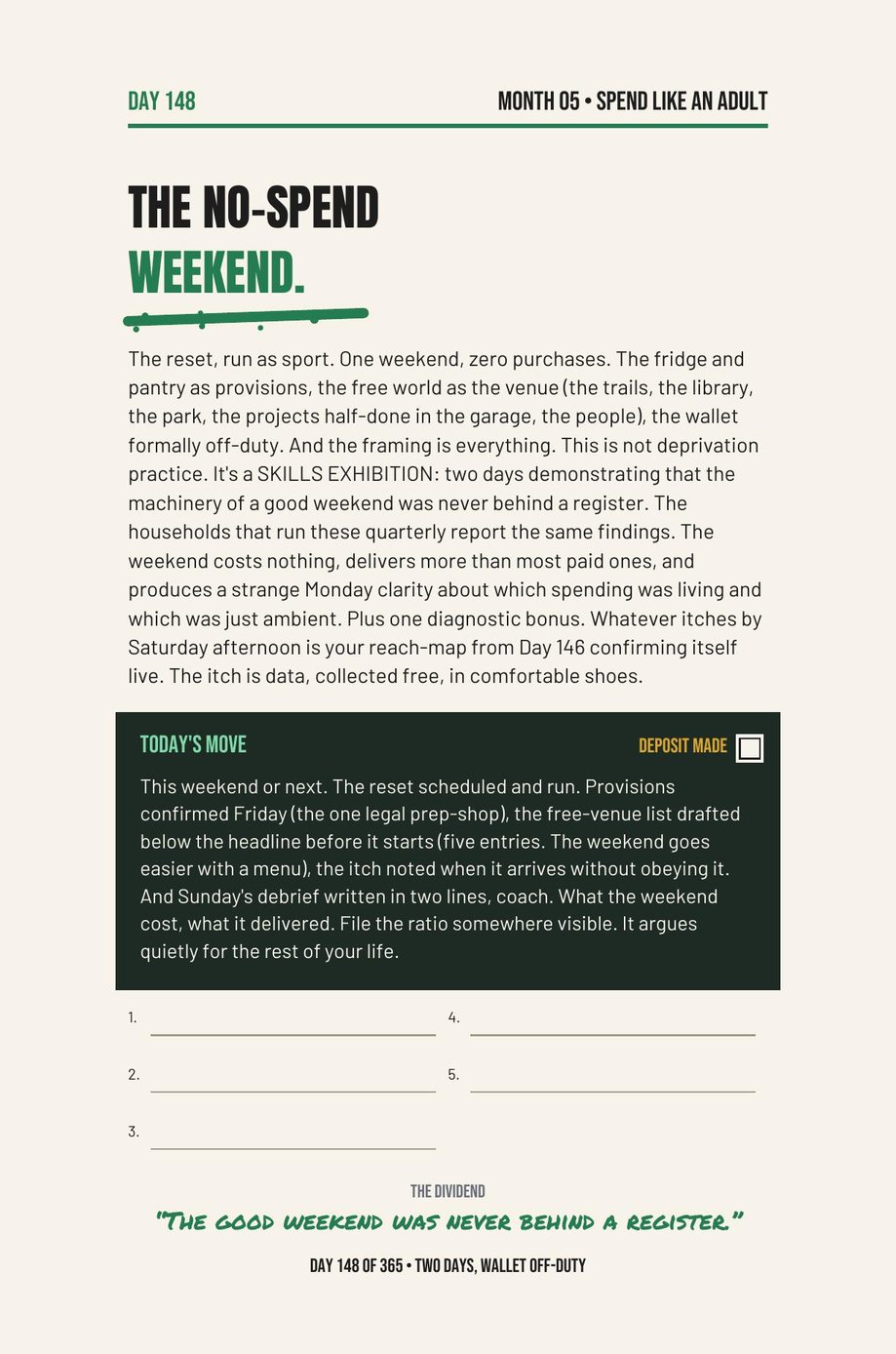
A no-spend challenge is a fixed period, a weekend, a week, sometimes a whole month, during which you spend zero on anything optional: no takeout, no orders, no small treats, only genuine essentials. It works, but not the way people expect. As a permanent lifestyle it fails on schedule. As a reset and a diagnostic, run as sport rather than punishment, it is one of the best tools in personal finance.
What counts and what does not
Essentials continue: rent, utilities, groceries already planned, medicine, the commute. Everything optional stops: restaurants, delivery, impulse buys, subscriptions you would start this week, the little unlocks. Write the two lists before you start, because deciding mid-challenge is how the challenge dies. The gray areas you argue about are, usefully, a map of your habits.
Why the short version works
A no-spend weekend or week does two things a budget cannot. It breaks the automatic reach, the ordering that happens without a decision, and it shows you exactly which spending you actually missed versus which you only did out of rhythm. Most people finish shocked at how little they missed. That information is worth more than the money saved, which is the point most write-ups get backwards.
Why the long version backfires
No-spend January as a lifestyle audition fails the way crash diets fail: white-knuckle restriction, then a rebound spree that erases the savings. The month version works only as a temporary extreme, opted into honestly, with a defined end and a plan for what changes afterward. Anything longer than that is not a challenge, it is a budget wearing a costume, and an actual system does that job better.
Run it as a diagnostic, then act on the results
The challenge ends; the findings should not. Cancel what you did not miss, starting with the subscription audit. Redirect one recovered leak straight into the buffer. And take the automatic-reach discovery into impulse spending, which is the habit the whole exercise was secretly measuring. A weekend of sport, a year of compounding.
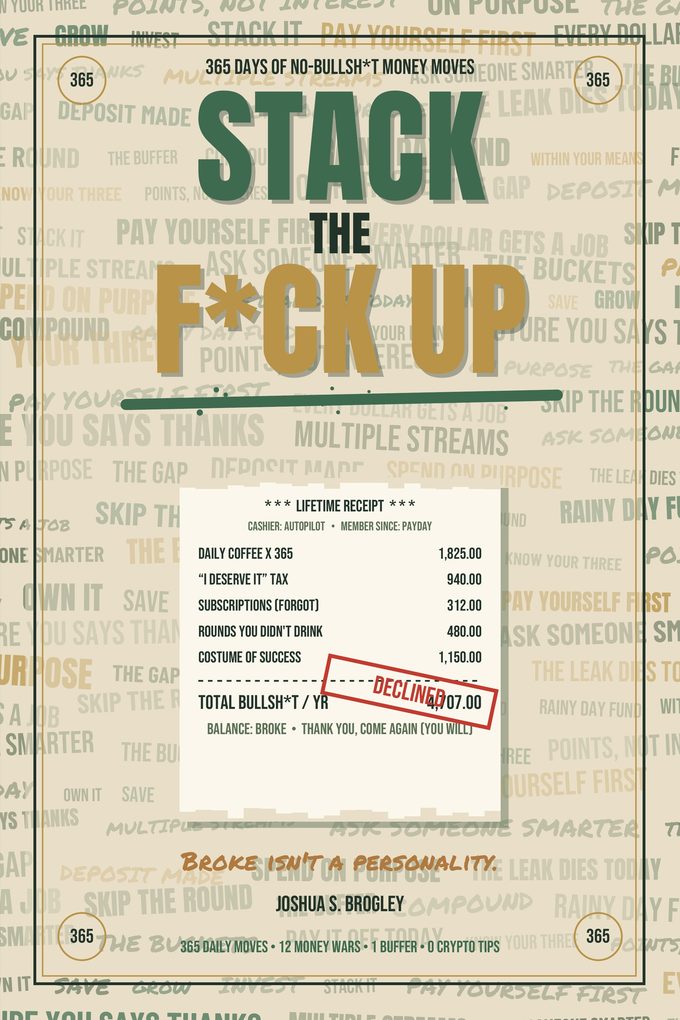
Stack The F*ck Up
365 days of no-bullsh*t money moves. Know your three numbers, fire the leaks, build the buffer, stack the rest.
What are the rules of a no-spend challenge?
Pick a fixed period, list essentials that continue and optional spending that stops, decide the gray areas in advance, and track every day. The rules you write before starting are the challenge; improvising them mid-week is quitting in slow motion.
Do no-spend challenges actually save money?
Directly, a modest amount. The real value is diagnostic: they reveal which spending is habit rather than want, and the cancellations and redirects afterward are where the lasting savings come from.
More on Stack The F*ck Up
- How Do I Stop Lifestyle Creep When I Start Earning More?
- How Do I Stop Being Broke? The Boring Fixes That Actually Work
- How Do I Ask for a Raise Without Making It Awkward?
- What Is a Good Money Book for Young Adults Who Hate Finance Books?
- How Do We Talk About Money as a Couple Without Fighting?
The method behind every book
- Which 365-Day Book Should I Start With? A One-Minute Guide
- What Is a No Zero Day? The Rule That Saves a Bad Week
- What Is a Realistic Morning Routine? Two Minutes, Not Two Hours
All articles about Stack The F*ck Up → · The book page → · All the books →
written by the author, at the kitchen table, after work.