Home / Blog / Level The F*ck Up
LEVEL THE F*CK UP
Is Gamification Actually Good for Habits, or Just a Gimmick?
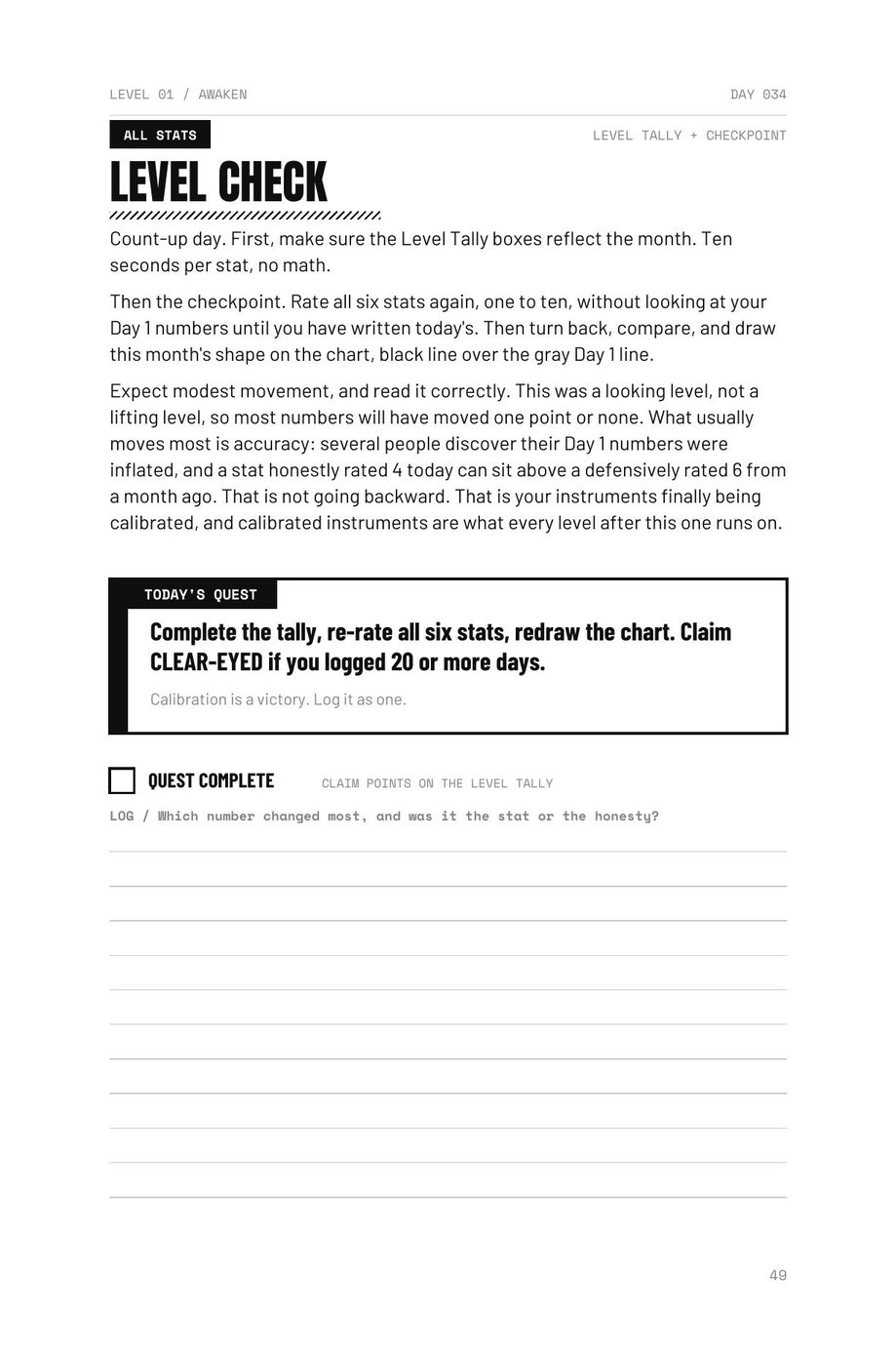
Gamification works when the game mechanics point at real actions and the rewards are proof of change; it fails when they point at the app and the rewards are points. Streaks, badges and notifications gamify engagement. Quests, boss fights and a hand-drawn chart gamify life. Level The F*ck Up sits on the second side deliberately: paper, six stats, twelve bosses, no app, no notifications, no streak anxiety, and no way to game the chart because your hand drew it.
Two kinds of gamification
One makes you open the app. The other makes you do the pushup. They use the same words, streaks, XP, levels, and produce opposite results. Ask of any system: who benefits when I engage?
Real quests, real proof
A quest is a real action; a boss fight is real proof it worked; the chart is a real record. None of it can be faked or inflated, which is exactly why it keeps working past week three.
No streak anxiety by design
Level The F*ck Up numbers its days instead of dating them. There is no streak to break, so there is no anxiety and no reset spiral. Miss a day and the campaign waits.
The honest test
After thirty days, is your life different or is your app usage different? A gimmick changes the second. Related: how to gamify your life without another app and the self-improvement book for gamers.
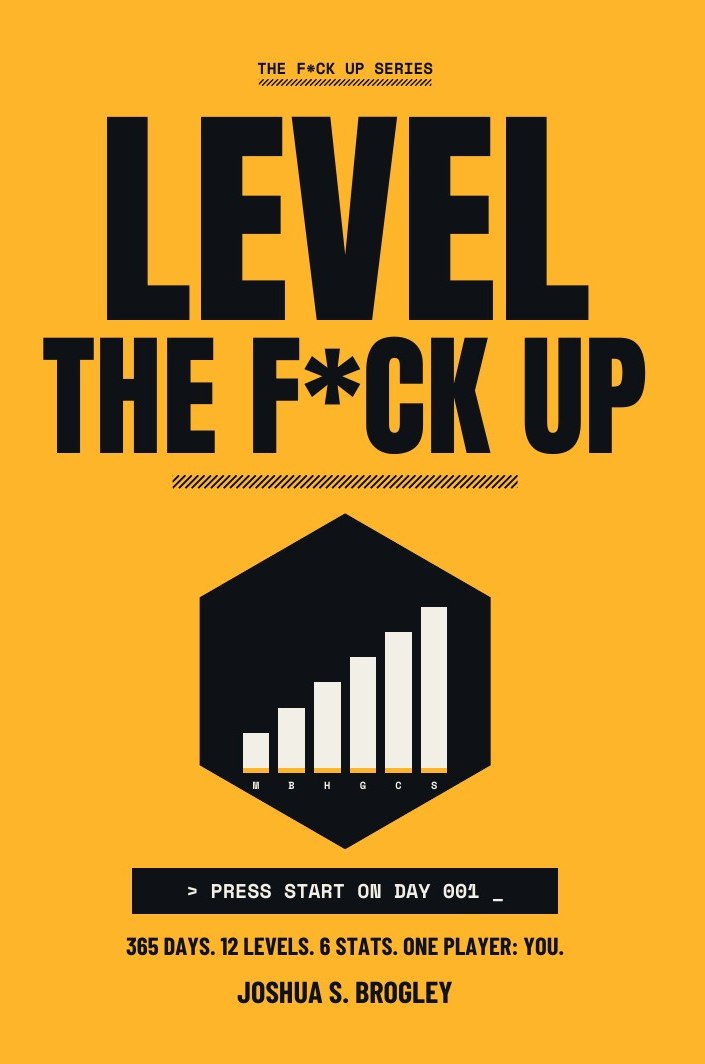
Level The F*ck Up
365 day-numbered quests, six stats, twelve boss fights, one hand-drawn chart. Your year as the campaign it was meant to be.
Why do habit apps stop working after a few weeks?
Because the reward loop is about the app, not the habit. Once the novelty of the badge fades, so does the behavior. Rewards that are actual proof, a cleared boss, a redrawn chart, do not fade.
What makes gamification healthy instead of manipulative?
Rewards that are real, mechanics you control, and no third party profiting from your attention. A paper campaign meets all three; most apps meet none.
More on Level The F*ck Up
- How to Get Your Life Together When You Do Not Know Where to Start
- Gift for a Brother Who Is Stuck (Turn His Year Into a Campaign)
- How Do I Actually Level Up My Life?
- How Do I Build Mental Toughness Without Punishing Myself?
- What Is a Boss Fight in Self-Improvement, and Why Does It Work?
The method behind every book
- Which 365-Day Book Should I Start With? A One-Minute Guide
- What Is a No Zero Day? The Rule That Saves a Bad Week
- What Is a Realistic Morning Routine? Two Minutes, Not Two Hours
All articles about Level The F*ck Up → · The book page → · All the books →
written by the author, at the kitchen table, after work.