Home / Blog / Maxx The F*ck Up
MAXX THE F*CK UP
What Does Mogging Mean? And the Only Comparison That Helps
The short answer: Mogging is internet slang for visibly outclassing someone: being taller, fitter, better dressed, more confident, to the point where the comparison is obvious. It comes from AMOG, alpha male of the group. The word is pure comparison culture, which is exactly why the only healthy version points at yourself.
Where the word comes from
AMOG started in early internet forums as alpha male of the group, and mogging grew out of it: to dominate the comparison. Short-form video spread it to a generation that now ranks height, jawlines, and outfits in the comments by reflex.
Why ranking strangers is a losing game
Comparison against the feed has no finish line. There is always someone taller, richer, and better lit, usually filtered. Chasing that scoreboard produces anxiety, not progress, because you are measuring against a stranger’s highlight reel with your own behind-the-scenes.
The one comparison that works
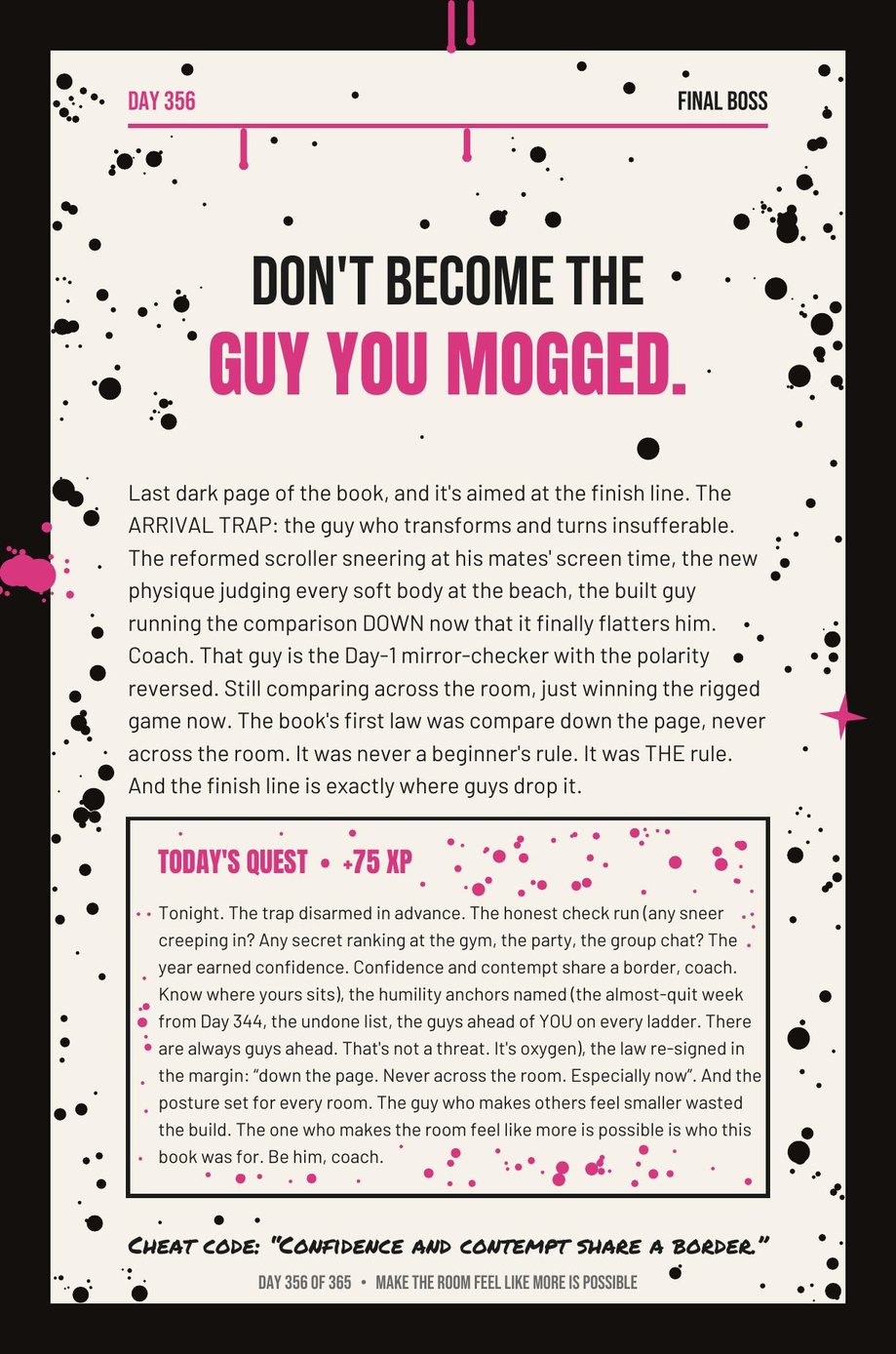
Progress needs a benchmark, and there is exactly one honest benchmark available: your own last entry. That is why MAXX The F*ck Up ends every level with a MOG CHECK against last month’s numbers, and why the same line is printed on every one of those pages: down the page, never across the room.
Turning the slang into a system
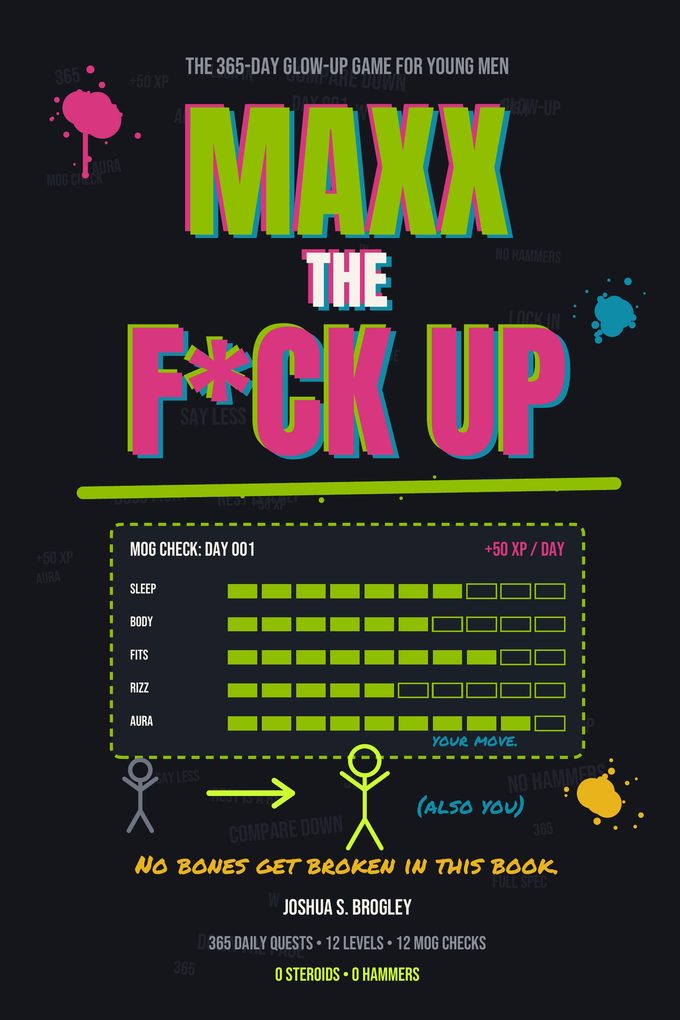
The book speaks the language fluently: XP, boss fights, mog checks, save files, and then quietly swaps the opponent. Twelve levels, one page a day, and the only person who ever gets mogged is Day-1 you. Legally, as the last page puts it.
Maxx The F*ck Up
Twelve levels, twelve mog checks, XP on every quest. The Five Bans on page one. Sleep is the meta.
One more thing: every write-in page from the book ships as a free 54-page companion PDF, no signup required.
Mog terms, translated
| Term | What it means | Worth keeping? |
|---|---|---|
| To mog | To visibly outclass someone in the moment | No. It is a two-second stranger comparison. |
| Mogged | Outclassed; on the losing end of the comparison | No. Nobody else is keeping this score. |
| Height-mog | Outclassed on height alone | No. You cannot train height. |
| Mog check | A side-by-side comparison of two people | Only the version below. |
| Self-mog | Comparing yourself to last month’s you | Yes. The only comparison that compounds. |
Is mogging an insult?
Usually it is a comparison, sometimes a taunt. Getting mogged means being visibly outclassed. Like most ranking slang, it says more about the scorer than the scored.
What is a MOG CHECK in MAXX The F*ck Up?
A monthly self-review where you compare your numbers against your own last entry: sleep, training, habits, money. The book’s rule is printed on the page: you versus last-month you, nobody else is in this fight.
What does it mean when someone mogs you?
It means, in the slang, that they visibly outclassed you in the moment: taller, better built, better dressed, more magnetic, and everyone supposedly noticed. In reality it is a report about a two-second comparison, not about you. The useful response is the one the daily pages train: log the rep, run your own protocol, and stop scoring yourself with someone else’s ruler.
What are mogging levels?
Online, people rank mogging by how total the outclassing is: height, frame, face, fits, presence, sometimes stacked into tier lists. The levels are a game you cannot win, because there is always a bigger fish and the judges are strangers. MAXX The F*ck Up flips the same instinct into the only level that compounds: you versus you, one page a day, with a MOG CHECK against last month’s version of yourself.
What do common mog terms mean?
Most of the vocabulary is the same idea wearing different outfits: being mogged (outclassed), height-mogging (outclassed on height alone), a mog check (comparing two people side by side). The one worth keeping is self-mogging: making yesterday’s you the only person in the comparison. That is the entire premise of the book’s year.
More on Maxx The F*ck Up
- Gift for a Son Leaving Home: The Kitchen Mogs the Gym
- When Did Mogging Become a Thing? A Short History of the Word
- What Is Mewing, and Does It Actually Do Anything?
- What Does Aura Farming Mean? And Why It Defeats the Point
- What Are Good Christmas Gifts for Teenage Boys Who Have Everything?
The method behind every book
- Which 365-Day Book Should I Start With? A One-Minute Guide
- What Is a No Zero Day? The Rule That Saves a Bad Week
- What Is a Realistic Morning Routine? Two Minutes, Not Two Hours
All articles about Maxx The F*ck Up → · The book page → · All the books →
written by the author, at the kitchen table, after work.