Home / Blog / Kids vs Grown-Ups
KIDS VS GROWN-UPS
What Are Good Family Competition Ideas Where Little Kids Still Have a Chance?
Family competition falls apart on the age gap: anything that rewards skill means the youngest loses every time and stops playing by week two. The fix is to score effort and participation rather than ability, split into mixed or generational teams, and keep each round short enough that a bad round does not decide anything.
The age gap ruins most games
A six-year-old against a grown-up is not a contest, and children work that out immediately. Letting them win is worse, because they work that out too. What you need is a scoring system where the six-year-old can legitimately outscore an adult on the merits.
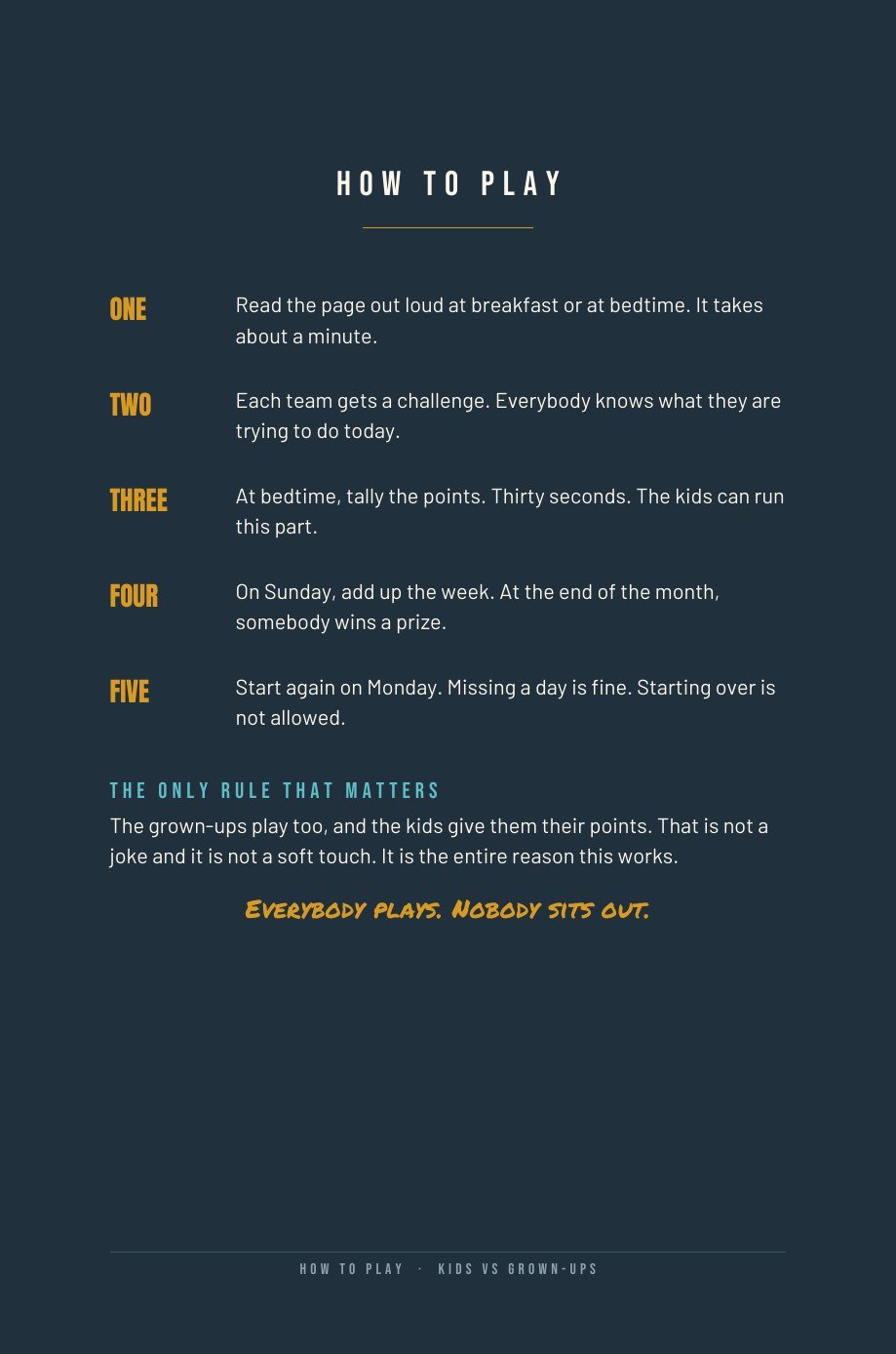
Score effort, not ability
If the point is awarded for doing the thing rather than doing it best, age stops mattering. The youngest can complete a challenge as completely as anyone. Suddenly the competition is real, and real is the only kind children stay interested in.
Kids against grown-ups beats free-for-all
Generational teams solve two problems at once. The small ones get carried when they need it and get to be the hero when they do not, and siblings end up on the same side for once. It also gives the adults a reason to genuinely try, which children notice instantly.
Short rounds, visible score, a real prize
Thirty seconds of tallying at bedtime, a scoreboard somebody can see, and something at stake at the end of the month. This is the part that turns it from a nice idea into a thing your kids ask for. It also works as a screen-free activity that actually sticks and as a way off the tablet that does not start a fight.
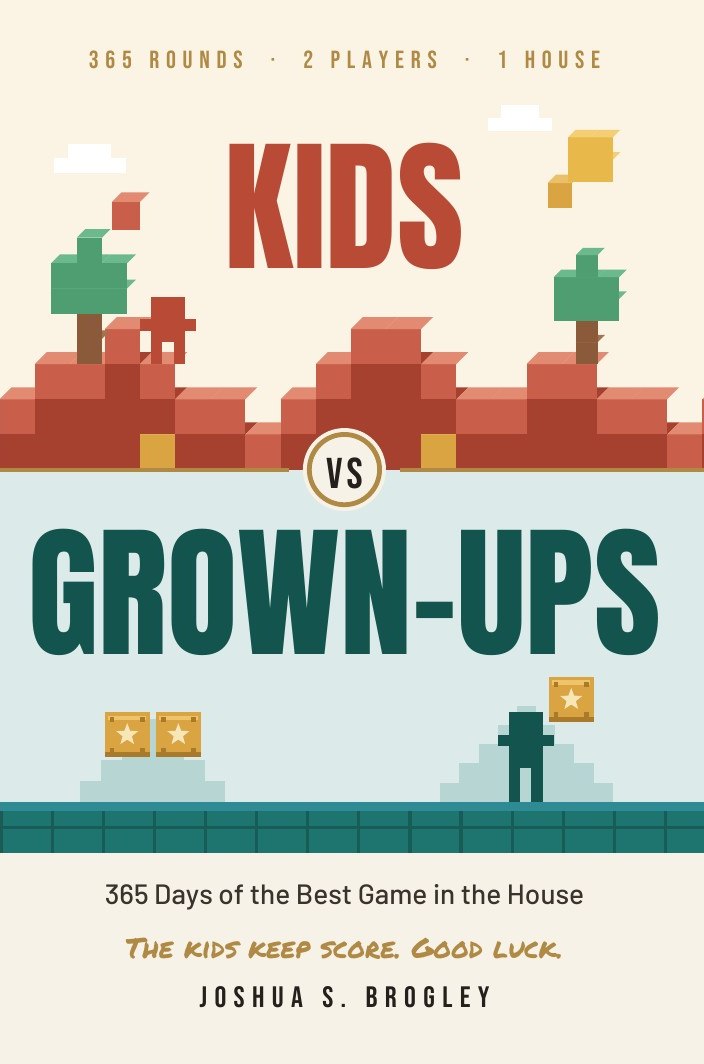
Kids vs Grown-Ups
365 days of the best game in the house: Team Kid versus Team Grown-Up, monthly scoreboards, a champion crowned. Fully family-friendly.
How do you make games fair for different ages?
Award points for completing a challenge rather than performing it best, and put mixed ages on the same team. Handicaps feel patronizing to children. A scoring rule that treats everyone the same does not.
What are good competitions for families with young kids?
Short daily challenges with a running score, split kids against adults. Keep each round under a couple of minutes, tally at a fixed time, and settle it monthly rather than nightly.
More on Kids vs Grown-Ups
- Indoor Family Games That Need Nothing but the People in the House
- Gift for a Family Game Night That Lasts a Year: Kids vs Grown-Ups
- How Do I Teach My Kids Manners That Actually Stick?
- How Do I Teach My Kids About Money at a Young Age?
- How Do I Help My Child With Big Emotions?
The method behind every book
- Which 365-Day Book Should I Start With? A One-Minute Guide
- What Is a No Zero Day? The Rule That Saves a Bad Week
- What Is a Realistic Morning Routine? Two Minutes, Not Two Hours
All articles about Kids vs Grown-Ups → · The book page → · All the books →
written by the author, at the kitchen table, after work.