Home / Blog / Kids vs Grown-Ups
KIDS VS GROWN-UPS
How Do I Teach My Kids Manners That Actually Stick?
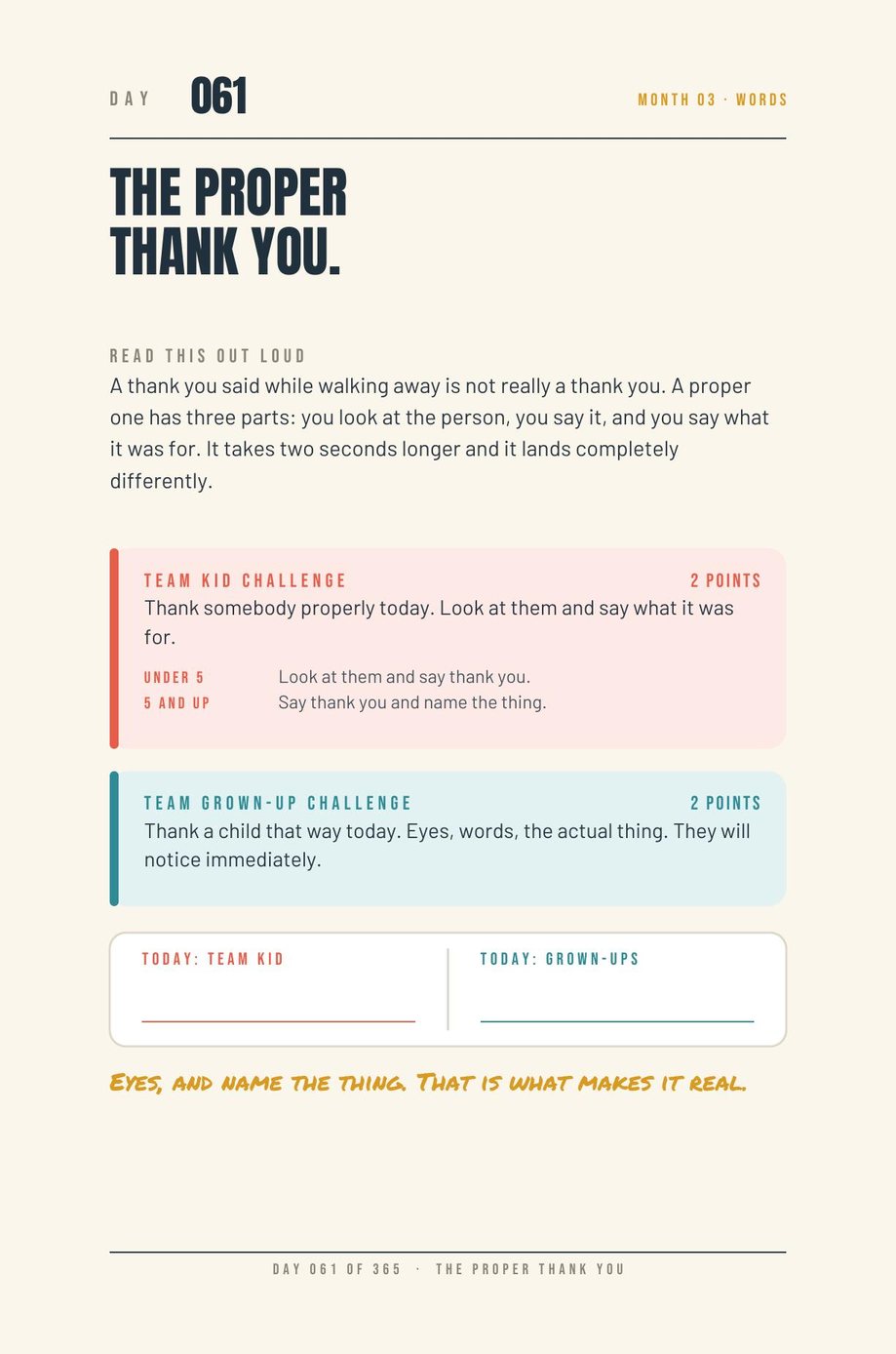
Manners stick when they are specific enough to practice. Two are worth more than a long list. First, asking instead of announcing: please could I have some juice rather than I want juice, because one lets the other person answer. Second, a proper thank you, which means looking at the person, saying it, and saying what it was for.
Ask, do not announce
There is a real difference between I want juice and please could I have some juice. The first is a statement about the weather. The second is a question, which leaves the other person somewhere to stand. Children pick this up quickly once the distinction is named, and it transfers to almost every other interaction.
The proper thank you has three parts
A thank you said while walking away is not really one. Look at the person, say it, and name what it was for. It takes two seconds longer and lands completely differently, and because it is concrete it can actually be practiced rather than just demanded.
Say it out loud, in daylight, not as a correction
Manners taught only through correction in front of others become about avoiding embarrassment. Discussing what the rule is and why, at a calm moment, works better than a hissed reminder at the table. Related: turning it into something the whole house plays.
They copy you far more than they obey you
How you speak to a server, a call center, or the other adult in the house is the actual curriculum. Children who hear please and thank you used sincerely at home produce them without being prompted. Everything else is enforcement. See also handling the screen negotiation, which runs on the same principle.
Kids vs Grown-Ups
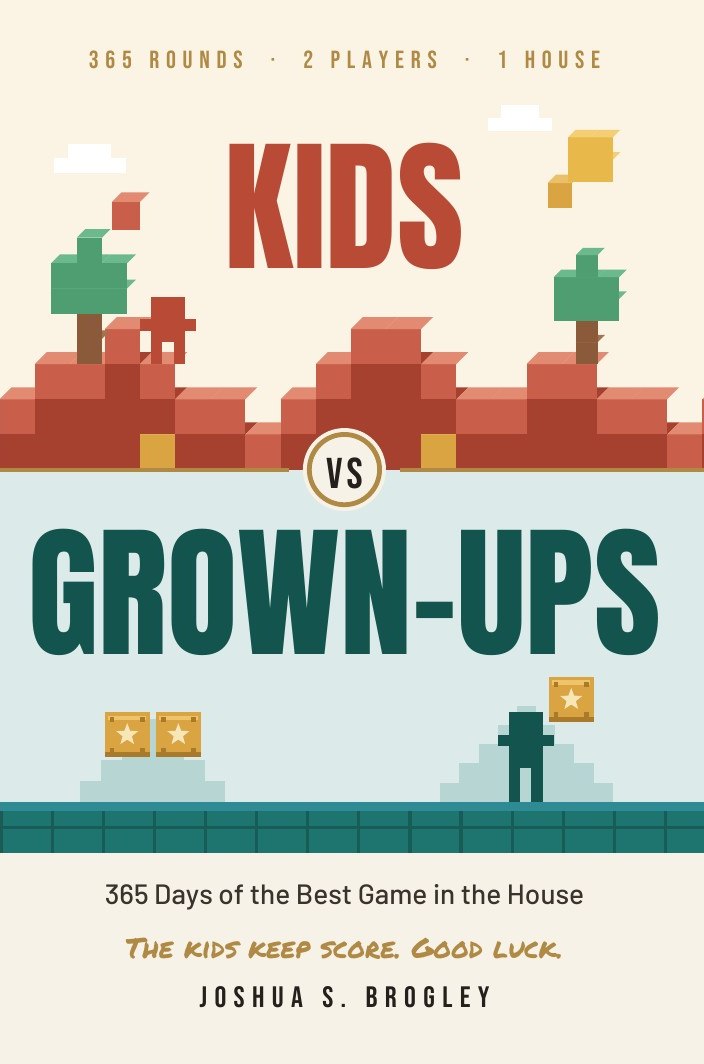
365 days of the best game in the house: Team Kid versus Team Grown-Up, monthly scoreboards, a champion crowned. Fully family-friendly.
At what age should you start teaching manners?
Around two for please and thank you as habits, and three to four for the reasoning behind them. Concrete versions, such as looking at the person, work from about four.
How do I get my child to say please without reminding them?
Name the difference between asking and announcing so they can hear it themselves, and model it consistently in your own requests. Prompting produces compliance; understanding the distinction produces the habit.
More on Kids vs Grown-Ups
- Indoor Family Games That Need Nothing but the People in the House
- Gift for a Family Game Night That Lasts a Year: Kids vs Grown-Ups
- How Do I Teach My Kids About Money at a Young Age?
- How Do I Help My Child With Big Emotions?
- How Do I Get My Kids to Do Chores Without a Fight?
The method behind every book
- Which 365-Day Book Should I Start With? A One-Minute Guide
- What Is a No Zero Day? The Rule That Saves a Bad Week
- What Is a Realistic Morning Routine? Two Minutes, Not Two Hours
All articles about Kids vs Grown-Ups → · The book page → · All the books →
written by the author, at the kitchen table, after work.