Home / Blog / Kids vs Grown-Ups
KIDS VS GROWN-UPS
How Do I Teach My Kids About Money at a Young Age?
Two ideas do most of the work and both land far earlier than parents expect. First, money comes from somewhere: somebody worked a certain number of hours doing a specific job. Second, the difference between wanting something and needing it. Both are allowed, but knowing which is which is among the most useful distinctions a person can learn early.
Money does not appear in a wall
To a child, the card always works and the machine always gives. Explaining that the money represents hours of somebody's work, doing a specific job, changes how spending feels at any age. Answer honestly and simply when they ask what you earn it doing, without the joke about never having enough.
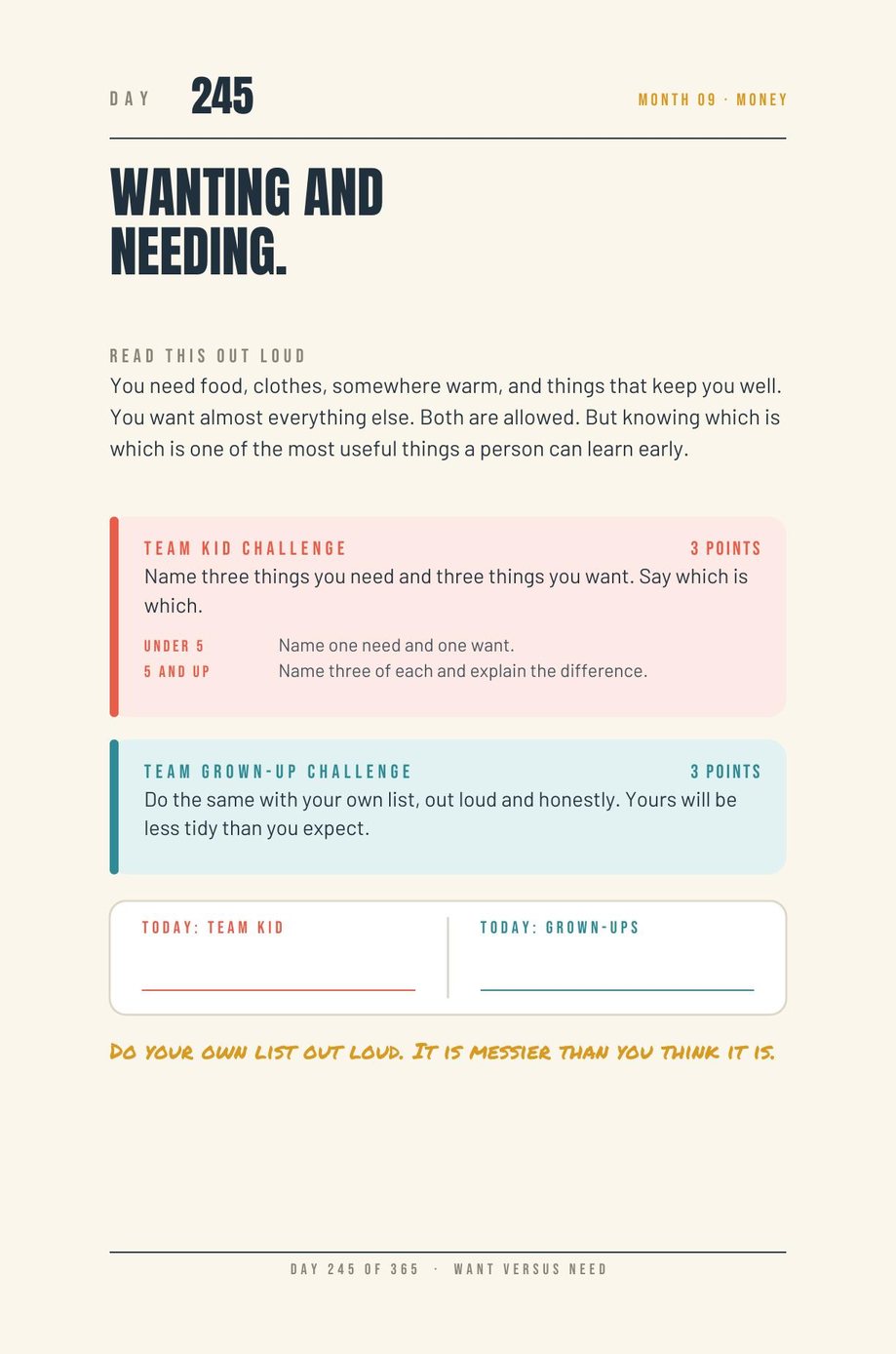
Wanting and needing
You need food, clothes, somewhere warm and the things that keep you well. Almost everything else is a want. Have them name three of each and say which is which. Doing your own list alongside theirs is worth more than the explanation, partly because it is harder than it sounds.
Let them make small bad decisions
A child who spends their whole allowance on something disappointing has learned something that no lecture delivers. The cost of that lesson is never lower than it is now. Resist rescuing the purchase, and resist the told-you-so afterward.
Talk about it out loud in front of them
Children absorb money attitudes from overheard tone long before any formal conversation: whether it is a source of stress, secrecy or calm. Saying we are not buying that today because it is not in the plan teaches more than an allowance system does. Related, for the grown-up version: talking about money as a couple.
Kids vs Grown-Ups
365 days of the best game in the house: Team Kid versus Team Grown-Up, monthly scoreboards, a champion crowned. Fully family-friendly.
What age should kids learn about money?
Around four or five children can grasp that money is finite and comes from work. Wants versus needs works from about five, and simple saving toward a goal from six or seven.
How do I teach my child the value of money?
Connect it to time and work rather than to numbers, and let them make small spending decisions with real consequences. Experience of a disappointing purchase teaches faster than explanation.
More on Kids vs Grown-Ups
- Indoor Family Games That Need Nothing but the People in the House
- Gift for a Family Game Night That Lasts a Year: Kids vs Grown-Ups
- How Do I Teach My Kids Manners That Actually Stick?
- How Do I Help My Child With Big Emotions?
- How Do I Get My Kids to Do Chores Without a Fight?
The method behind every book
- Which 365-Day Book Should I Start With? A One-Minute Guide
- What Is a No Zero Day? The Rule That Saves a Bad Week
- What Is a Realistic Morning Routine? Two Minutes, Not Two Hours
All articles about Kids vs Grown-Ups → · The book page → · All the books →
written by the author, at the kitchen table, after work.