Home / Blog / Kids vs Grown-Ups
KIDS VS GROWN-UPS
How Do I Help My Child With Big Emotions?
The distinction that does most of the work: all feelings are allowed, not all behavior is. A child is never in trouble for feeling furious, jealous or disappointed, but what they do with it is a separate question. And naming a feeling out loud genuinely shrinks it. Saying I am frustrated makes it easier to carry, which holds for adults just as reliably.
Separate the feeling from what they did
Children who get in trouble for the emotion itself learn to hide it rather than handle it, and hidden feelings still drive behavior. Being clear that the anger was fine and the throwing was not gives them somewhere to put it without having to pretend it is not there.
Naming it makes it smaller
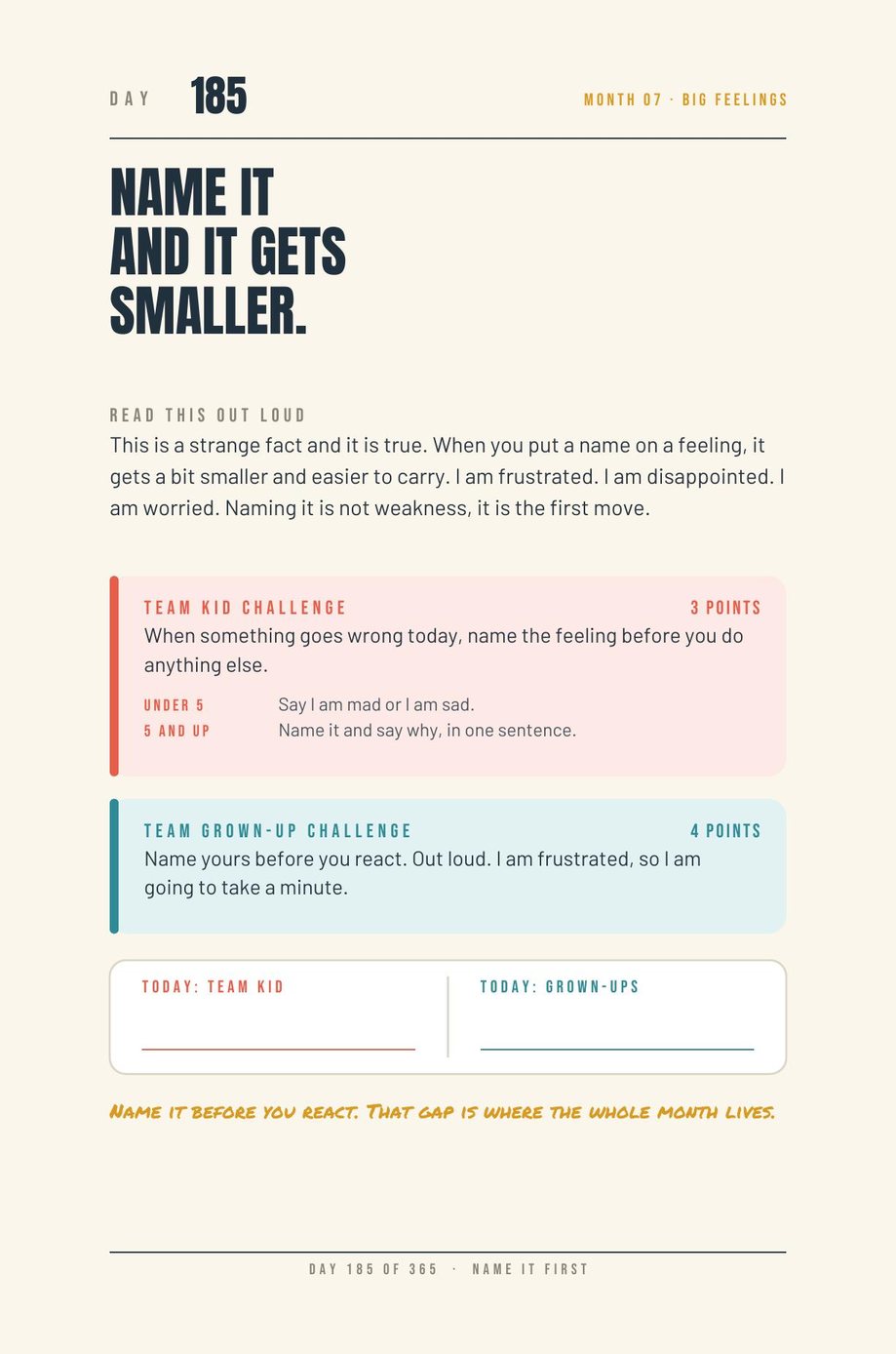
It sounds too simple and it is well supported. Putting a word on a feeling reduces its intensity, which is why the first move is naming rather than solving. I am disappointed. I am worried. For younger children the vocabulary itself is the skill, so start with mad, sad, worried and build outward.
Do yours out loud too
Saying I am frustrated and I am going to take a minute in front of your children teaches more than any explanation. It shows the feeling being named and handled rather than suppressed or unleashed. Related: keeping your own patience, which is the same skill from the other side.
Wait before you fix it
The instinct is to solve, reassure or explain why it is not so bad, and all three tend to shut the conversation down. Let the feeling be described first. If it is your teenager, the sideways approach works better than asking directly. If a child's distress seems persistent or overwhelming rather than passing, it is worth raising with your doctor.
Kids vs Grown-Ups
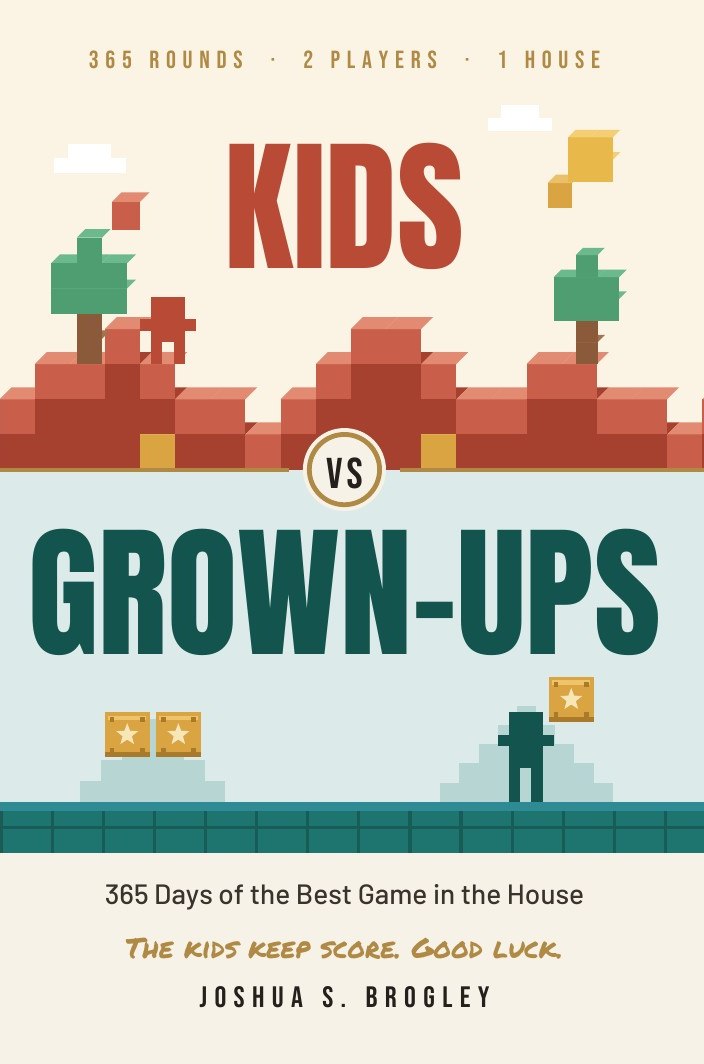
365 days of the best game in the house: Team Kid versus Team Grown-Up, monthly scoreboards, a champion crowned. Fully family-friendly.
How do I help my child calm down when they are upset?
Name the feeling with them before doing anything else, and stay nearby without immediately fixing or explaining. Calming usually follows being understood rather than the other way around.
Should I punish my child for being angry?
The feeling is not the thing to address. Anger itself is allowed. What is worth a consequence is the behavior, hitting or throwing, and separating the two makes it easier for children to admit what they feel.
More on Kids vs Grown-Ups
- Indoor Family Games That Need Nothing but the People in the House
- Gift for a Family Game Night That Lasts a Year: Kids vs Grown-Ups
- How Do I Teach My Kids Manners That Actually Stick?
- How Do I Teach My Kids About Money at a Young Age?
- How Do I Get My Kids to Do Chores Without a Fight?
The method behind every book
- Which 365-Day Book Should I Start With? A One-Minute Guide
- What Is a No Zero Day? The Rule That Saves a Bad Week
- What Is a Realistic Morning Routine? Two Minutes, Not Two Hours
All articles about Kids vs Grown-Ups → · The book page → · All the books →
written by the author, at the kitchen table, after work.