Home / Blog / Kids vs Grown-Ups
KIDS VS GROWN-UPS
How Do I Get My Kids to Do Chores Without a Fight?
Chores turn into a fight when children experience them as either a punishment or a favor they are doing for an adult. The reframe that works is simple and needs saying out loud: a job is your share of the place you live. Not a penalty for behavior, not something you are owed for. Get that framing right and most of the daily negotiation disappears.
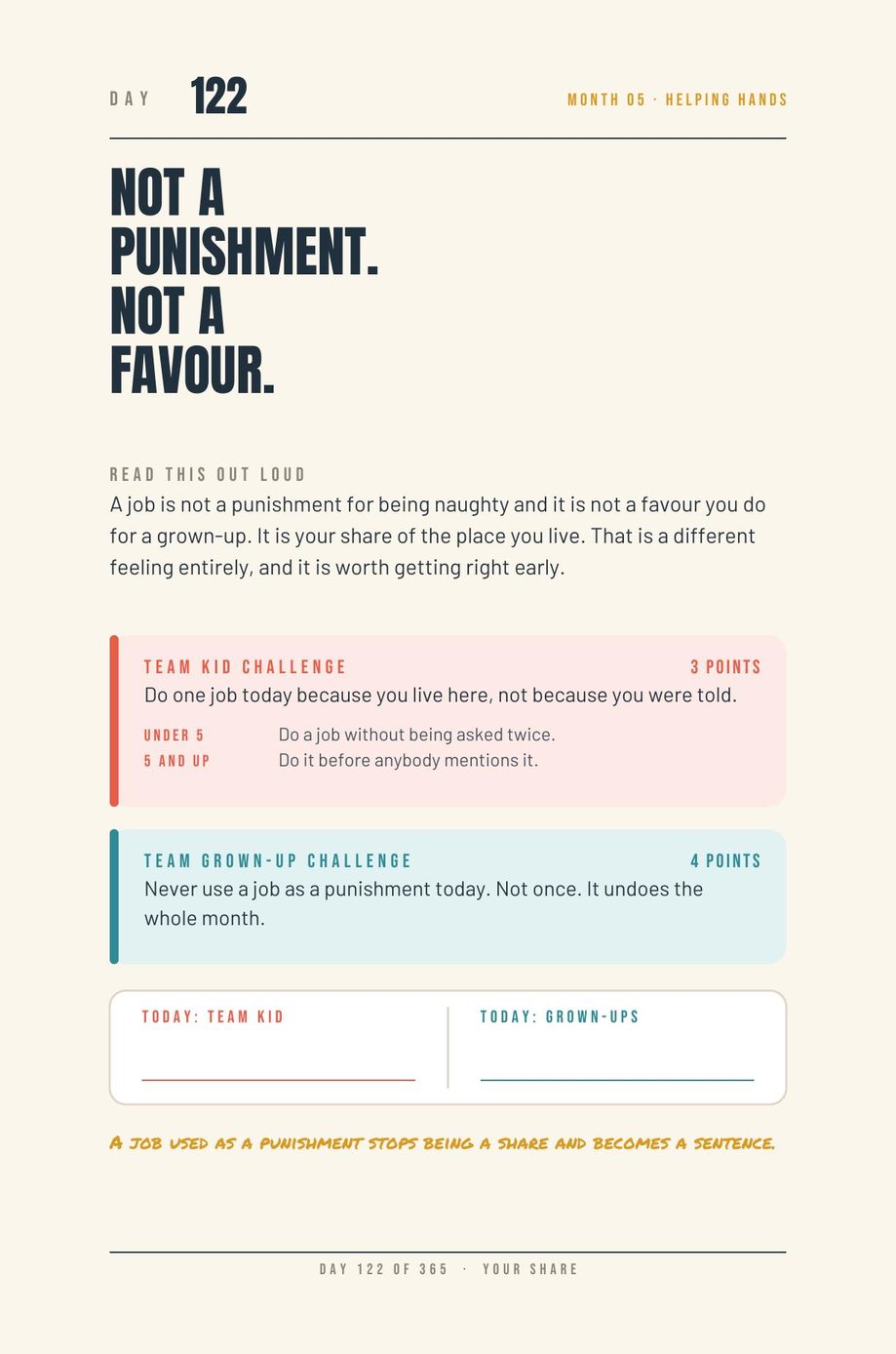
Never use a job as a punishment
The moment dishes become a consequence for bad behavior, you have taught that housework is what happens to people who did something wrong. That lesson lasts. Keep consequences and contributions in completely separate categories, even when the temptation to combine them is high.
Show them what the house actually takes
Most children have no idea how much work a household absorbs, particularly the invisible parts: the remembering, the planning, the noticing that something is running low. Ask them to name five jobs that happen in the house and who does each. The conversation is usually more revealing for the adults than the children.
They can do more than you think
Small children can carry plates, sort socks, feed a pet, water plants, wipe a table, put shopping away. The usual limit is not capability but adults finding it faster to do it themselves. Show them properly once, accept that it will be done badly for a while, and let them do it again. Related: making it a family competition if it needs the extra pull.
Everyone does it, including the adults
A house where children have jobs and adults do not reads as unfair, because it is. The strongest version of this is visible: everybody has a share, everybody's share is known, and nobody is exempt. That is also what makes the rest of the household routine easier to hold.

Kids vs Grown-Ups
365 days of the best game in the house: Team Kid versus Team Grown-Up, monthly scoreboards, a champion crowned. Fully family-friendly.
At what age should kids start doing chores?
Around two or three for simple tasks with help, such as carrying something to the table or putting toys away. By five most children can complete a small job independently once shown properly.
Should I pay my kids for chores?
Many families separate the two: basic contributions are unpaid because they are your share of the household, while paid work is extra and optional. Mixing them can make ordinary contribution feel negotiable.
More on Kids vs Grown-Ups
- Indoor Family Games That Need Nothing but the People in the House
- Gift for a Family Game Night That Lasts a Year: Kids vs Grown-Ups
- How Do I Teach My Kids Manners That Actually Stick?
- How Do I Teach My Kids About Money at a Young Age?
- How Do I Help My Child With Big Emotions?
The method behind every book
- Which 365-Day Book Should I Start With? A One-Minute Guide
- What Is a No Zero Day? The Rule That Saves a Bad Week
- What Is a Realistic Morning Routine? Two Minutes, Not Two Hours
All articles about Kids vs Grown-Ups → · The book page → · All the books →
written by the author, at the kitchen table, after work.