Home / Blog / Step The F*ck Up
STEP THE F*CK UP
Say the Funeral Speech While They're Alive
Part of the series Month Eight: 31 Days of Auditing Who Sharpens You, Who Drains You, Who Stays
The most honest words humans say about each other get said at funerals, to a room the subject is not in. Everything in that speech, what they meant to you, what you learned from them, the specific afternoon you never forgot, was true for years while they could still hear it. The mission is simple and almost nobody does it: move the speech up. Say it to the living.
Why we hold the speech until it is useless
Not coldness. Exposure. Telling someone what they mean to you hands them something they could theoretically laugh at, and the ledger-keeping part of the brain refuses the risk, year after year, until the risk expires along with the person. Funerals are where honesty finally feels safe because the one person who could make it awkward is gone. That is the whole absurdity, said plainly: we price a moment of awkwardness above a lifetime of them knowing.
The three-sentence version
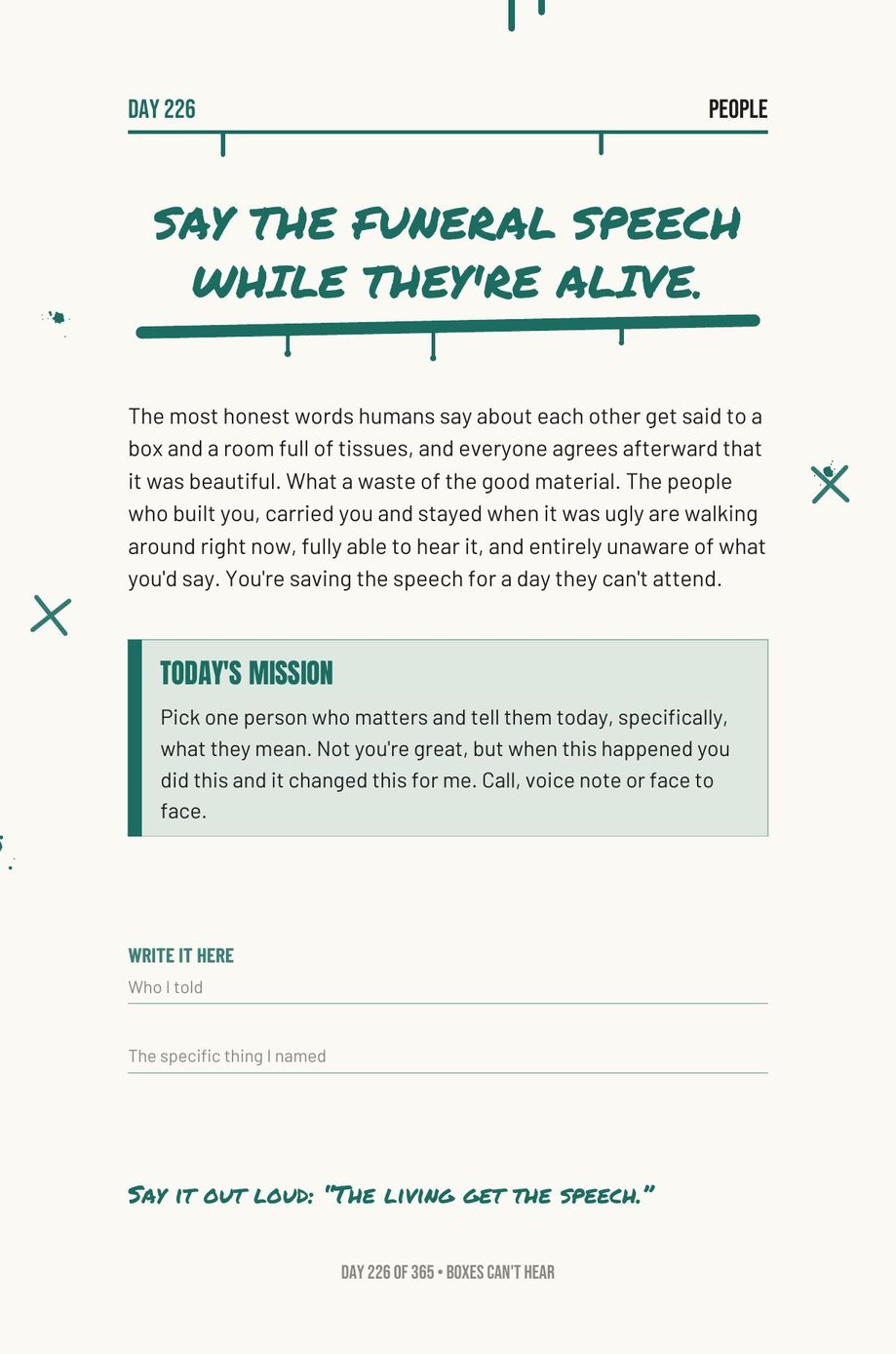
Nobody needs a eulogy over dinner. Three sentences do the work: what they did, what it changed in you, and that you have never said it properly. I watched how you handled those years. It taught me what steadiness looks like, and I have used it on my own kids. I do not think I ever told you that. Specific beats grand; the afternoon, the sentence they said, the habit you copied. Generic praise slides off. The remembered detail is the proof it mattered.
If saying it out loud is beyond you, write it
Some relationships cannot hold a face-to-face version without both parties detonating with discomfort, and that is fine: the words matter more than the delivery channel. A letter works. A message works. For the people furthest downstream of you, the version written into a letter to your child or a book built to be inherited does the same job on a longer clock. The only failing version is the one delivered to a room they are not in.
One per month is a practice; a binge is a spectacle
Done all at once it becomes a performance and everyone gets suspicious. Done as a habit, one person per month, three sentences, alive, it quietly reorders your relationships, because people carry those sentences around for years and they know exactly one person who hands them out. This lands as a single day's mission in a certain year of daily pages, deep in the month about people, and readers report it is the page they remember in December. There is a reason.
Step The F*ck Up
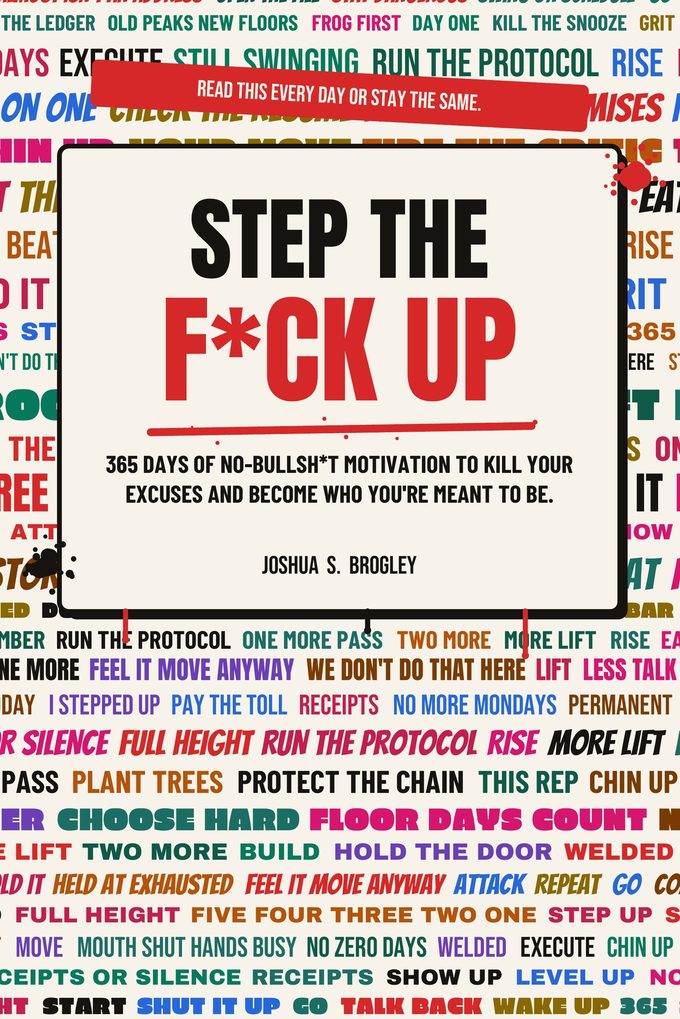
365 days of no-bullsh*t motivation. One page, one mission, two minutes. Miss never twice.
How do I tell someone what they mean to me without it being weird?
Three specific sentences: what they did, what it changed in you, that you never said it properly. Specificity removes the weirdness because it is evidence rather than flattery. Written works when spoken cannot.
Why do people only say kind things at funerals?
Because honesty feels exposed while the person can respond and safe once they cannot. The fix is accepting one moment of awkwardness now over the permanent version later.
More on Step The F*ck Up
- Your Eulogy Is Being Written Now, in Ordinary Hours
- Why You Self-Sabotage Right Before It Works
- Why Strength Is a Life Skill, Not Vanity
- Why Sleep Comes Before Everything: Sleep Is a Performance Drug
- Why Regret Hurts More Than Failure: The Compounding Problem
The method behind every book
- Which 365-Day Book Should I Start With? A One-Minute Guide
- What Is a No Zero Day? The Rule That Saves a Bad Week
- What Is a Realistic Morning Routine? Two Minutes, Not Two Hours
All articles about Step The F*ck Up → · The book page → · All the books →
written by the author, at the kitchen table, after work.