Home / Blog / Step The F*ck Up
STEP THE F*CK UP
Why You Self-Sabotage Right Before It Works
Part of the series Month One: 31 Days of Hunting Down Every Excuse You Have Ever Made
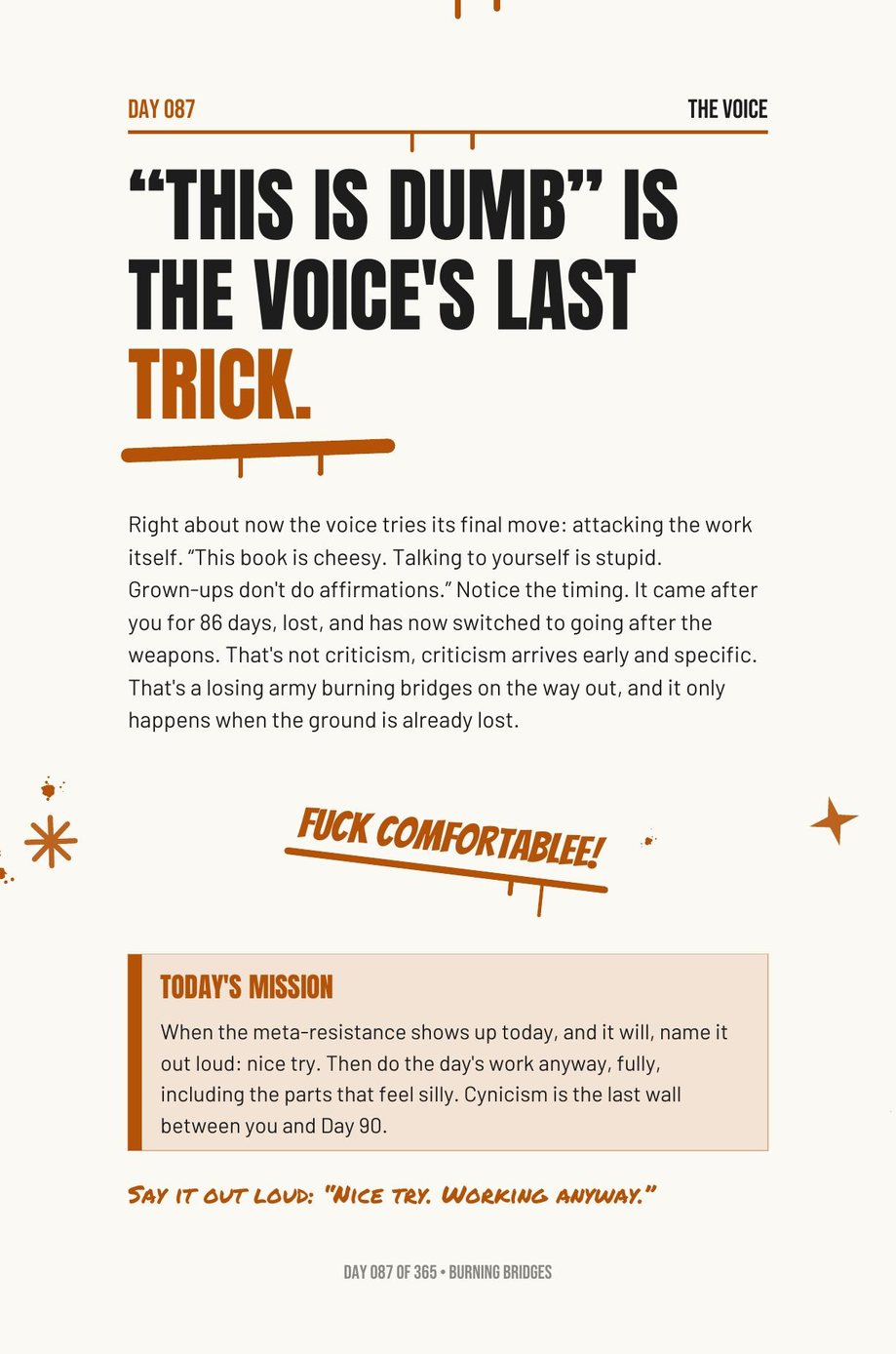
The inner voice that fights your progress runs a predictable schedule. At the start it uses fear: you will embarrass yourself. In the middle it uses boredom: this is not working fast enough. And right before the thing actually works, it deploys its last and best trick: this is dumb. Not scary, not hard, just suddenly, embarrassingly beneath you. The timing is the tell. The voice saves its most sophisticated argument for the moment it is about to lose.
Why the attack comes at the threshold
Early on, quitting needs no sophistication, ordinary friction does the job. But roughly two to three months in, the habit is nearly load-bearing and the results are almost visible, and the only remaining exit is a story that makes leaving feel like wisdom. This is dumb is that story: it reframes persistence as naivety, so quitting stops feeling like quitting and starts feeling like growing out of it. It is the same maneuver as a toddler declaring the game stupid the moment they start losing, dressed in adult vocabulary.
Success is an identity threat, which nobody tells you
There is a stranger reason the sabotage clusters near the breakthrough. If the thing works, you become someone slightly different, a person who finishes, and every identity, even a disappointing one, defends itself. The old self has years of evidence and one argument left: people like us do not actually do this. Recognizing that the resistance is your own continuity system, not a market signal about the work, drains most of its authority on contact.
The counter is a pre-decision, not a debate
You cannot out-argue the voice at 11 p.m. in week eleven; it has home-field advantage. The counter is decided in advance, in writing, while calm: when the this-is-dumb thought arrives, I do the floor version of the day's work and re-evaluate only at the next month gate. No negotiation window, no exceptions clause. The voice's entire power is the live debate; a pre-decision cancels the debate. This is a cousin of the missed-day rule in no zero days, aimed at a smarter opponent.
Learn its whole calendar and it stops being spooky
A year of daily pages against this voice teaches its full rotation: fear in month one, sloth in month three, this is dumb near every breakthrough, and finally silence, which is how you know the identity moved. Meeting the same trick on schedule, with its name already known, converts self-sabotage from a mystery into a weather forecast. The related patterns live in quieting the inner critic and the anatomy of quitting, which is this post's less sophisticated sibling.
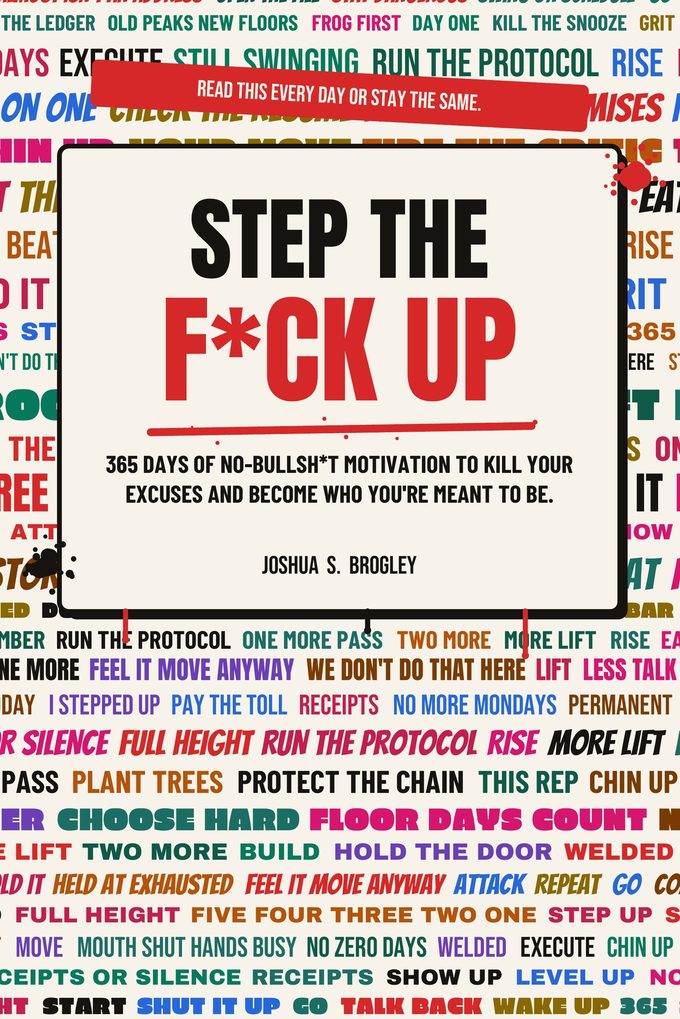
Step The F*ck Up
365 days of no-bullsh*t motivation. One page, one mission, two minutes. Miss never twice.
Why do I sabotage myself when things start going well?
Because success threatens identity: becoming someone who finishes contradicts years of evidence, and the old self defends itself with its best argument, usually that the effort is suddenly dumb or beneath you. The timing near breakthroughs is the giveaway.
How do I stop quitting right before a breakthrough?
Pre-decide the response in writing while calm: when the urge arrives, do the floor version and re-evaluate only at a fixed future date. The sabotage wins live debates; it loses to decisions made in advance.
More on Step The F*ck Up
- Your Eulogy Is Being Written Now, in Ordinary Hours
- Why Strength Is a Life Skill, Not Vanity
- Why Sleep Comes Before Everything: Sleep Is a Performance Drug
- Why Regret Hurts More Than Failure: The Compounding Problem
- Why Everything Feels Worse at Night (3 A.M. Is a Liar)
The method behind every book
- Which 365-Day Book Should I Start With? A One-Minute Guide
- What Is a No Zero Day? The Rule That Saves a Bad Week
- What Is a Realistic Morning Routine? Two Minutes, Not Two Hours
All articles about Step The F*ck Up → · The book page → · All the books →
written by the author, at the kitchen table, after work.