Home / Blog / Step The F*ck Up
STEP THE F*CK UP
Why Do I Make Excuses for Everything? What the Reflex Protects
Part of the series Month One: 31 Days of Hunting Down Every Excuse You Have Ever Made
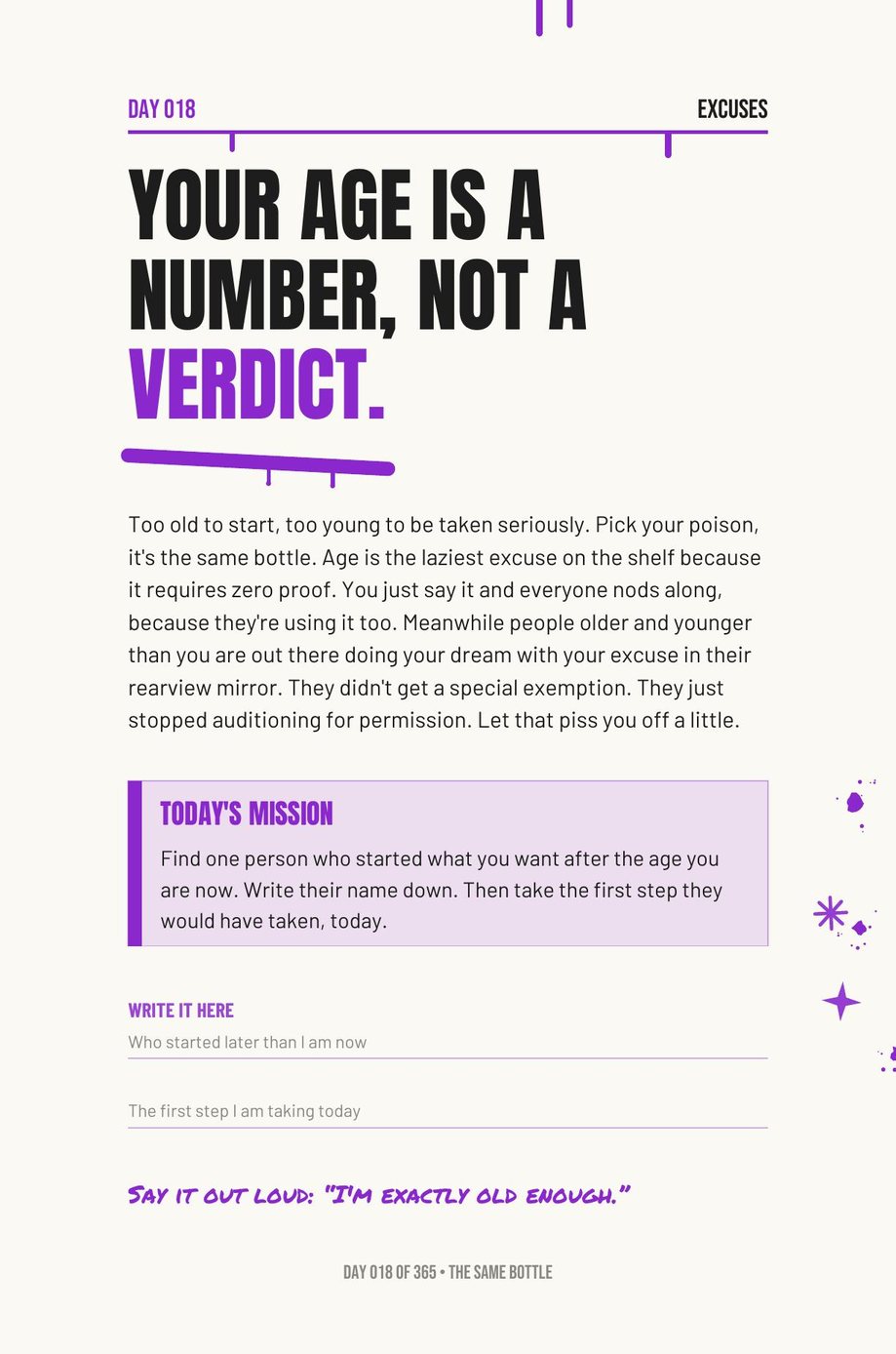
You make excuses for everything because excuses work. Nobody checks them. Say too old, too busy, not the right time, and everyone nods, because they are using the same lines. The book's Day 18 page calls age the laziest excuse on the shelf for exactly that reason: it requires zero proof. The reflex is not laziness and it is not stupidity. It is a negotiation with the weakest version of yourself, held in private, where that version always wins because it is the only one at the table.
What the excuse is protecting
Every excuse protects the same thing: the possibility of trying and failing in a way that cannot be explained away. If you never started because there was no time, the failure is the calendar's. If you never started because you are too old, the failure is the birth certificate's. The excuse is insurance against being the one who tried. The book's line for the pattern is that people who did the thing did not get a special exemption; they just stopped auditioning for permission. The excuse is the audition, held nightly, for a judge who always says no.
Why it feels true
Because it is half true. You are busy. You are older than the people in the photographs. Money is tight. The excuse takes a real constraint and inflates it into a verdict, and the inflation is the part nobody checks. The book's method is to check it: open the screen-time report, find one person who started later than you, look at where the hours actually went. Constraints survive the check. Verdicts do not, and the difference between a constraint and a verdict is the whole month.
How to catch it in the act
Three tells. The excuse arrives fully formed, in a sentence you have said before. It ends the conversation rather than starting one; can't is a locked door, won't is a choice. And it always points somewhere else, the calendar, the economy, the age. The mission the book gives is to write the excuse down the moment it appears, in its own words, and then write what is actually true next to it. Most people find the second sentence is shorter and more embarrassing than the first, which is why it works.
Where this goes
Excuses is the first month of the book because nothing else can be built while a working excuse is available, and the month puts one in the ground per day. Month One is the full walk; how to stop making excuses is the method; the time excuse and the can't excuse are the two most common; and the year-long version, one page and one excuse a day for thirty-one days, is the first chapter of a certain book that starts by taking your excuses away.
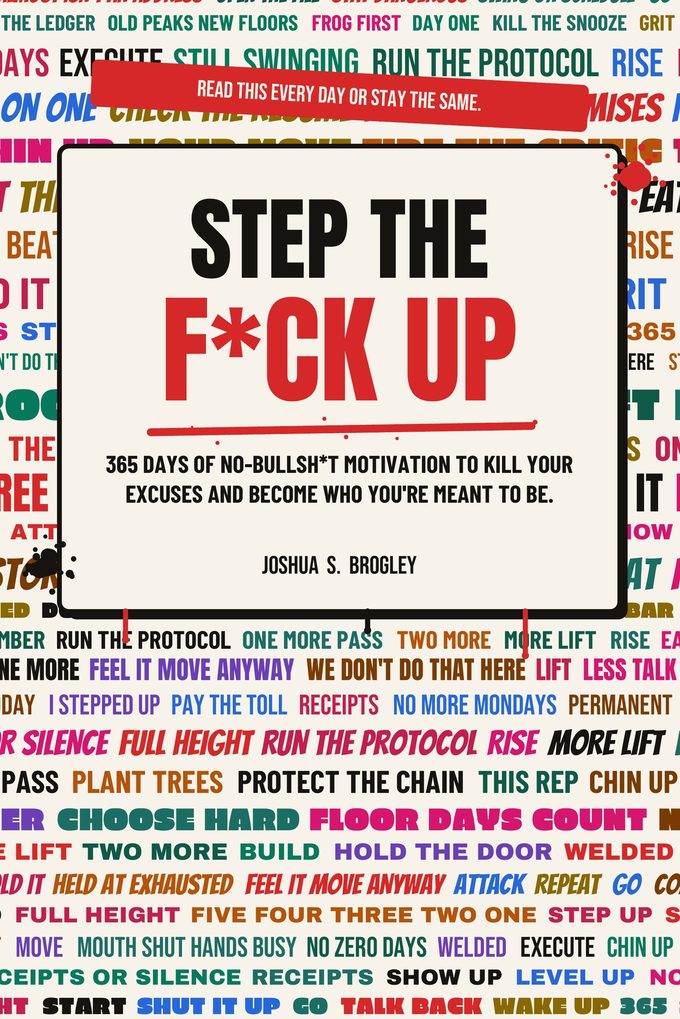
Step The F*ck Up
365 days of no-bullsh*t motivation. One page, one mission, two minutes. Miss never twice.
Why do I always make excuses?
Because they work and nobody checks them. An excuse takes a real constraint, time, age, money, and inflates it into a verdict, protecting you from being the person who tried and failed. The fix is checking the inflation.
How do I stop making excuses for myself?
Catch the excuse in writing the moment it appears, then write what is actually true beside it. Constraints survive that check; verdicts do not. The book does this once a day for a month.
More on Step The F*ck Up
- Your Eulogy Is Being Written Now, in Ordinary Hours
- Why You Self-Sabotage Right Before It Works
- Why Strength Is a Life Skill, Not Vanity
- Why Sleep Comes Before Everything: Sleep Is a Performance Drug
- Why Regret Hurts More Than Failure: The Compounding Problem
The method behind every book
- Which 365-Day Book Should I Start With? A One-Minute Guide
- What Is a No Zero Day? The Rule That Saves a Bad Week
- What Is a Realistic Morning Routine? Two Minutes, Not Two Hours
All articles about Step The F*ck Up → · The book page → · All the books →
written by the author, at the kitchen table, after work.