Home / Blog / Step The F*ck Up
STEP THE F*CK UP
I Always Quit Everything: The Difference Between Quitting and Failing
Part of the series Month One: 31 Days of Hunting Down Every Excuse You Have Ever Made
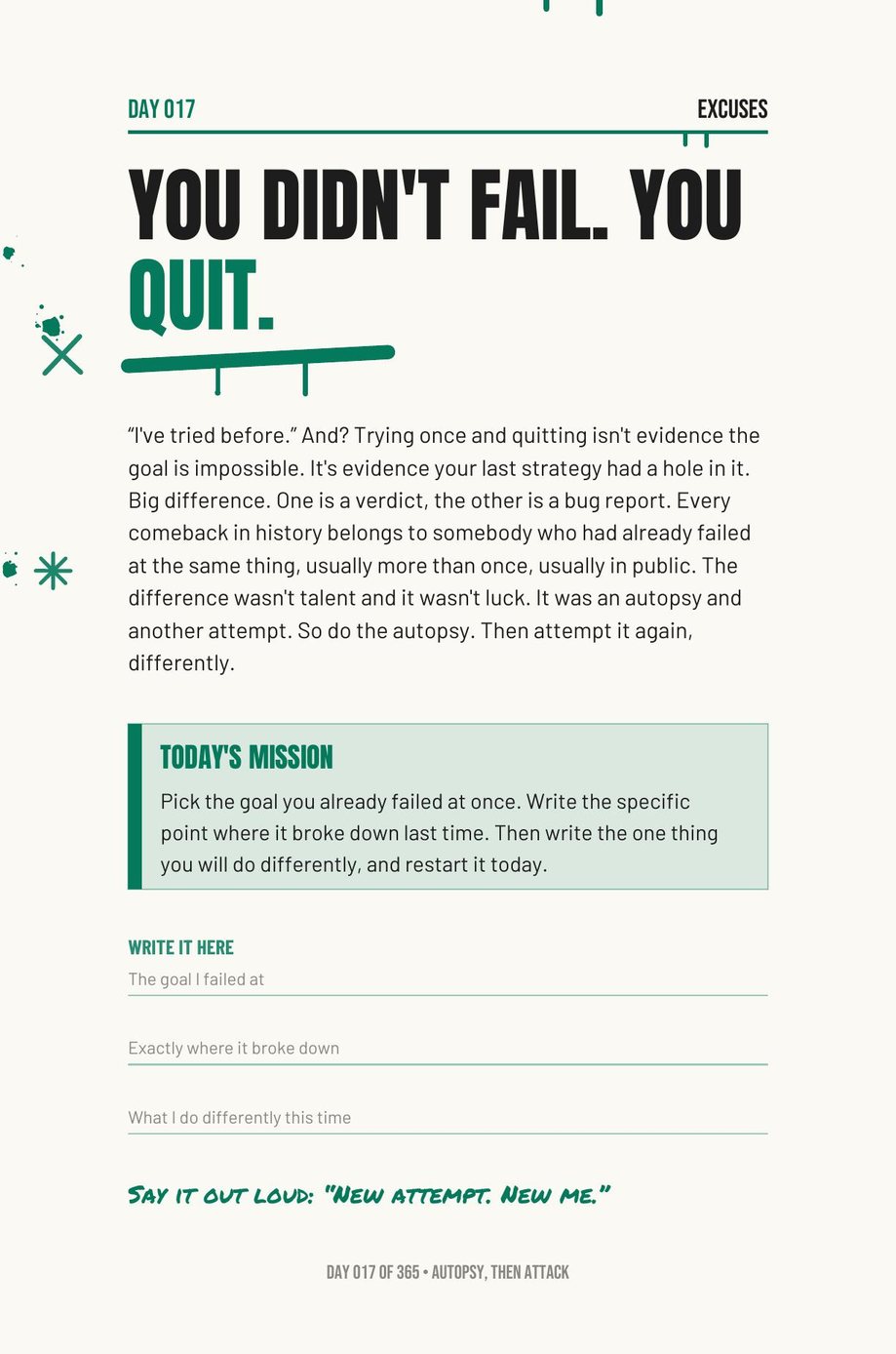
Here is the uncomfortable reframe hiding inside I always quit everything: most of those were not failures. Failure is when you do the thing and it does not work. Quitting is when you stop doing the thing. The distinction matters enormously, because failure is about the world and quitting is about the pattern, and a pattern has mechanics, which means it can be rewired. Trying once and stopping is not evidence the thing does not work. It is evidence of where your pattern breaks.
Find your quit point, because you have exactly one
Serial quitters almost never quit randomly. Look at the wreckage honestly and a signature appears: day four, when novelty dies. Week three, at the first missed day. Month two, when nobody noticed. The moment progress went invisible. Different people, different quit points, but each person's is remarkably consistent, and knowing yours converts a character flaw into a scheduling problem: you now know exactly which week to fortify.
The pattern feeds on evidence you supply
Every quit gets filed as proof for the next one: see, I always do this. But read the file honestly and it says something narrower: you always do this at the same point, for the same reason, under the same conditions. That is not a broken person, that is a repeatable bug. Bugs get patched. The identity claim, I am someone who quits, is the pattern protecting itself by pretending to be a diagnosis.
Patch it with a floor, not with intensity
The instinct is to come back harder: this time, every day, no excuses. Intensity is quit fuel, because it raises the cost of an ordinary bad day until stopping feels like relief. The patch is a floor version, the smallest count-as-done unit, deployed at your known quit point: on the day novelty dies or the streak breaks, the mission shrinks to two minutes and continues. That is the whole logic of no zero days, and it is why discipline builds from the floor up, never from the ceiling down.
Pick something un-quittable to practice on
Rewiring wants a training ground where the daily unit is too small to justify stopping: one page, two minutes, day numbers instead of dates so a gap is a turned page rather than a broken calendar. Run one un-quittable thing for a year and the file gains its first contrary evidence, which turns out to be the entire cure. The identity does not argue with receipts. Sticking to something for a full year is the mechanics of that receipt.
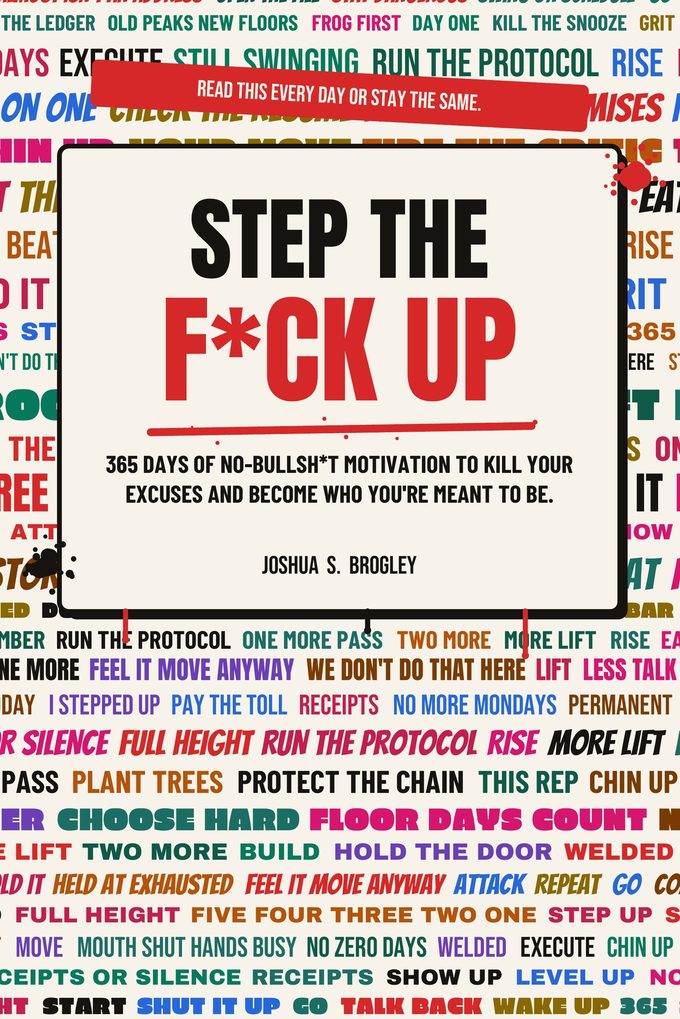
Step The F*ck Up
365 days of no-bullsh*t motivation. One page, one mission, two minutes. Miss never twice.
Why do I quit everything I start?
Almost certainly at a consistent quit point, day four, week three, first missed day, driven by the same trigger each time, usually the death of novelty or the arrival of invisibility. Finding the point matters more than blaming the character.
How do I stop being a quitter?
Shrink the daily unit until quitting saves nothing, pre-decide the floor version for your known quit point, and finish one small thing for long enough to give your identity contrary evidence. Intensity restarts the cycle; floors end it.
More on Step The F*ck Up
- Your Eulogy Is Being Written Now, in Ordinary Hours
- Why You Self-Sabotage Right Before It Works
- Why Strength Is a Life Skill, Not Vanity
- Why Sleep Comes Before Everything: Sleep Is a Performance Drug
- Why Regret Hurts More Than Failure: The Compounding Problem
The method behind every book
- Which 365-Day Book Should I Start With? A One-Minute Guide
- What Is a No Zero Day? The Rule That Saves a Bad Week
- What Is a Realistic Morning Routine? Two Minutes, Not Two Hours
All articles about Step The F*ck Up → · The book page → · All the books →
written by the author, at the kitchen table, after work.