Home / Blog / Step The F*ck Up
STEP THE F*CK UP
Self-Improvement Books for Men in Their 30s: 8 for the Building Decade
Part of the series The 12 Best Self-Help Books for Men, Ranked by What They Make You Do
The thirties are the building decade. Careers take shape or stall, households form or the decision not to form them solidifies, parents begin to need help instead of giving it, and time first becomes finite as a felt sense. The self-improvement books that help a man in his thirties are the ones that match those specific problems: how to build one thing instead of ten, how to protect the closest people from getting the leftover hours, how to make the compounding practices non-negotiable while starting them is still cheap. Eight books, in the order most men in their thirties should read them.
Quick answer: For men in their 30s: Step The F*ck Up for a daily engine, Atomic Habits for the compounding practices, Deep Work for the hours, Extreme Ownership for the results, Essentialism for the commitments, The Psychology of Money for the money, Man's Search for Meaning for the why, and Lifetime Blueprint to score the twenties before they blur.
The eight, in order
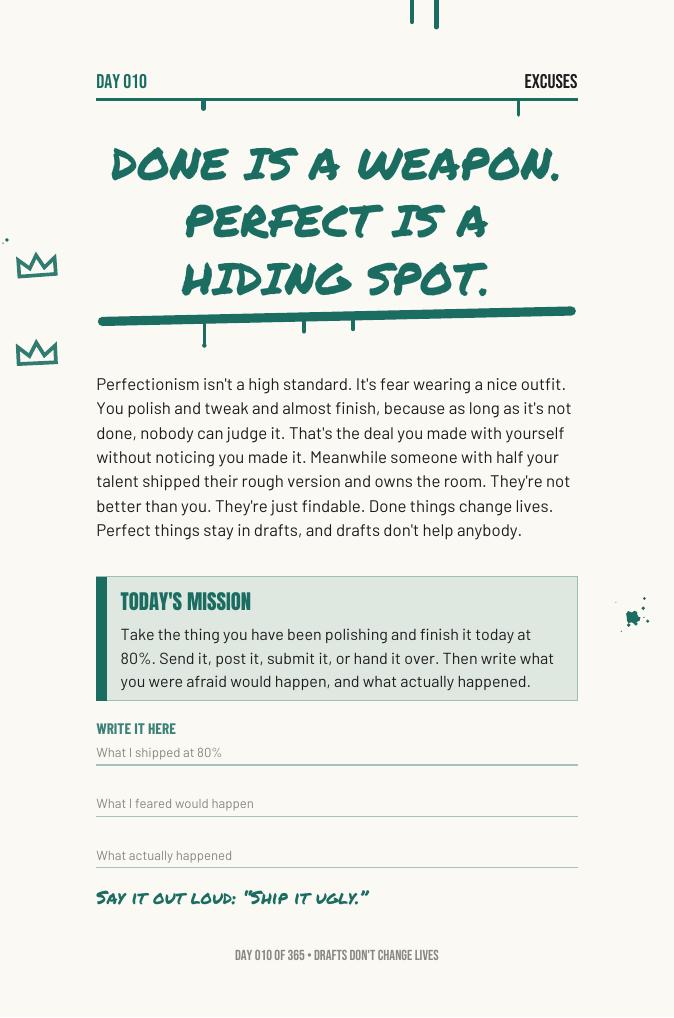
- Step The F*ck Up by Joshua S. Brogley. Mine, and the daily engine: one page a day for a year, a mission with a box, twelve months from excuses to legacy. The thirties are when a man has the least time and the most to build, and a two-minute page is the only unit that survives that decade.
- Atomic Habits by James Clear. The practices that must become non-negotiable in the thirties compound for thirty years, and this is the book on how compounding habits are built.
- Deep Work by Cal Newport. The thirties are where careers take shape or stall, and the difference is usually hours of uninterrupted work that most men have never learned to protect.
- Extreme Ownership by Jocko Willink and Leif Babin. Results start arriving in the thirties, good and bad, and they have to be owned or the machine that produced them gets blamed and dismantled.
- Essentialism by Greg McKeown. The signature failure of the thirties is the accumulation of small commitments that leave no space for the large one. This is the book on saying no to good things.
- The Psychology of Money by Morgan Housel. Not a finance manual; a book on how people actually behave with money, which is the thirties' most expensive blind spot.
- Man's Search for Meaning by Viktor E. Frankl. Short, and the antidote to a decade spent building without asking what for.
- Lifetime Blueprint by Joshua S. Brogley. Also mine, and the other half: the twenties scored before hindsight edits them, the thirties chapter's focus list, and a five-year snapshot to check the line at 35 and 40.
Why the thirties need different books than the twenties
In the twenties the problem is starting; in the thirties it is selecting. A man at 32 does not lack ambition or information; he lacks the space to do one thing well, because the calendar filled itself with reasonable commitments while he was busy. The Lifetime Blueprint's thirties chapter names the decade's obstacles precisely: comparison to peers whose surfaces look more accomplished, health declining quietly while attention is elsewhere, and the closest relationships receiving leftover energy rather than protected energy. Your thirties is that chapter; the list above is the reading that goes with it.
The order matters
Daily engine first, because none of the other books do anything unless something runs every morning. Then habits and focus, the two mechanics. Then ownership and essentialism, the two corrections. Then money and meaning, the two long games. The Blueprint last, or first if you would rather measure before you read anything. The full ranked list is the decade-neutral version; the forties list is what this list becomes in ten years.
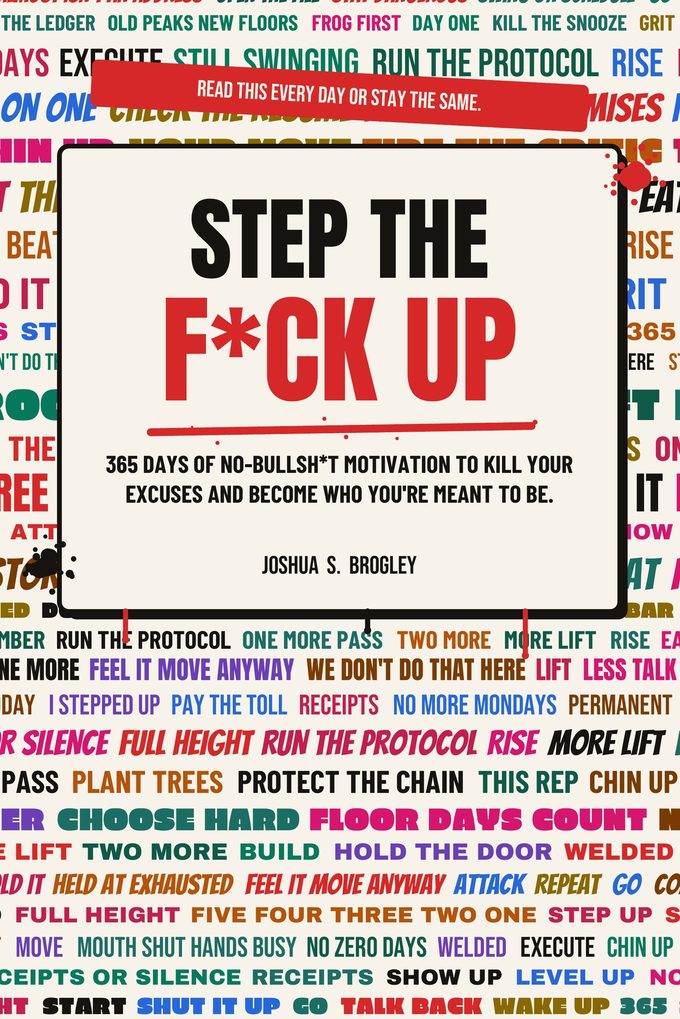
Step The F*ck Up
365 days, one page a day: excuses, fear, the voice, discipline, ownership, body, proof, people, money, resilience, standards, legacy. No theory. A mission a day.
What should a man in his 30s read?
A daily engine first, then the mechanics of habits and focus, then ownership and essentialism, then money and meaning. Step The F*ck Up, Atomic Habits, Deep Work, Extreme Ownership, Essentialism, The Psychology of Money, Man's Search for Meaning, and Lifetime Blueprint to score the decade.
Why are the 30s called the building decade?
Because careers take shape or stall, households form or do not, and the practices started now compound for thirty years. It is also the first decade in which time feels finite, which is why selection matters more than ambition.
More on Step The F*ck Up
- Why Regret Hurts More Than Failure: The Compounding Problem
- Why Sleep Comes Before Everything: Sleep Is a Performance Drug
- Why Strength Is a Life Skill, Not Vanity
- Why You Self-Sabotage Right Before It Works
- Your Eulogy Is Being Written Now, in Ordinary Hours
The method behind every book
- Which 365-Day Book Should I Start With? A One-Minute Guide
- What Is a No Zero Day? The Rule That Saves a Bad Week
- What Is a Realistic Morning Routine? Two Minutes, Not Two Hours
All articles about Step The F*ck Up → · The book page → · All the books →
written by the author, at the kitchen table, after work.