Home / Blog / Step The F*ck Up
STEP THE F*CK UP
How to Apologize to Someone You Hurt, Without the Word If
Part of the series Month Five: 30 Days of Taking the Deed to Your Whole Life
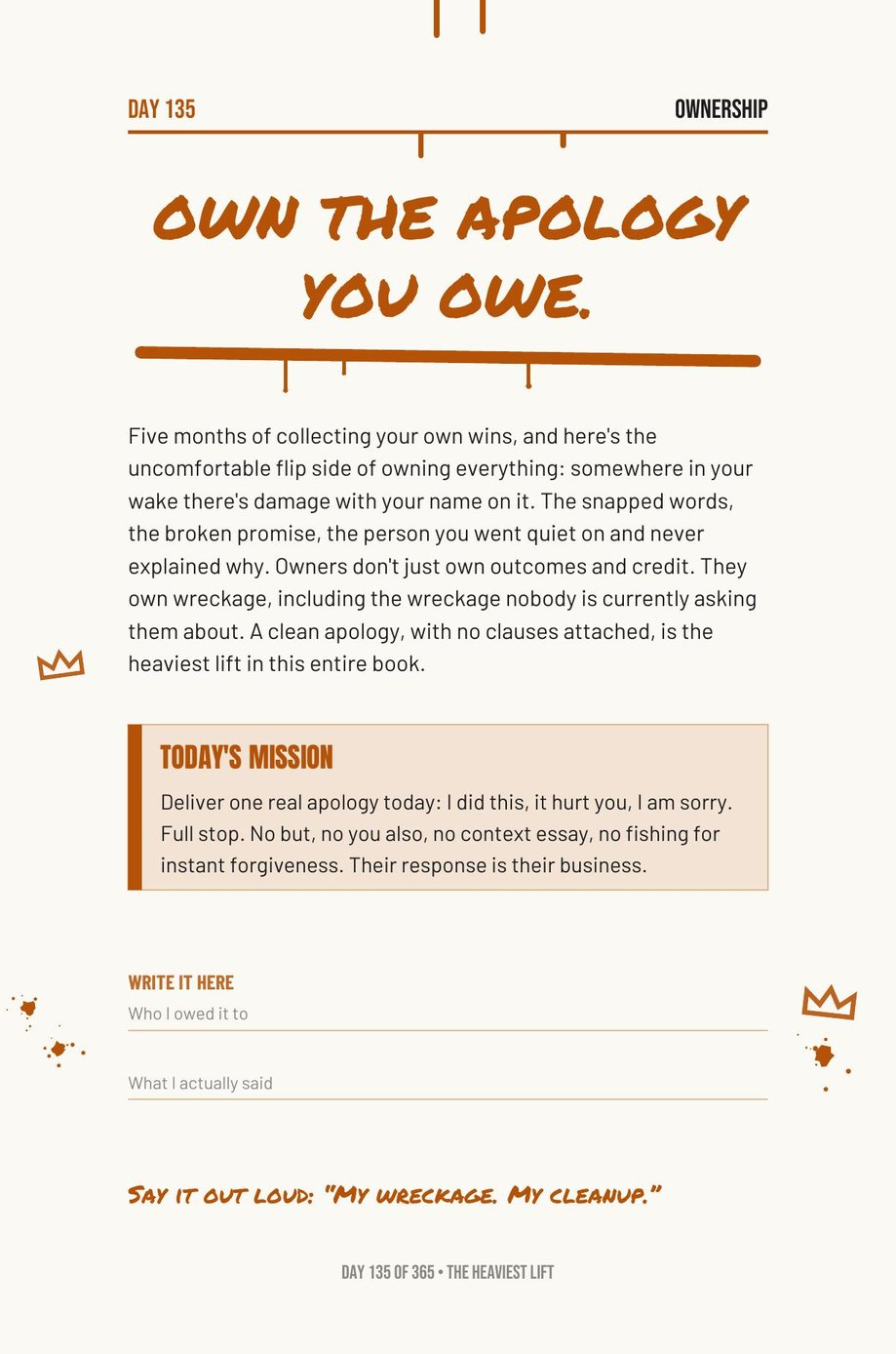
A clean apology has four parts and zero conditions. Name the specific thing you did, without the word if. Own it, without the word but. Offer a repair, concrete if one exists. Then stop talking. Everything people add past that point, the context, the explanation, the tour of their own good intentions, converts the apology back into a defense, and the other person can feel the conversion happen in real time.
The two words that void an apology
If, as in sorry if you were hurt, relocates the event from your behavior to their sensitivity: it apologizes for their reaction, not your act, and everyone hears the difference instantly. But, as in I am sorry, but, is a delete key for everything before it. A useful drill before delivering: write the apology down and strike both words wherever they appear. What survives is usually shorter, more uncomfortable, and finally accurate, which is the correct order of operations.
Specific is the whole game
Sorry for everything is an invoice with no line items; it cannot be accepted because nothing was actually presented. Name the act: I made that comment in front of your parents. I missed it and did not call. I let you carry it alone for a year. The specificity is painful precisely because it proves you know what you did, and proving you know what you did is what the other person has been waiting for, sometimes for years. Vague contrition asks them to do the naming for you, which is one more job handed to the injured party.
Repair is an offer, not a purchase
Where a concrete repair exists, offer it plainly: replacing, redoing, showing up this time. Where none exists, the repair is behavioral and it is demonstrated rather than promised, over months, which is the expensive part and the reason apologies feel cheap without it. What repair is not: a payment that obligates forgiveness. That is a transaction wearing remorse as a costume, and it converts your apology into a bill they now owe.
Then silence, and no expectations
The apology ends when you stop talking. What comes back, forgiveness, coldness, a shrug, time, is theirs to choose and none of it is the metric. You did not apologize to be absolved; you apologized because you owed a debt and adults pay debts. This lands, not accidentally, five months into a year of daily ownership work, after enough reps that the speaker can survive not being forgiven, which is the actual prerequisite. The surrounding machinery is in taking ownership and, for the marriage-sized version, ending the recurring argument.
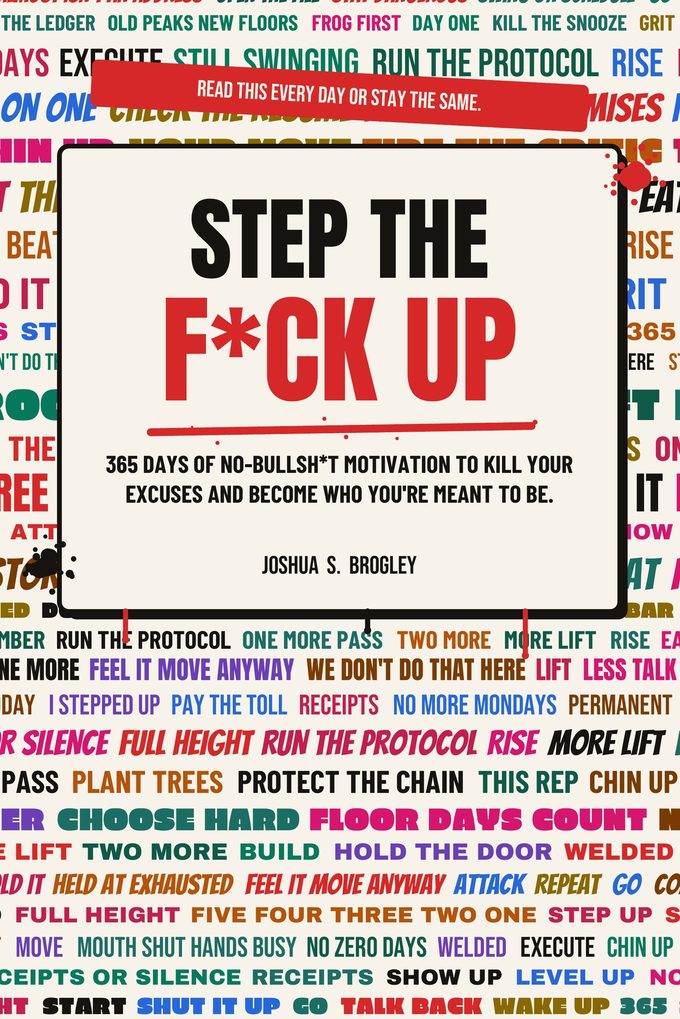
Step The F*ck Up
365 days of no-bullsh*t motivation. One page, one mission, two minutes. Miss never twice.
What are the parts of a proper apology?
Four: name the specific act with no if, own it with no but, offer a concrete repair where one exists, and stop talking. Explanations and context added afterward convert the apology into a defense.
What if my apology is not accepted?
Nothing changes. Acceptance belongs to the other person and was never the metric; the apology pays a debt regardless. Expecting forgiveness as the receipt turns the apology into a transaction, which is partly why it was owed in the first place.
More on Step The F*ck Up
- Your Eulogy Is Being Written Now, in Ordinary Hours
- Why You Self-Sabotage Right Before It Works
- Why Strength Is a Life Skill, Not Vanity
- Why Sleep Comes Before Everything: Sleep Is a Performance Drug
- Why Regret Hurts More Than Failure: The Compounding Problem
The method behind every book
- Which 365-Day Book Should I Start With? A One-Minute Guide
- What Is a No Zero Day? The Rule That Saves a Bad Week
- What Is a Realistic Morning Routine? Two Minutes, Not Two Hours
All articles about Step The F*ck Up → · The book page → · All the books →
written by the author, at the kitchen table, after work.