Home / Blog / Shut The F*ck Up
SHUT THE F*CK UP
How Do I Stop Giving Unsolicited Advice When Someone Vents?
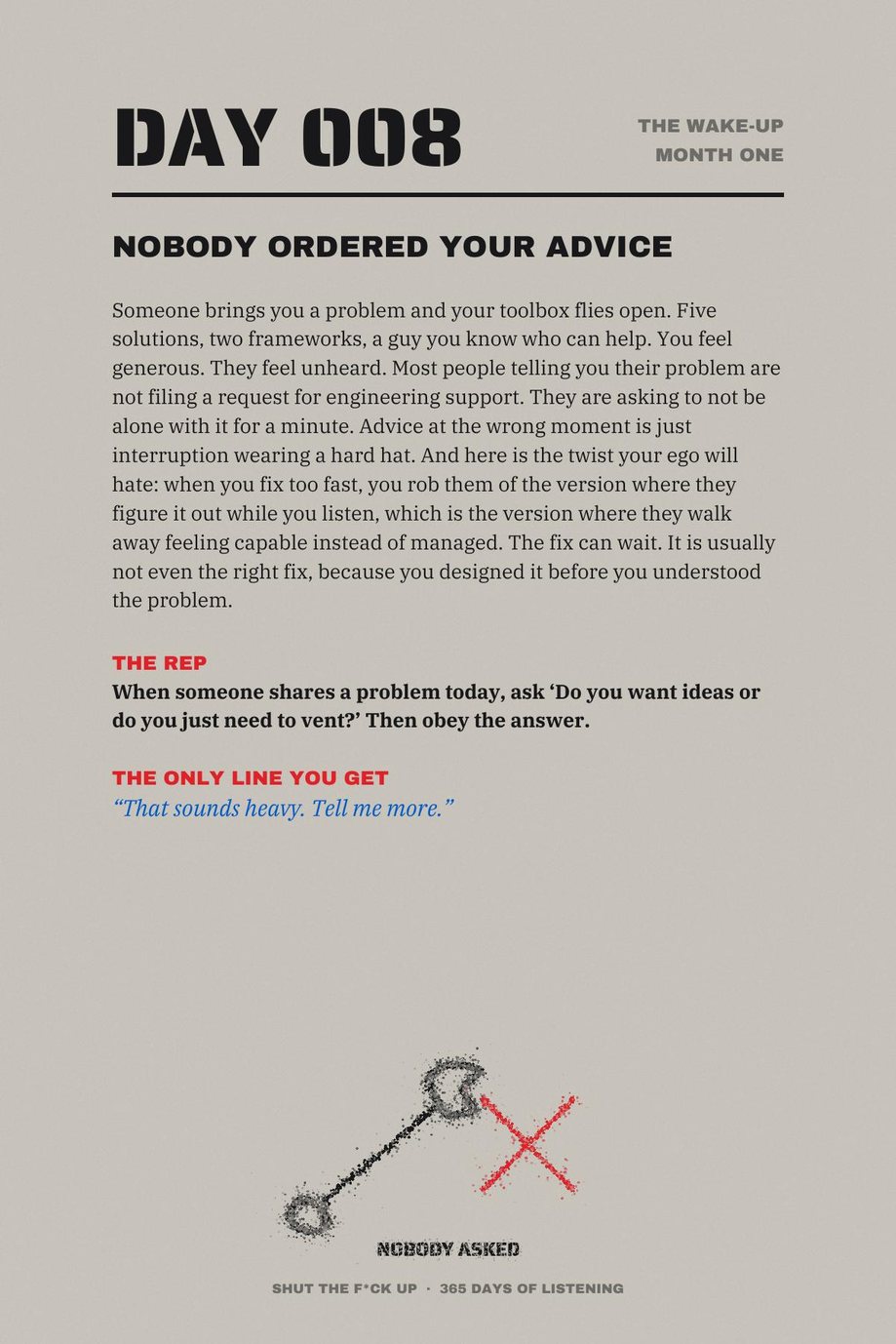
One question fixes most of it: do you want ideas, or do you want me to listen? Ask it, honor the answer, and if the answer is listen, hold the two-second pause and ask a follow-up instead of offering a fix. The fixing reflex is love expressed as interruption, and Shut The F*ck Up drills it out one rep at a time, because most people never realize the advice is the reason they stopped being told things.
The fix is for you
Someone’s distress is uncomfortable, and a solution ends the discomfort quickly. That is why the advice comes out before you decide to give it. Naming that honestly is the first rep.
Ask which one they want
Ideas or ears. People almost always know, and asking is not awkward, it is respectful. Half the time the answer is ears, and the whole conversation changes.
Follow-up questions replace solutions
A follow-up question is the listener’s version of a fix: it moves the conversation forward without taking it over. Shut The F*ck Up runs question reps for a whole month because they are the muscle that replaces the advice reflex.
The reward is the real stuff
People bring their real problems to whoever does not fix them. That is the payoff the book keeps returning to: become the person everyone trusts with the real stuff. Related: dealing with someone who talks too much, which is often the same reflex from the outside.
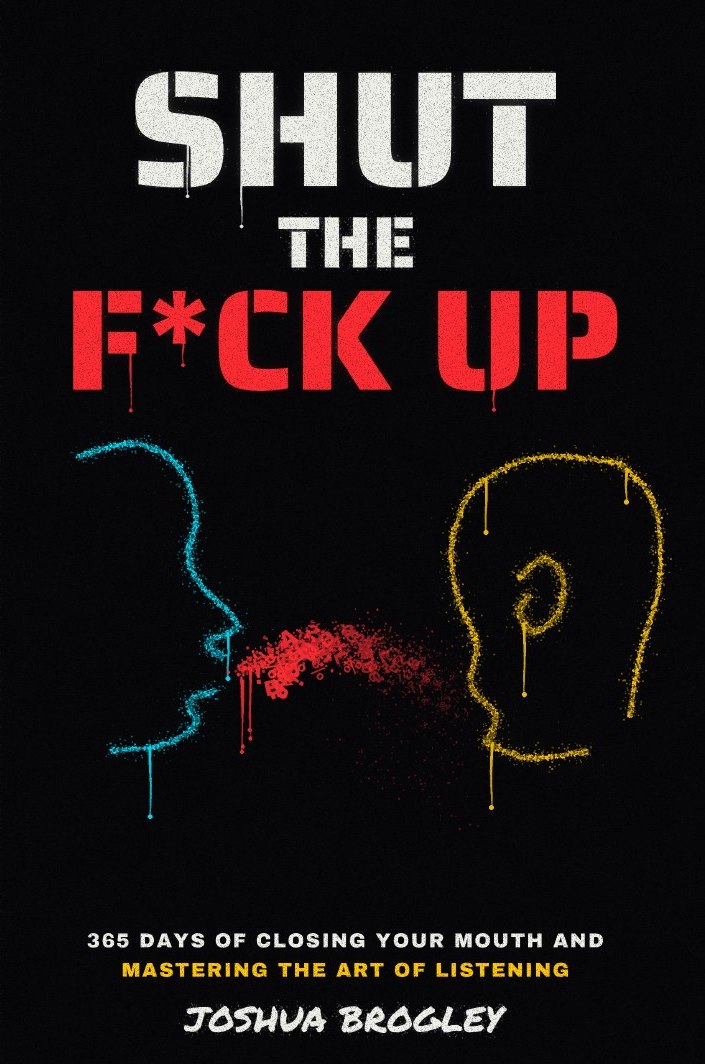
Shut The F*ck Up
365 days of closing your mouth and mastering the art of listening. The pause, the questions, the ratio. One rep a day.
Why do I always try to fix people’s problems?
Because it feels like helping and it ends your discomfort with their distress. It rarely helps and it teaches people to bring you fewer problems.
What should I say instead of giving advice?
Ask a question that shows you understood: what was the worst part, what do you think you will do, how are you feeling about it now. Follow-up questions are the whole replacement.
More on Shut The F*ck Up
- How to Talk Less: The 70/30 Rule and a Word Budget
- Active Listening Exercises You Can Run in Real Conversations
- How Do You Gently Stop Someone Who Won't Stop Talking?
- Why Do I Talk So Much? The Honest Reasons and the Fix
- How Do I Stay Calm During a Difficult Conversation?
The method behind every book
- Which 365-Day Book Should I Start With? A One-Minute Guide
- What Is a No Zero Day? The Rule That Saves a Bad Week
- What Is a Realistic Morning Routine? Two Minutes, Not Two Hours
All articles about Shut The F*ck Up → · The book page → · All the books →
written by the author, at the kitchen table, after work.