Home / Blog / Shut The F*ck Up
SHUT THE F*CK UP
Why Do I Talk So Much? The Honest Reasons and the Fix
The short answer: The honest reasons people talk too much: silence feels dangerous, so you fill it. You prove your value by adding, so you add constantly. Or you get excited and skip reading the room. None of these are character flaws; all of them are reflexes, and reflexes retrain.
Measure your talk-listen ratio for three days, then start holding the two-second pause. Shut The F*ck Up turns that retraining into a year of one-page reps, which is roughly what an overtrained mouth needs.
The silence panic
Most overtalking is pause-avoidance. The gap after someone speaks feels like a fire to put out, so you douse it with words, including words that end the other person’s thought. Day one of the fix is reframing the pause as respect, not vacancy.
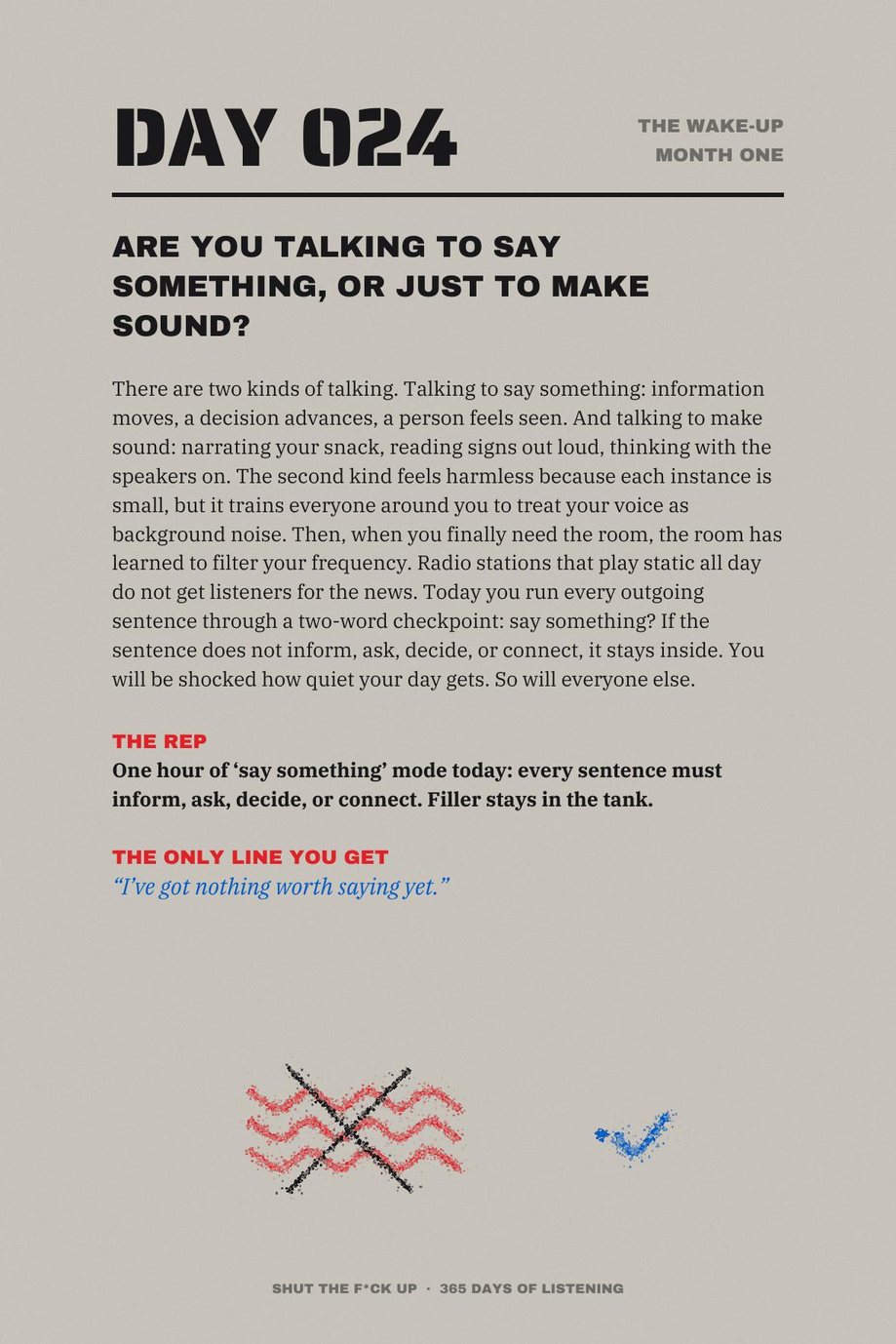
Proving value out loud
If your worth in a room feels tied to your word count, you narrate everything. The twist: the people whose value nobody questions are usually the ones who speak last and briefly. Scarcity reads as weight.
Excitement without brakes
Some talkers are just delighted, and the delight tramples. Keep the delight, add brakes: let them finish, count two, then one question before your story. The enthusiasm lands better with a runway.
Reps, not resolutions
You cannot decide your way out of a reflex; you rep your way out. One page a day: measure the ratio, hold the pause, ask the follow-up, lose the last word on purpose. Related: how to stop interrupting and the last-word reflex.
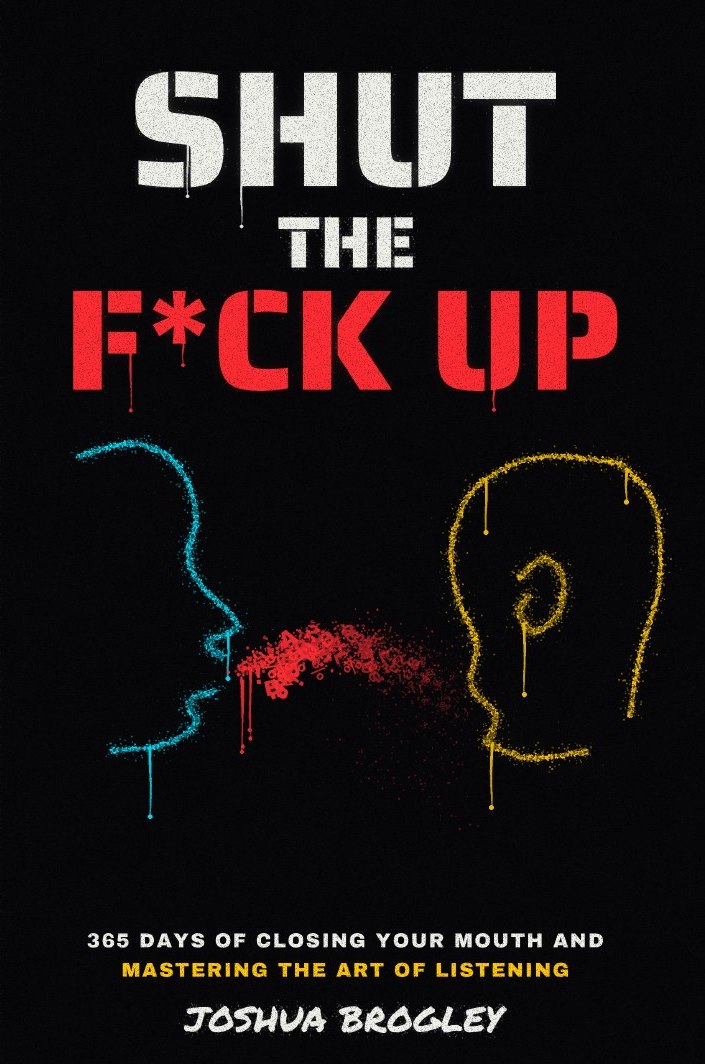
Shut The F*ck Up
365 days of closing your mouth and mastering the art of listening. The pause, the questions, the ratio. One rep a day.
Is talking too much a sign of anxiety?
Often it is silence-discomfort: the pause feels like failure, so words rush in. Learning that two seconds of quiet is not an emergency removes most of the overflow. If talking feels genuinely uncontrollable, that is worth discussing with a professional.
How do I know if I talk too much?
Measure, do not vibe. For three days, estimate your share of each conversation. Above sixty percent consistently, and the people around you already know the answer.
More on Shut The F*ck Up
- How to Talk Less: The 70/30 Rule and a Word Budget
- Active Listening Exercises You Can Run in Real Conversations
- How Do You Gently Stop Someone Who Won't Stop Talking?
- How Do I Stay Calm During a Difficult Conversation?
- How Do I Ask Better Questions in a Conversation?
The method behind every book
- Which 365-Day Book Should I Start With? A One-Minute Guide
- What Is a No Zero Day? The Rule That Saves a Bad Week
- What Is a Realistic Morning Routine? Two Minutes, Not Two Hours
All articles about Shut The F*ck Up → · The book page → · All the books →
written by the author, at the kitchen table, after work.