Home / Blog / Shut The F*ck Up
SHUT THE F*CK UP
Why Do I Always Need the Last Word, and How Do I Stop?
The short answer: The last-word reflex is usually about feeling unheard, not about being right, and it retrains the same way it formed: reps. Once a day, let a conversation end on the other person’s sentence, on purpose, and notice that nothing bad happens.
Shut The F*ck Up treats the last word as the final boss of talking too much: the interrupting, the fixing and the one-upping all fall before it, and the year ends with letting go of it.
It is a reflex, not a position
You do not decide to have the last word; it fires. That is good news, because reflexes retrain and positions do not. Shut The F*ck Up treats the mouth as an overtrained muscle for exactly this reason.
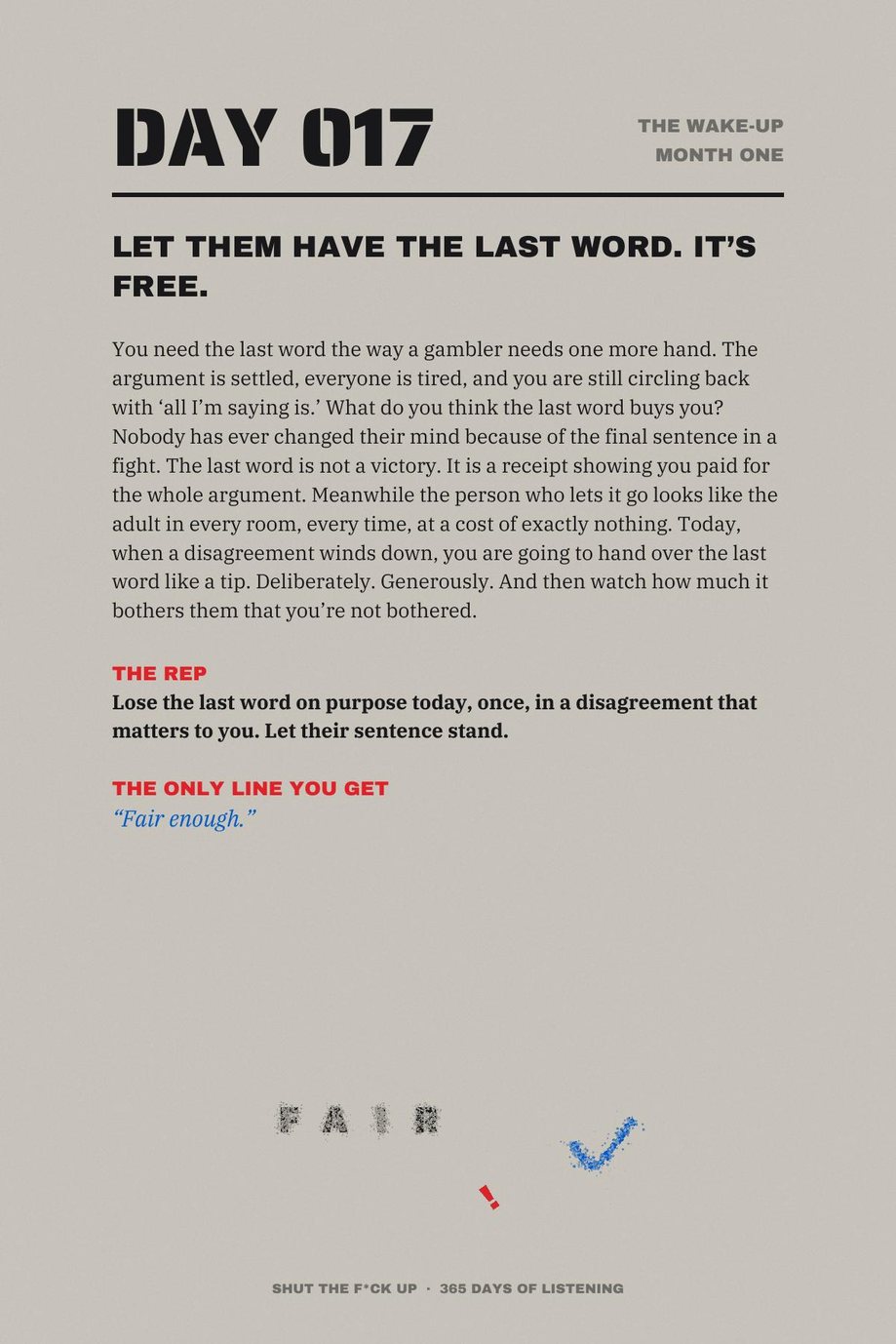
Nobody remembers who spoke last
Everybody remembers who listened. The last word feels like winning and reads as needing to win. Once you see that from the outside, the appeal fades fast.
One rep a day
End one conversation, any conversation, on their sentence. On purpose. The daily practice is small enough to keep and, across a year, it removes the reflex entirely.
Fix it upstream
The need to win the end usually comes from losing the middle. Listen at seventy, ask the follow-up, hold the pause, and there is nothing left to win at the end. Related: becoming a better listener.
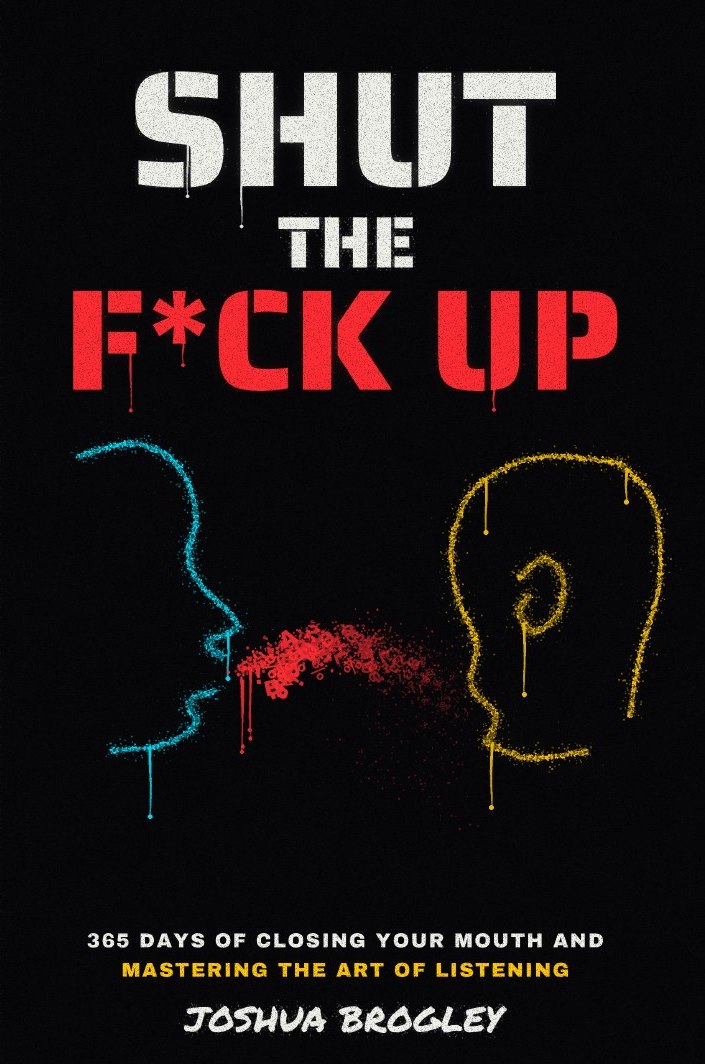
Shut The F*ck Up
365 days of closing your mouth and mastering the art of listening. The pause, the questions, the ratio. One rep a day.
Is needing the last word a sign of insecurity?
Often it is a sign of not feeling heard earlier in the conversation, which is different. The fix is upstream: listen better early and the need to win late fades.
How do I let someone else have the last word?
Decide before the conversation ends that you will. Then, when the moment comes, nod, and stop. It feels unbearable for a week and invisible after a month.
More on Shut The F*ck Up
- How to Talk Less: The 70/30 Rule and a Word Budget
- Active Listening Exercises You Can Run in Real Conversations
- How Do You Gently Stop Someone Who Won't Stop Talking?
- Why Do I Talk So Much? The Honest Reasons and the Fix
- How Do I Stay Calm During a Difficult Conversation?
The method behind every book
- Which 365-Day Book Should I Start With? A One-Minute Guide
- What Is a No Zero Day? The Rule That Saves a Bad Week
- What Is a Realistic Morning Routine? Two Minutes, Not Two Hours
All articles about Shut The F*ck Up → · The book page → · All the books →
written by the author, at the kitchen table, after work.