Home / Blog / Step The F*ck Up
STEP THE F*CK UP
Accountability Questions for Men: 30 That Actually Get Honest Answers
Part of the series How to Start a Men's Accountability Group That Lasts Past Week Three
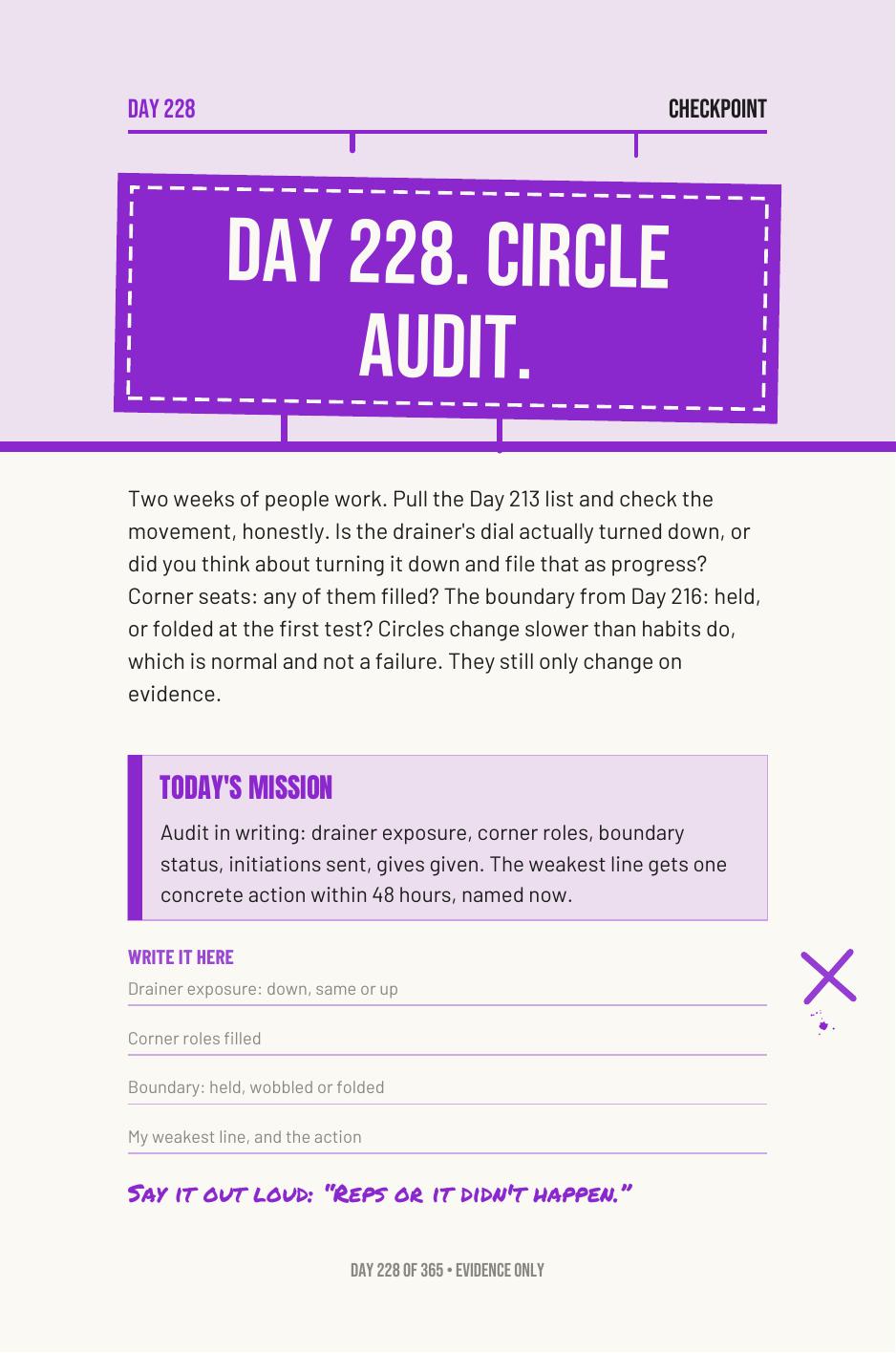
Most accountability questions get dodged because they invite a story. How was your week gets a story. Did you keep your word gets a story. The questions that work ask for a number, a name or a yes, and Step The F*ck Up runs its checkpoints on that rule: Day 228 is a circle audit with one line at the bottom, reps or it didn't happen. Here are thirty questions built the same way, sorted by what they check, with the three that should open every check-in.
Quick answer: The three questions to open every check-in: How many days out of seven did you do what you said? What excuse showed up most this week, in its own words? What is the one thing you will do before we meet again? Then pick two or three from the deeper sets below.
The weekly check-in: three questions, every week
- How many days out of seven did you do what you said you would? A number, not a story.
- What excuse showed up most this week? Say it in its own words, the way it sounded in your head.
- What is the one thing you will do before we meet again? Specific enough that we can check.
Discipline and the voice
- Where did you negotiate with yourself this week, and who won?
- What did you say you would do and then quietly drop?
- Did you miss a day? Did you miss two in a row?
- What is one standard that crept down without a decision?
- What did the voice in your head say most often this week? Quote it.
- What did you avoid because you felt unready?
- Where did you call yourself stupid, and what was actually true?
- What did you postpone to tomorrow, and how many tomorrows has it been?
People, money and the body
- Who got your leftovers this week: your wife, your kids, your friends?
- Who did you reach out to first, without keeping score?
- Is there a conversation you have owed someone for more than a week?
- What did you spend that you would not want this group to see?
- Do you know your three monthly numbers: in, out, left over?
- How many hours did you sleep, on average? Not the story, the average.
- How many days did you move on purpose?
- Who in your life is carrying the most right now, and did you take any weight off them?
The hard ones, for when the group is ready
- What are you pretending is fine?
- What would your wife say is the gap between who you are here and who you are at home?
- What are you still blaming on someone else?
- What would you do if you were not afraid of how it looked?
- Where are you lying to this group, even a little?
- If you kept going exactly like this for five years, where would you be?
- What do you want us to ask you next week that we did not ask today?
- Who in this room have you not been honest with?
- What did you do this week that you are proud of? Say it without the qualifier.
- What would the man you want to be at sixty tell you to stop doing?
- What is the one thing you are not saying?
Step The F*ck Up
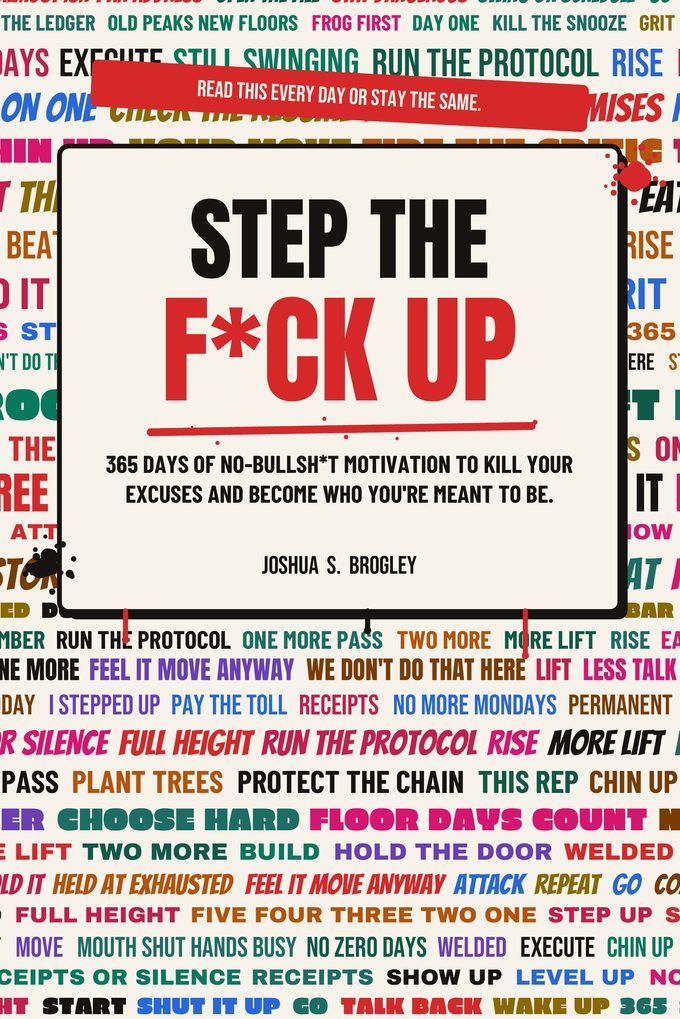
365 days, one page a day: excuses, fear, the voice, discipline, ownership, body, proof, people, money, resilience, standards, legacy. No theory. A mission a day.
What questions should an accountability partner ask?
Three every week: how many days out of seven you did what you said, what excuse showed up most, and the one thing you will do before you meet again. Questions that ask for a number or a name get honest answers; questions that invite a story get dodged.
What makes a good accountability question?
It asks for evidence rather than a feeling: a number, a name, a yes or no. How was your week invites a story. How many days did you train invites the truth.
More on Step The F*ck Up
- Why Regret Hurts More Than Failure: The Compounding Problem
- Why Sleep Comes Before Everything: Sleep Is a Performance Drug
- Why Strength Is a Life Skill, Not Vanity
- Why You Self-Sabotage Right Before It Works
- Your Eulogy Is Being Written Now, in Ordinary Hours
The method behind every book
- Which 365-Day Book Should I Start With? A One-Minute Guide
- What Is a No Zero Day? The Rule That Saves a Bad Week
- What Is a Realistic Morning Routine? Two Minutes, Not Two Hours
All articles about Step The F*ck Up → · The book page → · Group and bulk orders →
written by the author, at the kitchen table, after work.