Home / Blog / Step The F*ck Up
STEP THE F*CK UP
How to Be a Good Accountability Partner: Pass Your Own Standards First
Part of the series How to Start a Men's Accountability Group That Lasts Past Week Three
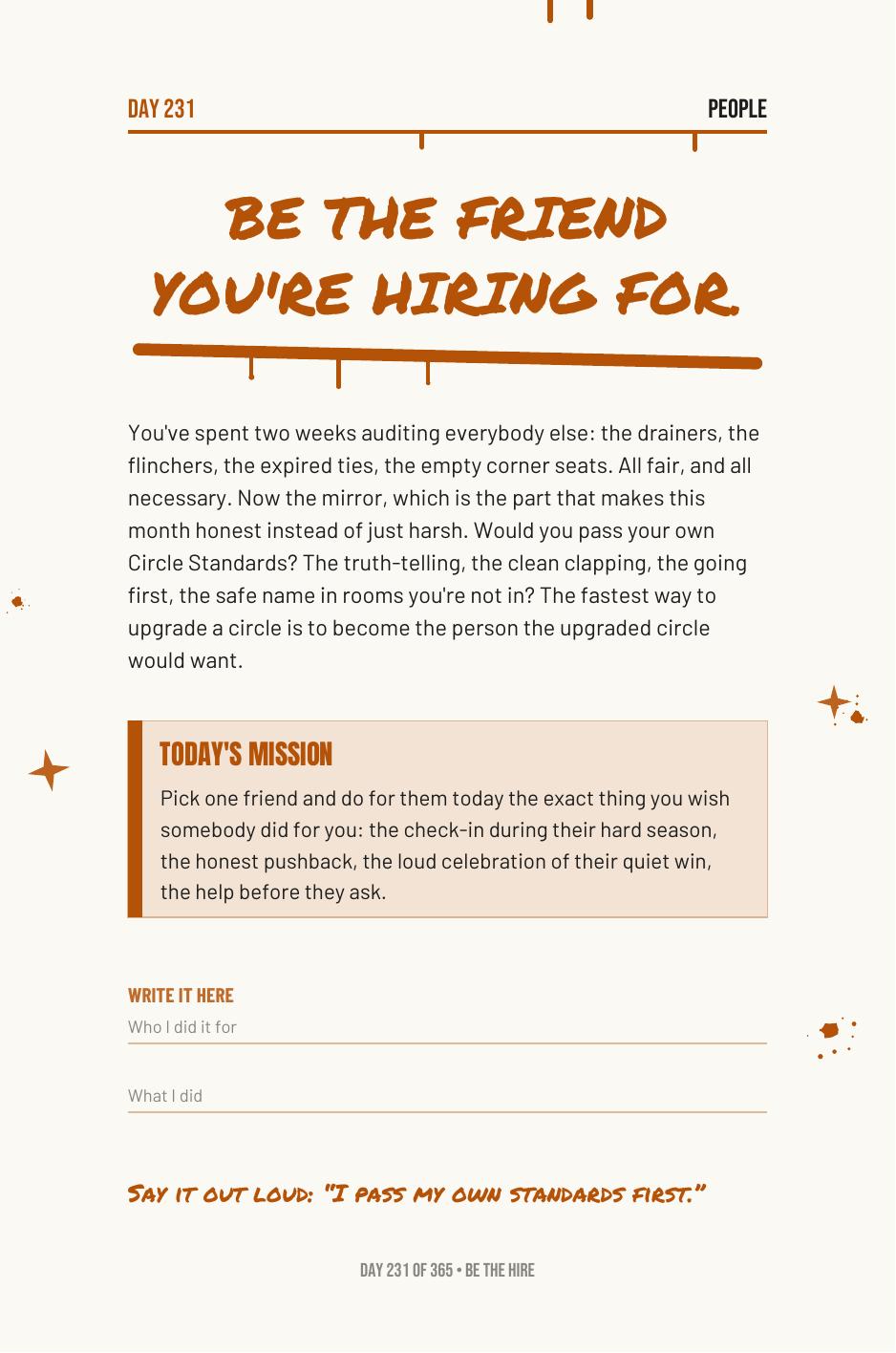
Everybody wants a good accountability partner; far fewer men are one. Day 231 of Step The F*ck Up turns the month's audit around: you have spent two weeks evaluating everybody else, the drainers, the flinchers, the empty corner seats, and now the mirror. Would you pass your own standards? The fastest way to upgrade a partnership is to become the partner the upgraded version would want. Here are the habits, and the mistakes that quietly end most partnerships.
Quick answer: A good accountability partner asks for evidence rather than stories, tells the truth kindly, celebrates wins without flinching, keeps the other man's name safe when he is not in the room, and holds his own commitments first. The most common failure is going soft: accepting the story to avoid the awkward moment.
The five habits
- Ask for the number. Not how did it go, but how many days. A partner who accepts the story is a partner in the excuse.
- Tell the truth, kindly. The Corner Oath on Day 242 puts it exactly: I tell hard truths kindly. Both halves matter.
- Clap clean. Celebrate his win without a qualifier and without turning it into your story. Day 230 says to watch who claps when you win; be the one who does.
- Keep his name safe. What is said in the check-in stays there. One leak ends the trust that makes the arrangement work.
- Go first. Report your own number before you ask for his. Standards without reciprocity are just a throne.
The mistakes that end partnerships
Going soft is the most common: one week you accept the story because the honest question felt awkward, and from then on the arrangement is a friendship with a calendar invite. Going hard is the second: turning every check-in into a lecture, which works for a month and then he stops answering. The third is becoming the coach, where one man always reports and the other always judges; it is a different arrangement and it has a shorter life. The fourth is no end date. Agree on a season, ninety days or a year, and renew it deliberately.
When he misses
He will. The rule from Day 109 applies to the partnership as much as to the habit: miss once, never twice. Your job after a miss is not to judge it; it is to make sure the next day happens. One question does it: what is today's smallest version? Then check tomorrow. The partner who handles the miss well is worth more than the one who celebrates the streak.
Where this comes from
Month eight of Step The F*ck Up, People, is effectively a month-long course in being and finding a corner. Finding a partner is the other side of this post; the accountability questions give you the check-in; auditing your circle is where the month starts.
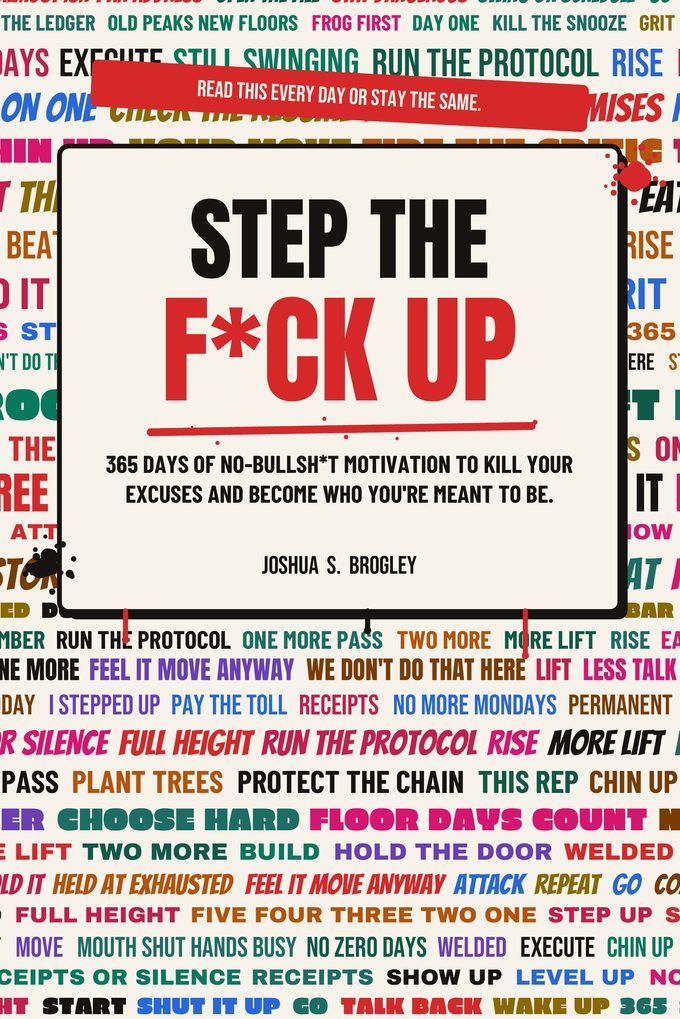
Step The F*ck Up
365 days, one page a day: excuses, fear, the voice, discipline, ownership, body, proof, people, money, resilience, standards, legacy. No theory. A mission a day.
What makes a good accountability partner?
Asking for evidence rather than stories, telling hard truths kindly, celebrating wins without qualifiers, keeping confidences, and reporting his own commitments first. The most common failure is going soft to avoid an awkward moment.
What should you do when your accountability partner misses?
Do not judge the miss; make sure the next day happens. Ask what today's smallest version is and check tomorrow. Once is weather; the job is to prevent twice.
More on Step The F*ck Up
- Why Regret Hurts More Than Failure: The Compounding Problem
- Why Sleep Comes Before Everything: Sleep Is a Performance Drug
- Why Strength Is a Life Skill, Not Vanity
- Why You Self-Sabotage Right Before It Works
- Your Eulogy Is Being Written Now, in Ordinary Hours
The method behind every book
- Which 365-Day Book Should I Start With? A One-Minute Guide
- What Is a No Zero Day? The Rule That Saves a Bad Week
- What Is a Realistic Morning Routine? Two Minutes, Not Two Hours
All articles about Step The F*ck Up → · The book page → · Group and bulk orders →
written by the author, at the kitchen table, after work.