Home / Blog / Step The F*ck Up
STEP THE F*CK UP
Do Accountability Groups Work? Iron Sharpens Iron, Brunch Does Not
Part of the series How to Start a Men's Accountability Group That Lasts Past Week Three
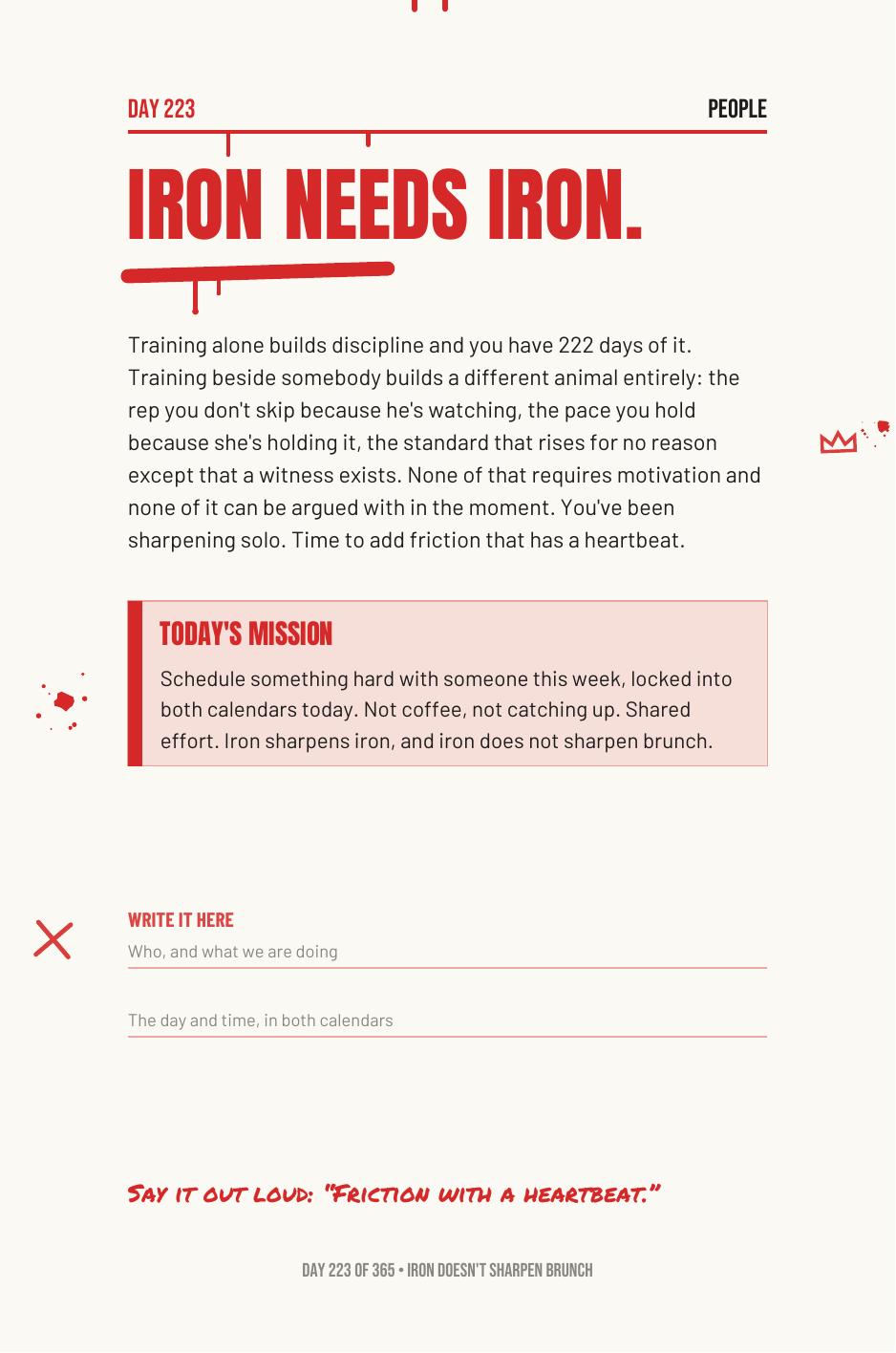
Training alone builds discipline. Training beside somebody builds a different animal: the rep you do not skip because he is watching, the pace you hold because he is holding it, the standard that rises for no reason except that a witness exists. That is Day 223 of Step The F*ck Up, and it is the honest answer to whether accountability groups work. They work when they add friction that has a heartbeat. They fail when they become a pleasant hour of talking about the week.
Quick answer: Yes, when the group checks evidence: what each man said he would do, and whether he did it. Groups that run on conversation fade by week three. Groups that run on a shared, checkable commitment, the same daily practice or the same weekly target, outlast nearly any solo effort, because a witness changes behavior in a way motivation never does.
Why a witness works
Because it removes the private negotiation. Alone, the decision to skip happens in your head, where the weakest version of you always wins because it is the only one at the table. In a group, the decision has an audience next Tuesday, and the audience does not need to say anything; its existence is the whole mechanism. None of it requires motivation and none of it can be argued with in the moment. The book's line for it is short: iron sharpens iron, and iron does not sharpen brunch.
Why most groups fail anyway
Three reasons, nearly always. Nothing concrete to be accountable to, so the check-in becomes a conversation. No fixed slot, so the group gets rescheduled into extinction. And no reciprocity: one man becomes the coach and the others become clients, which is a different arrangement with a shorter shelf life. A group that fixes all three, a shared daily practice, a fixed weekly time, and everyone answering the same questions, is the version that is still meeting a year later.
The ingredient the good ones share
Shared effort. Not shared opinions about effort; shared effort, at the same time, on the same thing. The training group that runs together at six. The men's group reading the same page every morning and reporting the day number on Sunday. Day 223's mission is the clearest version: schedule something hard with someone this week, locked into both calendars, not coffee, not catching up. A group that does hard things together becomes a group that holds each other to them.
Start one
How to start a men's accountability group is the setup; the thirty questions are the check-in; the group guide gives a year of meetings a shared spine. For the solo version, finding a partner is the place to begin.
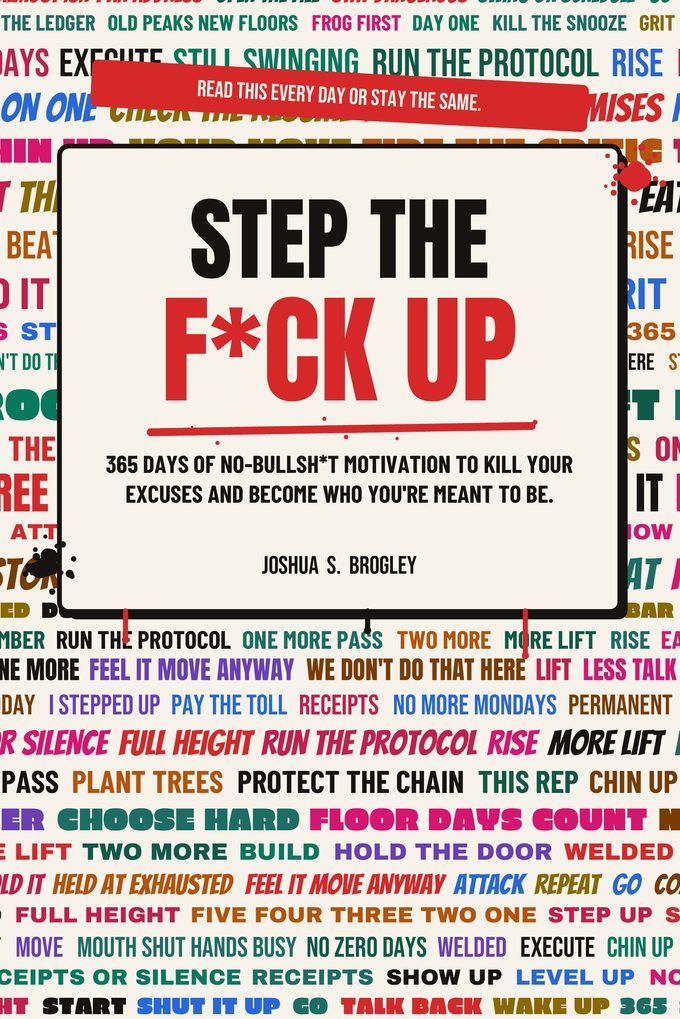
Step The F*ck Up
365 days, one page a day: excuses, fear, the voice, discipline, ownership, body, proof, people, money, resilience, standards, legacy. No theory. A mission a day.
Do accountability groups actually work?
Yes, when they check evidence against a shared, concrete commitment and meet at a fixed time. Groups that become weekly conversations fade by week three. A witness changes behavior because it removes the private negotiation.
What is the point of an accountability group?
To add a witness to the decisions you would otherwise make alone, in your head, where the weakest version of you always wins. The group's existence next week is the mechanism.
More on Step The F*ck Up
- Why Regret Hurts More Than Failure: The Compounding Problem
- Why Sleep Comes Before Everything: Sleep Is a Performance Drug
- Why Strength Is a Life Skill, Not Vanity
- Why You Self-Sabotage Right Before It Works
- Your Eulogy Is Being Written Now, in Ordinary Hours
The method behind every book
- Which 365-Day Book Should I Start With? A One-Minute Guide
- What Is a No Zero Day? The Rule That Saves a Bad Week
- What Is a Realistic Morning Routine? Two Minutes, Not Two Hours
All articles about Step The F*ck Up → · The book page → · Group and bulk orders →
written by the author, at the kitchen table, after work.