Home / Blog / Step The F*ck Up
STEP THE F*CK UP
Last Year's Best Is This Year's Warm-Up: Museums Are Where Standards Go to Die
Part of the series Month Eleven: 30 Days of Raising the Bar and Welding It in Place
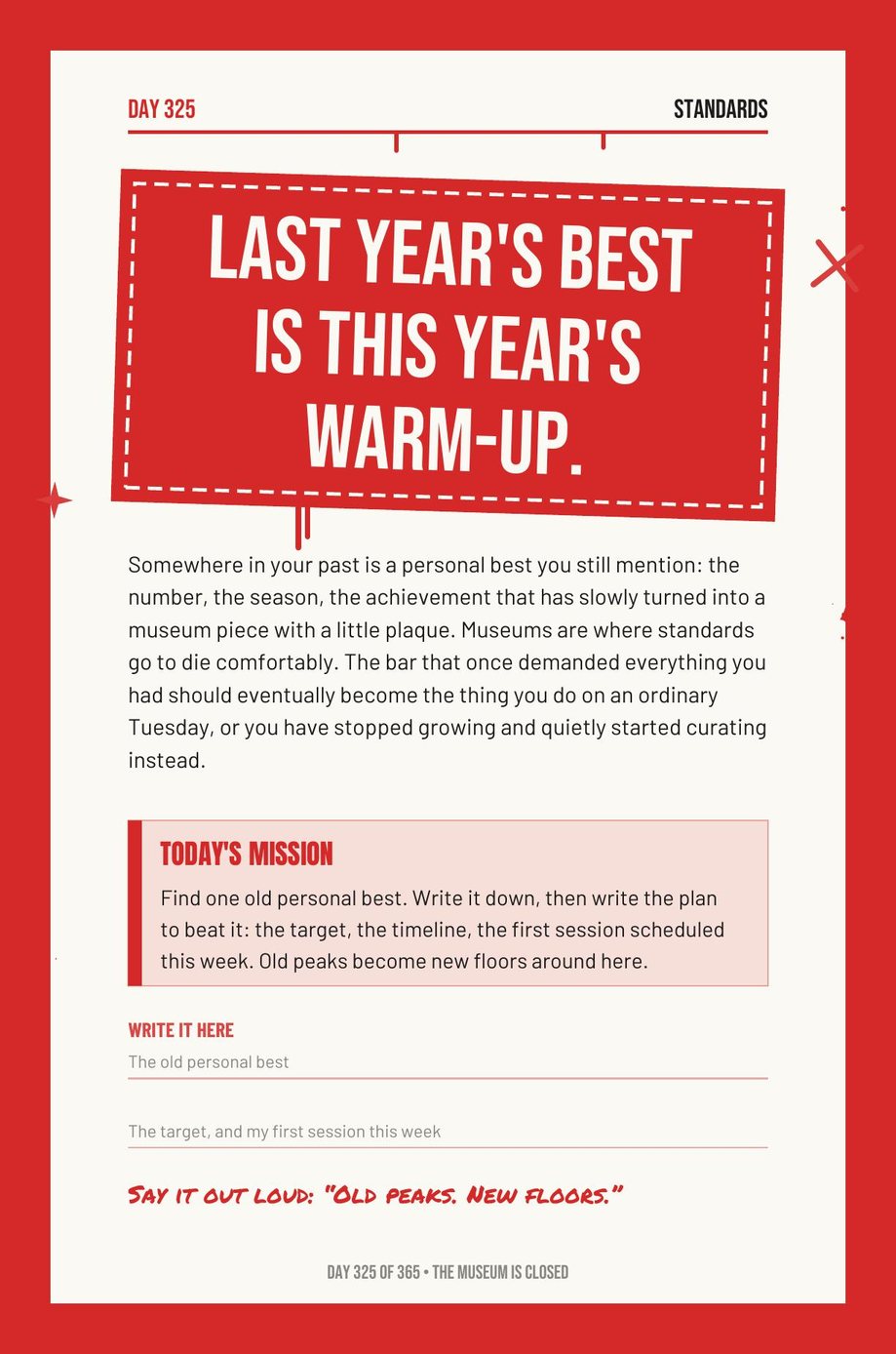
Somewhere in your past is a personal best you still mention: the number, the season, the achievement that has slowly turned into a museum piece with a little plaque. The book's Day 325 page says museums are where standards go to die comfortably. The bar that once demanded everything you had should eventually become the thing you do on an ordinary Tuesday, or you have stopped growing and quietly started curating instead.
How a best becomes a plaque
It happens through pride, which is the respectable version of the problem. The achievement was real and hard, so it gets told, and each telling fixes it a little more firmly in the past tense, until the person is defined by a thing they did rather than a thing they do. The tell is the verb. I ran a marathon. I used to be able to. I once built. Curating feels like self-respect and functions as retirement, and the book's standards month exists to notice the difference before the plaque gets bolted on.
The mission: write the best, then write the new floor
Find one old personal best. Write it down, then write it again as this year's minimum: the number that was a peak is now the floor, the thing you do without ceremony. The point is not to beat it today; it is to reclassify it, from museum piece to warm-up, and let the reclassification pull the training. Most people find the old peak is closer than the plaque suggested, because the machine from Month Four and the body from Month Six have been compounding underneath the story, and the story had not been updated.
Why this is a standard and not a goal
A goal is a peak you aim at; a standard is a floor you refuse to go under. The month is about floors, because peaks are visited and floors are lived on. Raising the floor to last year's peak changes the ordinary day, which is where a life actually happens, and it does so permanently, because a floor is welded and a peak is not. Day 315 says it directly: raise the floor, not just the ceiling. The plaque comes down and the number goes on the schedule.
Where this sits
Day 325 of Month Eleven, Standards, late in the month, aimed at the standards that hide inside pride. Good enough is a ceiling is the same move at the bottom of the range; stopping the negotiation is how the new floor holds; raising your standards is the anchor; the Growth rubric in the slow book asks whether you are more capable than last year, which a plaque answers no. One old best, rewritten as a floor, in a certain book that closes museums.
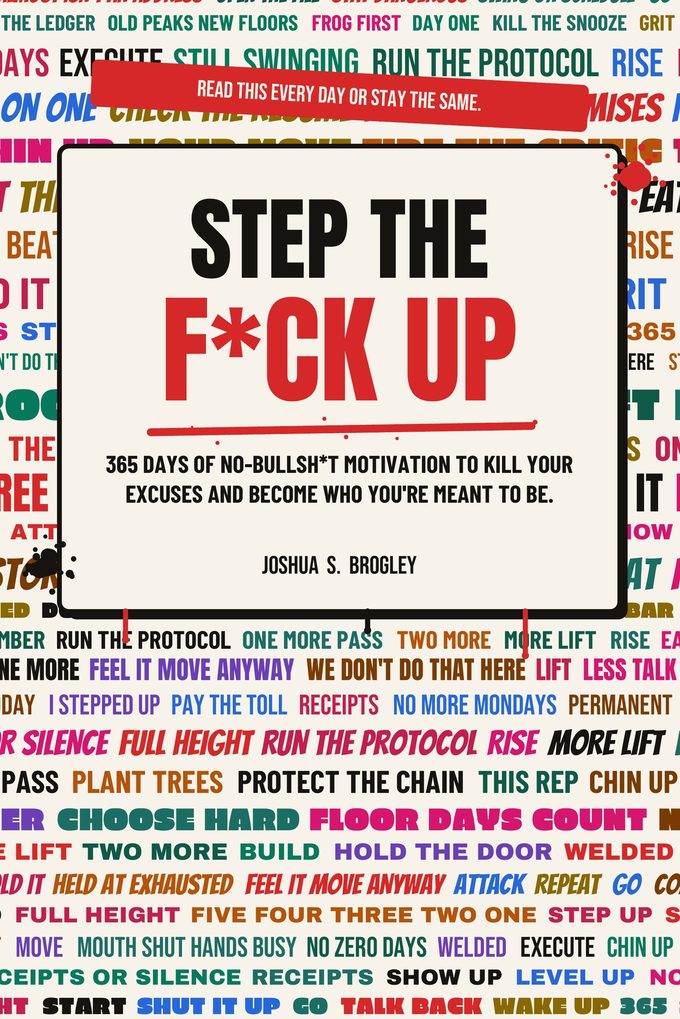
Step The F*ck Up
365 days of no-bullsh*t motivation. One page, one mission, two minutes. Miss never twice.
How do you keep improving after a big achievement?
Reclassify the achievement from peak to floor: write the old personal best, then write it again as this year's minimum, the thing done without ceremony. The plaque comes down and the number goes on the schedule.
Why do people plateau after early success?
Because pride fixes the achievement in the past tense, each telling a little more firmly, until the person is defined by what they did rather than what they do. Curating feels like self-respect and functions as retirement.
More on Step The F*ck Up
- Your Eulogy Is Being Written Now, in Ordinary Hours
- Why You Self-Sabotage Right Before It Works
- Why Strength Is a Life Skill, Not Vanity
- Why Sleep Comes Before Everything: Sleep Is a Performance Drug
- Why Regret Hurts More Than Failure: The Compounding Problem
The method behind every book
- Which 365-Day Book Should I Start With? A One-Minute Guide
- What Is a No Zero Day? The Rule That Saves a Bad Week
- What Is a Realistic Morning Routine? Two Minutes, Not Two Hours
All articles about Step The F*ck Up → · The book page → · All the books →
written by the author, at the kitchen table, after work.