Home / Blog / Step The F*ck Up
STEP THE F*CK UP
We Don't Do That Here: The Most Powerful Standard Sentence Has Five Words
Part of the series Month Eleven: 30 Days of Raising the Bar and Welding It in Place
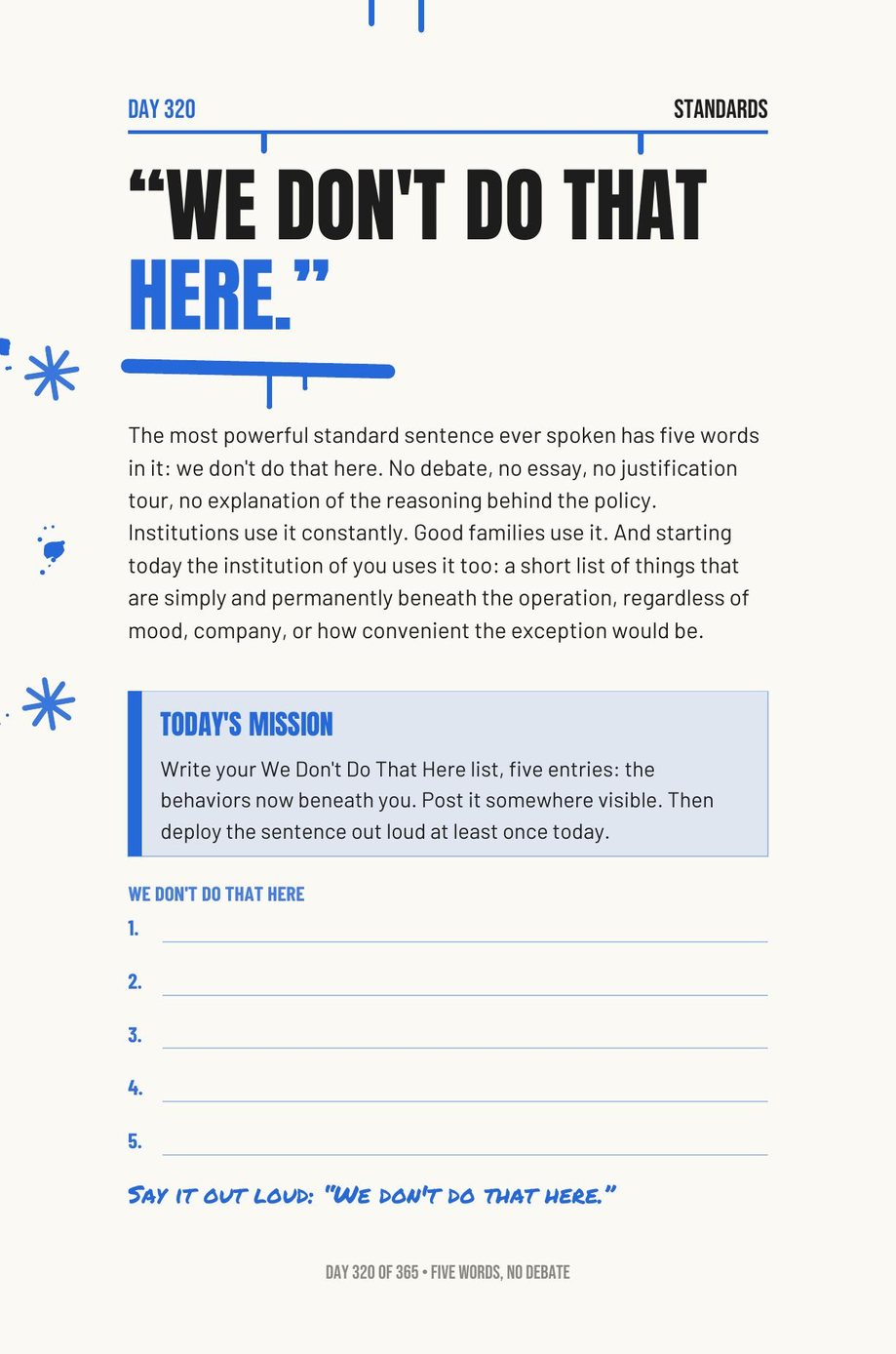
The most powerful standard sentence ever spoken has five words in it, according to the book's Day 320 page: we don't do that here. No debate, no essay, no justification tour, no explanation of the reasoning behind the policy. Institutions use it constantly. Good families use it. And starting today the institution of you uses it too: a short list of things that are simply and permanently beneath the operation, regardless of mood, company, or how convenient the exception would be.
Why the sentence works
Because it refuses the frame in which the behavior was a question. Every other way of declining something invites a negotiation: I'd rather not, I'm trying to cut back, not tonight. Each is an opening bid and everyone in the room knows it. We don't do that here is not a bid. It is a description of the institution, delivered in the same tone a good restaurant uses about substitutions, and it ends the conversation because there is nothing in it to argue with. It is also the sentence you say to yourself, which is where it does most of its work.
The list: short, and permanent
The mission is to write your We Don't Do That Here list, and the book's guidance is to keep it short, because a long list is a wish list and a short one is a constitution. Five items, maybe seven. Things that are beneath the operation regardless of circumstances: we don't lie to make a moment easier, we don't speak about people who are not in the room, we don't skip the workout for a mood, we don't take the phone to bed, we don't break a promise to a kid for a meeting. Each one already exists as a standard in the pages behind you; this is the day it gets the sentence.
What it does to the exceptions
Every standard fails at the exception, the special night, the good reason, the just this once, and the exception is always reasonable, which is why standards fail. The five words remove the exception's standing. The question is not whether tonight is special; tonight is always special. The question is whether we do that here, and the list says no, and the list was written by the version of you qualified to write it, on a day nothing was at stake. That is what the month means by welding: the bar cannot be lowered by the person standing under it at the moment they most want to.
Where this sits
Day 320 of Month Eleven, Standards, right after the bar check, the sentence that makes the month portable. Stopping the negotiation is the internal version; boundaries as instructions from Month Eight is the same sentence pointed outward; raising your standards is the anchor. Five to seven lines, beneath the operation, in a certain book that treats you as an institution.
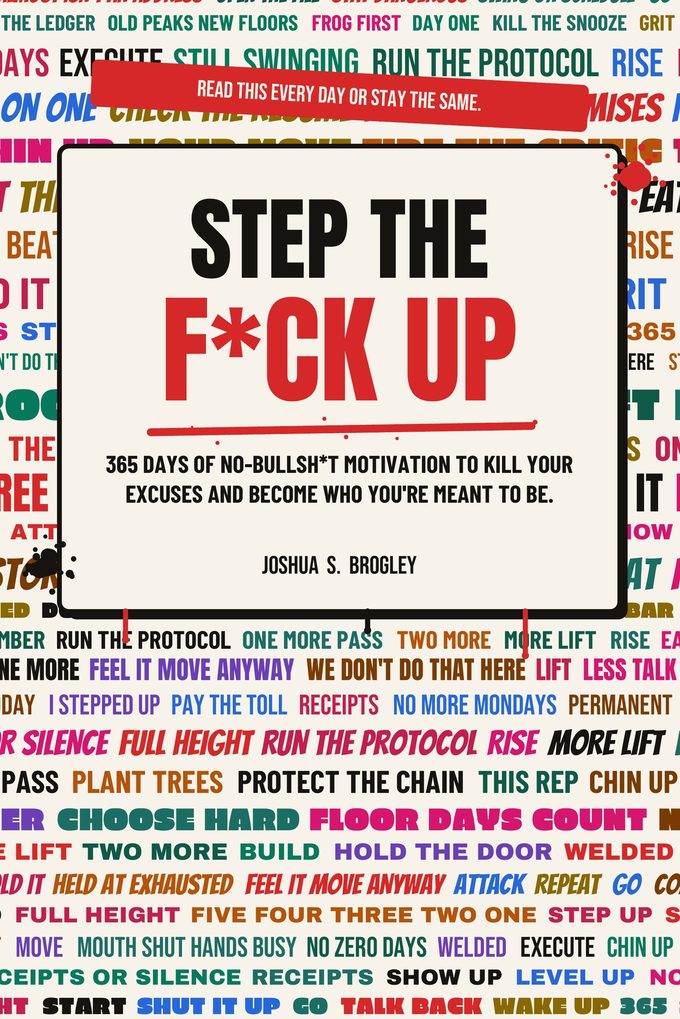
Step The F*ck Up
365 days of no-bullsh*t motivation. One page, one mission, two minutes. Miss never twice.
What does we don't do that here mean?
A standard stated as a description of who you are rather than a preference up for debate. It refuses the frame in which the behavior was a question, the way a good institution declines a substitution, and it works on yourself as much as on others.
How do you hold standards when everyone around you does not?
With a short written list of things beneath the operation regardless of mood or company, and the five-word sentence when an exception is offered. Tonight is always special; the question is whether we do that here.
More on Step The F*ck Up
- Your Eulogy Is Being Written Now, in Ordinary Hours
- Why You Self-Sabotage Right Before It Works
- Why Strength Is a Life Skill, Not Vanity
- Why Sleep Comes Before Everything: Sleep Is a Performance Drug
- Why Regret Hurts More Than Failure: The Compounding Problem
The method behind every book
- Which 365-Day Book Should I Start With? A One-Minute Guide
- What Is a No Zero Day? The Rule That Saves a Bad Week
- What Is a Realistic Morning Routine? Two Minutes, Not Two Hours
All articles about Step The F*ck Up → · The book page → · All the books →
written by the author, at the kitchen table, after work.