Home / Blog / Step The F*ck Up
STEP THE F*CK UP
Daily Habits That Actually Change Your Life (Anchored, Not Remembered)
Part of the series How Do I Change My Life Without Blowing It Up First?
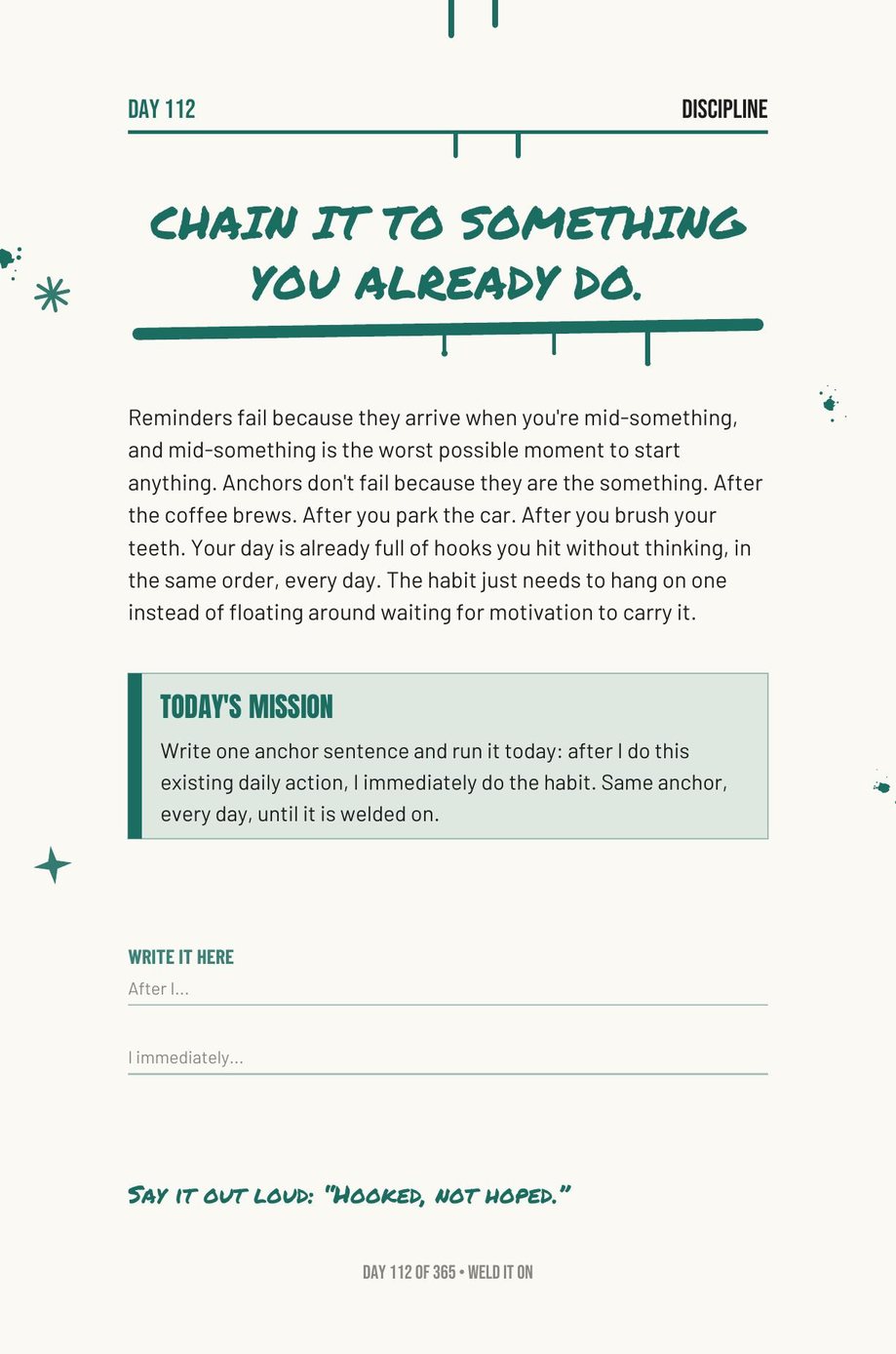
The daily habits that change a life are fewer than the lists suggest and installed differently than the lists assume. Reminders fail, the book's Day 112 page says, because they arrive when you are mid-something, and mid-something is the worst moment to start anything. Anchors do not fail because they are the something: after the coffee brews, after you park, after you brush your teeth. Your day is already full of hooks you hit without thinking. The habits below are the ones the book installs across a year, and each is chained to a hook rather than a reminder.
The five that carry the rest
One non-negotiable, ten minutes, chosen once: the thing that happens every day regardless of feeling. The first hour: no phone for thirty minutes, water before coffee, two minutes of movement, five written commands read aloud. The night-before plan: tomorrow's three tasks with times, supplies laid out for future you. Thirty minutes of deliberate movement, chained to a fixed point in the day. A hard bedtime that buys seven-plus hours, because every other habit runs on it. Five, not twenty, because five held for a year is a different person and twenty held for three weeks is a story.
Why anchoring is the whole trick
A habit that depends on remembering depends on the tired lawyer's cooperation, and he never cooperates. A habit chained to an existing hook borrows the hook's reliability: you will brush your teeth tonight, so the two minutes after that is the most reliable slot in your day, and a habit placed there inherits it. The book's method is to pick the hook first and the habit second, because the hook is what makes it daily and the habit is just what fills the slot.
The two rules that keep them alive
Never twice: you will miss, the machine does not die when you miss, it dies when you miss twice, so the day after a miss is the only day that matters. And track one number: pretty well and pretty often are bedtime stories, and a number tracked daily, same time, same place, no judging for two weeks, is the only way to know whether the habit exists or is a feeling about a habit. Comfort creep, the slow softening without a decision, is caught by that number and by nothing else.
Where these come from
Months Four and Six of the book, where the machine is built and the vessel is kept. Daily discipline is the load-out; the realistic morning routine is the first hour in detail; a habit for a year is the long run; what to do every day is the practice list. One page, one mission, chained to your morning, in a certain book that is itself a daily habit.
Step The F*ck Up
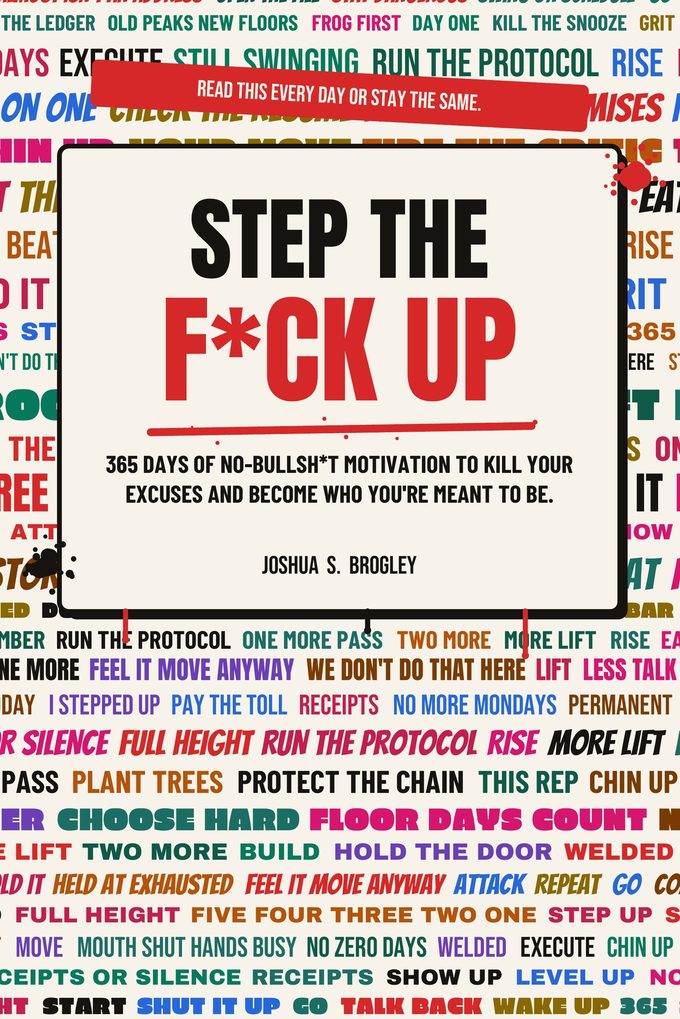
365 days of no-bullsh*t motivation. One page, one mission, two minutes. Miss never twice.
What daily habits actually change your life?
Five, anchored to existing hooks: one ten-minute non-negotiable, a phone-free first hour with water and movement, tomorrow planned tonight, thirty minutes of deliberate movement, and a hard bedtime. Five held for a year beats twenty held for three weeks.
How do you make a daily habit stick?
Chain it to something you already do rather than to a reminder, never miss twice, and track one number daily so you know whether the habit exists or is a feeling about it.
More on Step The F*ck Up
- Your Eulogy Is Being Written Now, in Ordinary Hours
- Why You Self-Sabotage Right Before It Works
- Why Strength Is a Life Skill, Not Vanity
- Why Sleep Comes Before Everything: Sleep Is a Performance Drug
- Why Regret Hurts More Than Failure: The Compounding Problem
The method behind every book
- Which 365-Day Book Should I Start With? A One-Minute Guide
- What Is a No Zero Day? The Rule That Saves a Bad Week
- What Is a Realistic Morning Routine? Two Minutes, Not Two Hours
All articles about Step The F*ck Up → · The book page → · All the books →
written by the author, at the kitchen table, after work.