Home / Blog / Step The F*ck Up
STEP THE F*CK UP
How to Change Your Life Faster: The Honest Answer Is to Start Condition-Free
Part of the series How Do I Change My Life Without Blowing It Up First?
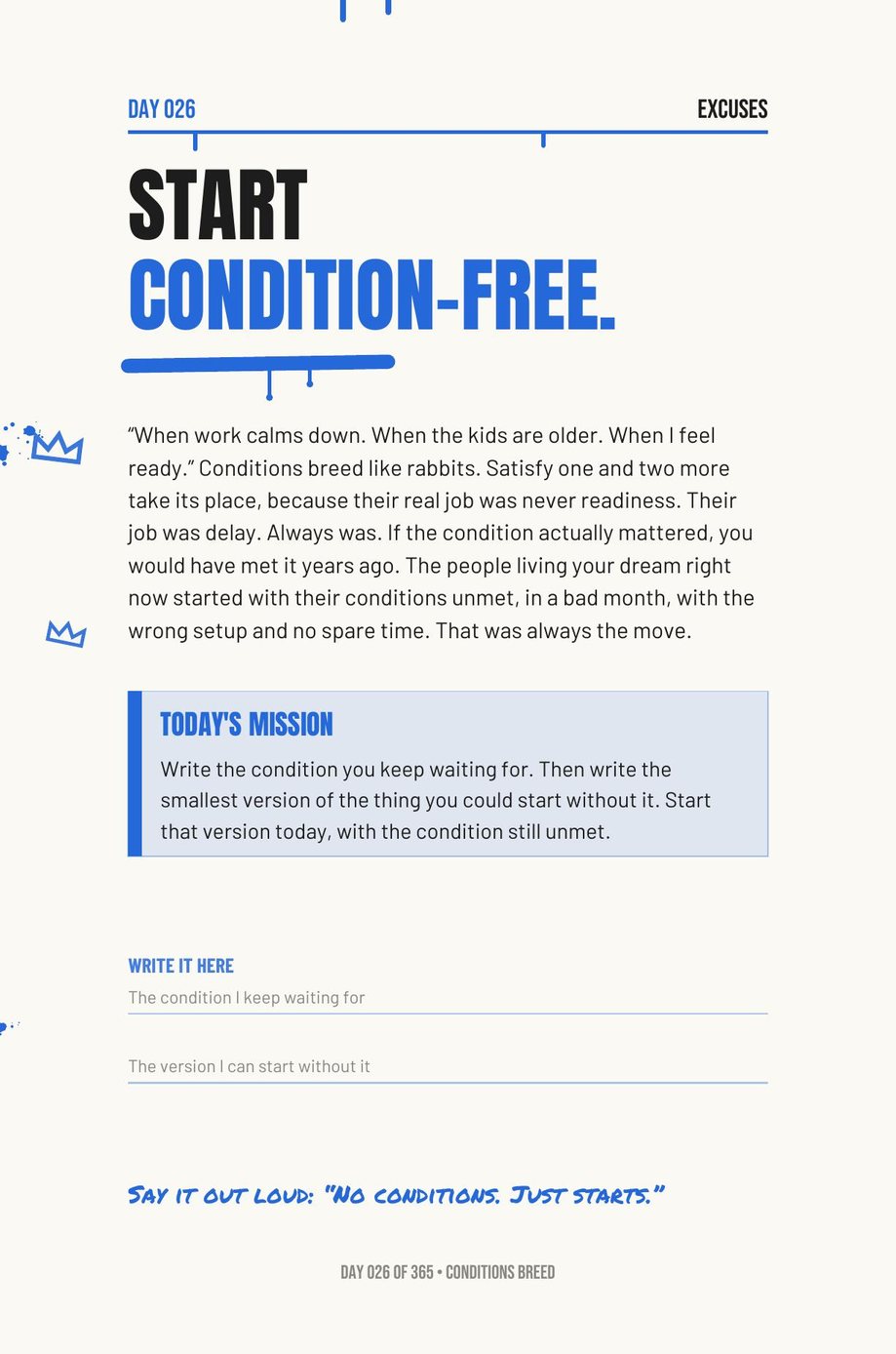
The honest answer to how to change your life faster is that speed is not intensity. Intensity is the January gym, the seven-habit overhaul, the program that dies by Day 9, and it is slower than a walk because it stops. Speed is the absence of delay, and the book's Day 26 page names where the delay lives: when work calms down, when the kids are older, when I feel ready. Conditions breed like rabbits. Satisfy one and two more take its place, because their real job was never readiness. Their job was delay. The people living your dream started with their conditions unmet.
Faster means today, not harder
The single largest source of slowness is the gap between deciding and starting, which for most people is measured in years and filled with conditions. Removing the gap is the fastest change available to anyone: the thing postponed until things settle down, started within the next sixty minutes, exactly as unprepared as you are. Nothing in the rest of the year moves faster than that one move, because everything after it compounds and nothing before it does.
Faster means smaller
The second source of slowness is scale. A goal at the size of a life produces dread and dread produces the scroll, so the fast version cuts it: three pieces, the first piece into three, the smallest done now. Ten minutes, daily, compounds; sixty minutes, weekly, does not, because the sixty-minute version gets renegotiated by the tired lawyer and the ten-minute one is beneath his notice. The book's whole design is this insight applied to a year: one page, two minutes, three hundred sixty-five times, which is faster than any program because it is the only one that gets finished.
Faster means never missing twice
The third source of slowness is the restart. A missed day followed by a quit costs not one day but the weeks of momentum and the months of starting over, and most people have restarted the same change a dozen times, each restart slower than a single continued week would have been. Never twice removes the restart from the system. Twenty missed days in a year with no quits is a habit that ran three hundred forty-five times; that is the fast version, and it looks, from the outside, like patience.
The rate limit, stated honestly
There is a floor on how fast a person changes, and it is the number of days, because change is made of days and days cannot be compressed. What can be compressed is the delay before the days start and the restarts between them, and that is where almost all the available speed is. How long change really takes gives the phases; shrinking the goal and never miss twice are the two speed tools; procrastination is the delay named. Start condition-free, today, in a certain book that thinks the fastest year is the one that gets finished.
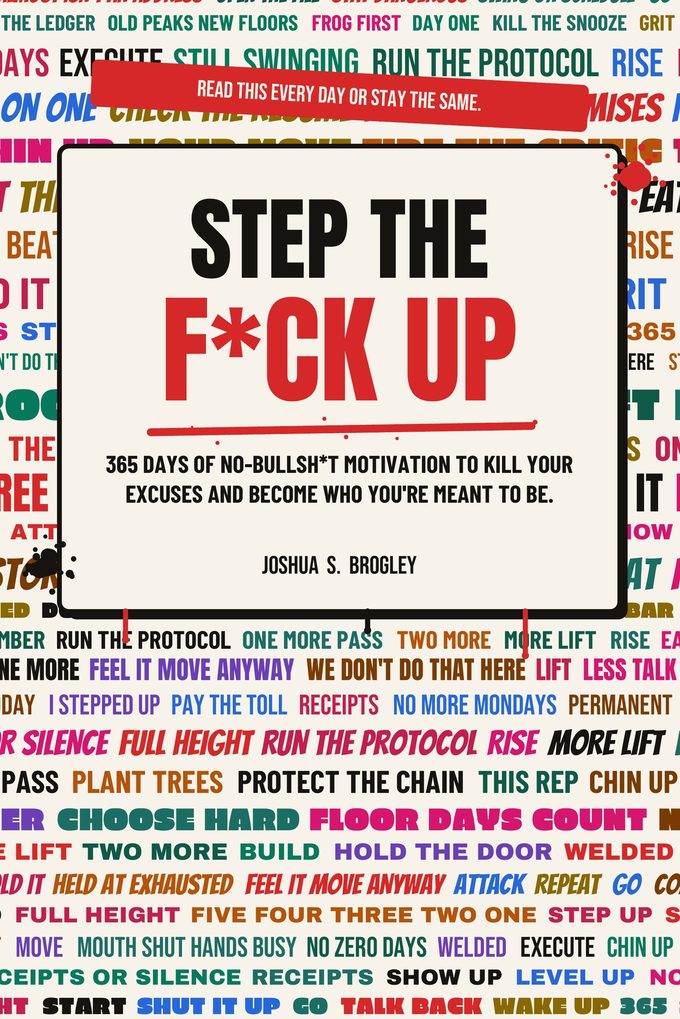
Step The F*ck Up
365 days of no-bullsh*t motivation. One page, one mission, two minutes. Miss never twice.
What is the fastest way to change your life?
Remove the delay: start the postponed thing within sixty minutes with your conditions unmet, cut the first move down to ten minutes, and never miss twice. Intensity is slower than that because it stops.
Why does trying harder not work faster?
Because the sixty-minute version gets renegotiated every tired morning and the program dies by Day 9. A ten-minute version done daily for a year compounds; it is the only one that gets finished, which makes it the fast one.
More on Step The F*ck Up
- Your Eulogy Is Being Written Now, in Ordinary Hours
- Why You Self-Sabotage Right Before It Works
- Why Strength Is a Life Skill, Not Vanity
- Why Sleep Comes Before Everything: Sleep Is a Performance Drug
- Why Regret Hurts More Than Failure: The Compounding Problem
The method behind every book
- Which 365-Day Book Should I Start With? A One-Minute Guide
- What Is a No Zero Day? The Rule That Saves a Bad Week
- What Is a Realistic Morning Routine? Two Minutes, Not Two Hours
All articles about Step The F*ck Up → · The book page → · All the books →
written by the author, at the kitchen table, after work.