Home / Blog / Lifetime Blueprint
LIFETIME BLUEPRINT
How Do I Do a Year in Review That Is Actually Useful?
Most year-in-review exercises produce a list of things that happened, which is pleasant and tells you nothing. A useful review scores the same set of life areas every single year, against the same scale, so that the numbers can be compared. One year of scores is a snapshot. Five years of scores is a direction, and direction is the only thing worth acting on.
Events are not the review
Listing the highlights is memory work, not assessment. The question a review should answer is not what happened but where you are relative to last year and to where you intended to be. That requires the same categories and the same scale each time, which is why ad hoc reviews never accumulate into anything.
Score the same areas every year
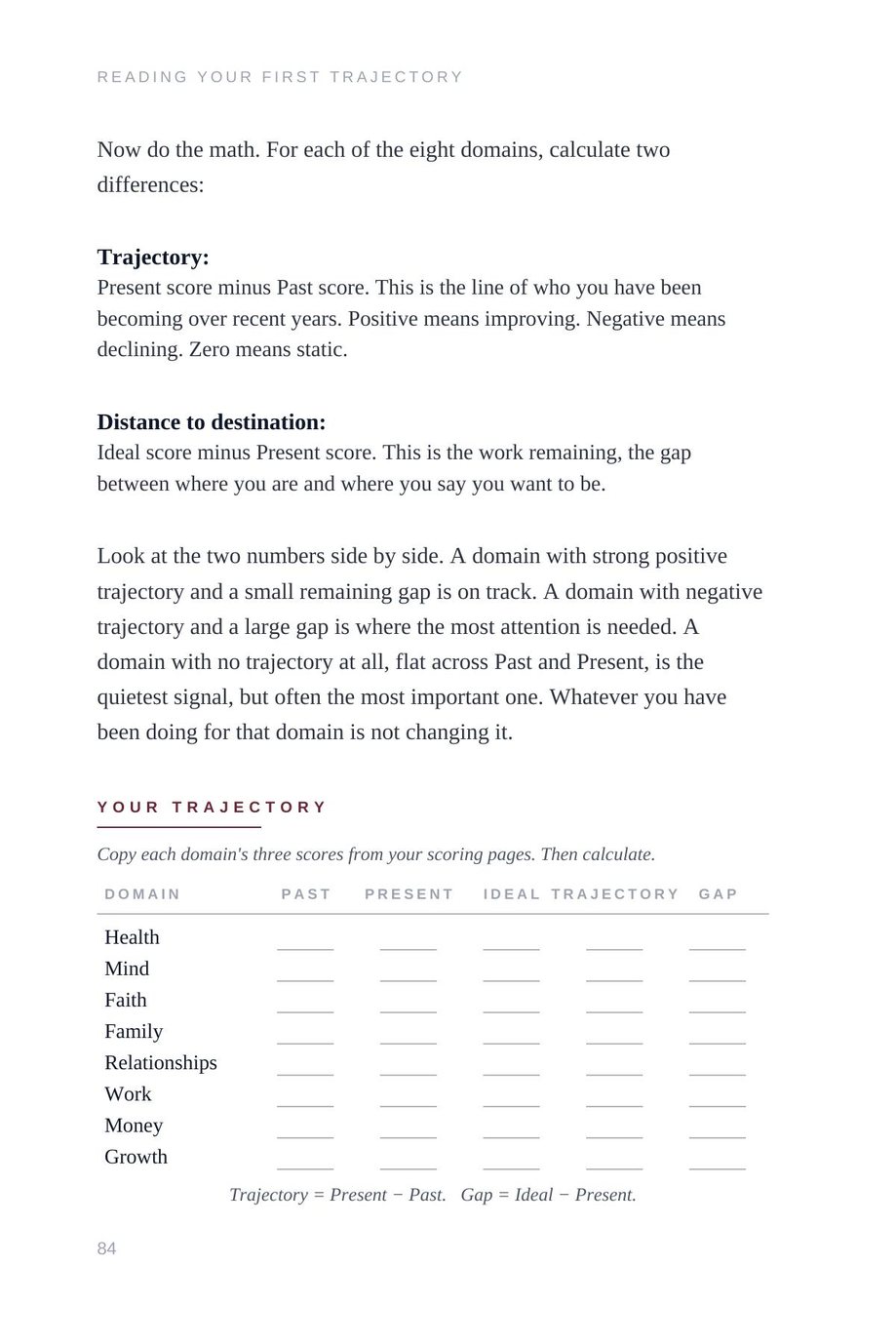
Eight is a workable split: health, mind, faith, family, relationships, work, money and growth. Rate each honestly. The value is not in this year's number, it is in the comparison, and the comparison only exists if you resisted the urge to redesign your categories.
Score three points in time, not one
The exercise that makes the first review useful even with no history: rate each area as it was a few years ago, as it is today, and as you actually want it. Past to present shows the trajectory you are already on. Present to ideal shows the gap. Together they usually reveal that the area you complain about most is not the one that has actually declined. Related: the eight-domain life audit.
Write the sentence you will need next year
Numbers age badly without context. One or two lines per area explaining why the score is what it is turns a spreadsheet into something your future self can read. This is also what makes measuring growth across years rather than weeks possible, and it takes about twenty minutes.
Lifetime Blueprint
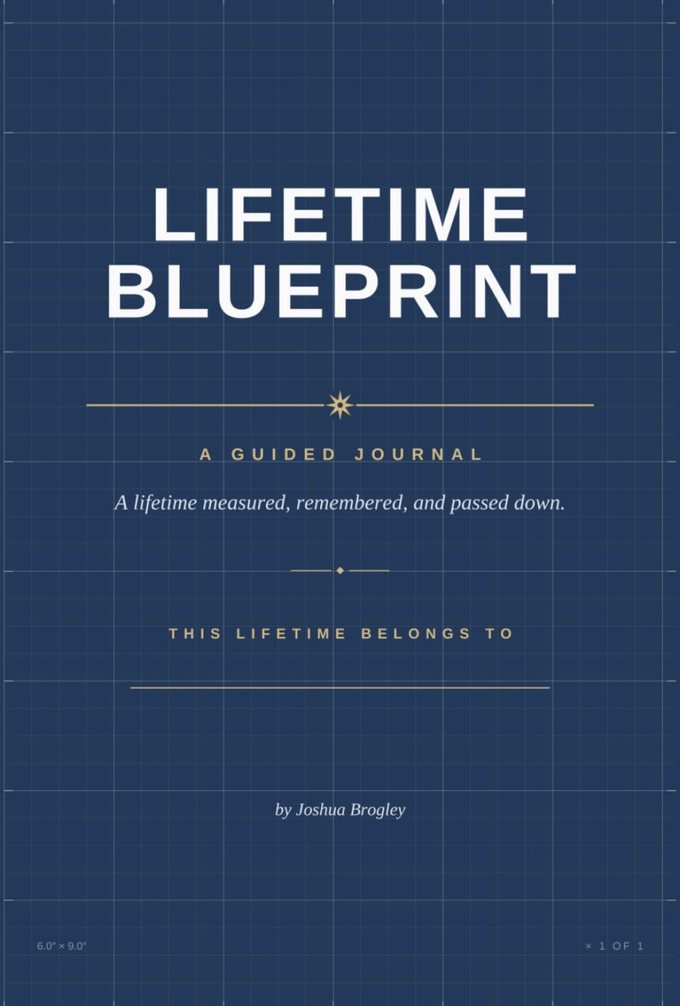
A hardcover life-design system: eight domains scored across the decades, reflections on every era, and letters to the people who come after.
What should I include in a year in review?
A score for each of the same life areas you used last year, a short explanation of each score, and a comparison against previous years. Events belong in the explanation, not as the review itself.
When is the best time to do a yearly review?
Whenever you will actually repeat it. Consistency of timing matters more than the date, since the entire value comes from comparing like with like across years.
More on Lifetime Blueprint
- Your Twenties: The Decade of Compounding Choices
- Your Thirties: The Building Decade, When Time Starts to Feel Finite
- Your Forties Are a Recalibration, Not a Crisis
- Your Fifties: The Distillation Decade, Subtraction Over Addition
- Why Most People Will Never Write Their Life Down
The method behind every book
- Which 365-Day Book Should I Start With? A One-Minute Guide
- What Is a No Zero Day? The Rule That Saves a Bad Week
- What Is a Realistic Morning Routine? Two Minutes, Not Two Hours
All articles about Lifetime Blueprint → · The book page → · All the books →
written by the author, at the kitchen table, after work.