Home / Blog / Lifetime Blueprint
LIFETIME BLUEPRINT
Your Fifties: The Distillation Decade, Subtraction Over Addition
Part of the series How to Reflect on Your Life by Decade: The Complete Method
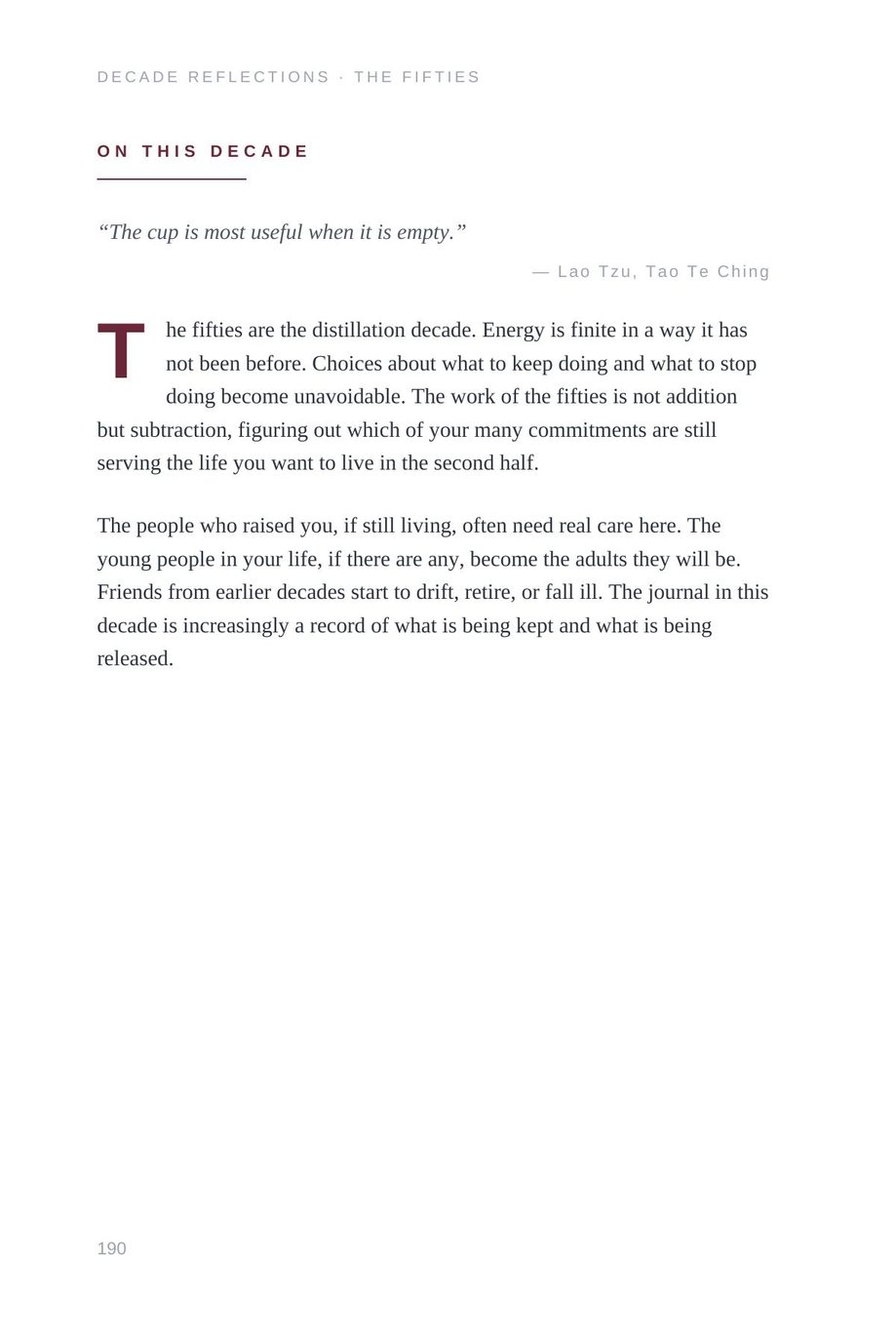
The fifties are the distillation decade. Energy is finite in a way it has not been before, and choices about what to keep doing and what to stop doing become unavoidable. The work of the decade is not addition but subtraction: figuring out which of many commitments are still serving the life you want to live in the second half. The people who raised you, if living, often need real care here. The young people in your life become the adults they will be. Friends from earlier decades drift, retire or fall ill. The record in this decade becomes, increasingly, an account of what is being kept and what is being released.
What to focus on
Distillation: fewer commitments, deeper. Caregiving for elders where it applies, and the practical and emotional work that entails, which the book names plainly because it is rarely named at all. Becoming a mentor to people two and three decades younger, which is the decade's most generative use of accumulated competence. And beginning to articulate, in writing, what you want passed on after you, because the fifties are early enough to shape the answer and late enough to mean it.
The obstacles
The instinct to keep doing things out of inertia or duty when the season for them has passed; inertia is the fifties' most expensive habit because energy no longer covers it. The grief of losing peers, friends and family, which begins in earnest for many in this decade and compounds from here. Bodies that no longer absorb the same demands without consequence. And unfinished conversations with people who may not have many years left to receive them, which the chapter treats as an obstacle because avoiding them is a decision with a deadline.
What is coming, and the four tips
Some people who have been in your life since childhood may not be there in the next decade. The young people in your life will need you in less obvious ways. The work that defined your forties may begin to feel like the wrong work for the next twenty years. And the health choices of this decade often determine the shape of the sixties and seventies. The tips: say what you need to say to the people in your life, because the window does not stay open indefinitely; build at least one practice that costs nothing and depends on no one, walking, prayer, breath, gardening, music; stay in regular contact with people younger than you, since their world becomes yours faster than the reverse; and forgive what can be forgiven, and carry less.
Scoring a subtraction decade
A decade of release scores strangely if you expect growth everywhere: Work may fall by design while Faith, Family and Growth rise, and the During-and-At-the-End pair catches exactly that reshaping. The fifties are also where the People Who Matter inventory turns urgent, the remaining-visits arithmetic done for parents in their eighties and friends in their sixties, and where the letters forward stop being rehearsal. The math belongs in this decade; saying the speech while they are alive is the practice; the sixties and after are what this decade prepares; the full method holds the chapter.
Lifetime Blueprint
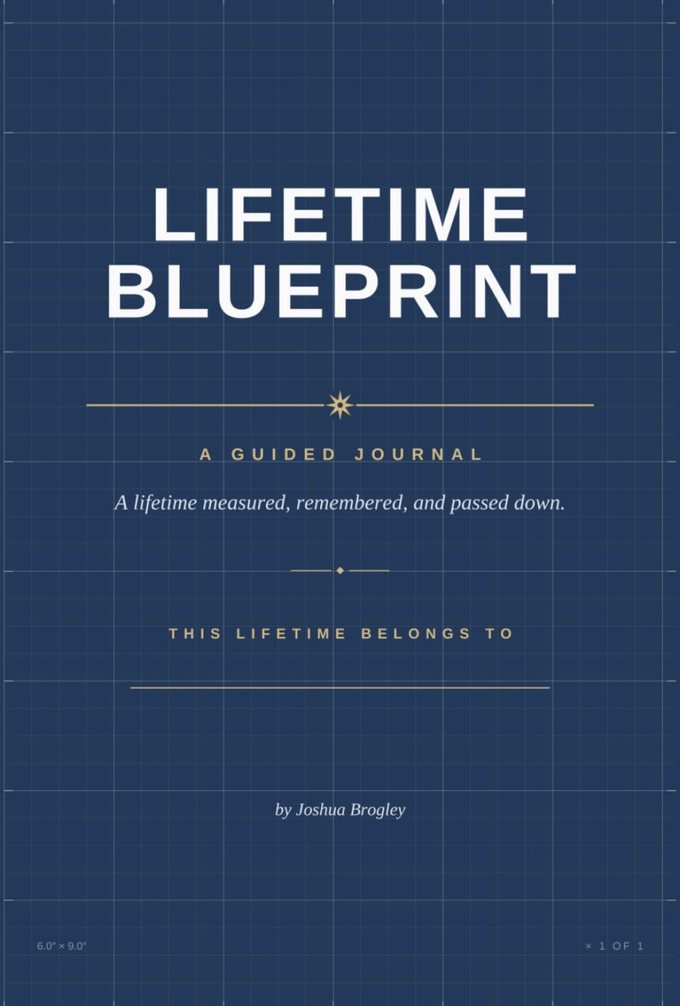
The hardcover built to be inherited: eight life domains scored across decades, thirty life-event templates, and letters written forward, ending in a Final Letter.
What should you focus on in your fifties?
Subtraction: fewer commitments, deeper. Caregiving where it applies, mentoring people decades younger, articulating in writing what you want passed on, and saying what needs saying to people whose window is closing.
Why do the fifties feel like a turning point?
Because energy becomes finite in a new way and inertia stops being affordable; commitments must be kept or released deliberately. Health choices made now largely determine the shape of the sixties and seventies.
More on Lifetime Blueprint
- Your Twenties: The Decade of Compounding Choices
- Your Thirties: The Building Decade, When Time Starts to Feel Finite
- Your Forties Are a Recalibration, Not a Crisis
- Why Most People Will Never Write Their Life Down
- Who the Lifetime Blueprint Is For: Five Readers, Five Reasons
The method behind every book
- Which 365-Day Book Should I Start With? A One-Minute Guide
- What Is a No Zero Day? The Rule That Saves a Bad Week
- What Is a Realistic Morning Routine? Two Minutes, Not Two Hours
All articles about Lifetime Blueprint → · The book page → · All the books →
written by the author, at the kitchen table, after work.