Home / Blog / Lifetime Blueprint
LIFETIME BLUEPRINT
How to Reflect on a Decade You Already Lived
Part of the series How to Reflect on Your Life by Decade: The Complete Method
Reflecting on a decade you already lived, your twenties from your thirties, your thirties at forty, is a genuine skill with a real methodology, and almost everyone attempts it with a mood instead. The mood version produces one adjective, wasted or great, applied to 3,650 days. The method version scores the decade domain by domain, demands one line of evidence per score, writes the what-I-did-not-know-then sentence, and treats hindsight as a lens with known distortions rather than a clear window.
One decade, eight scores, evidence required
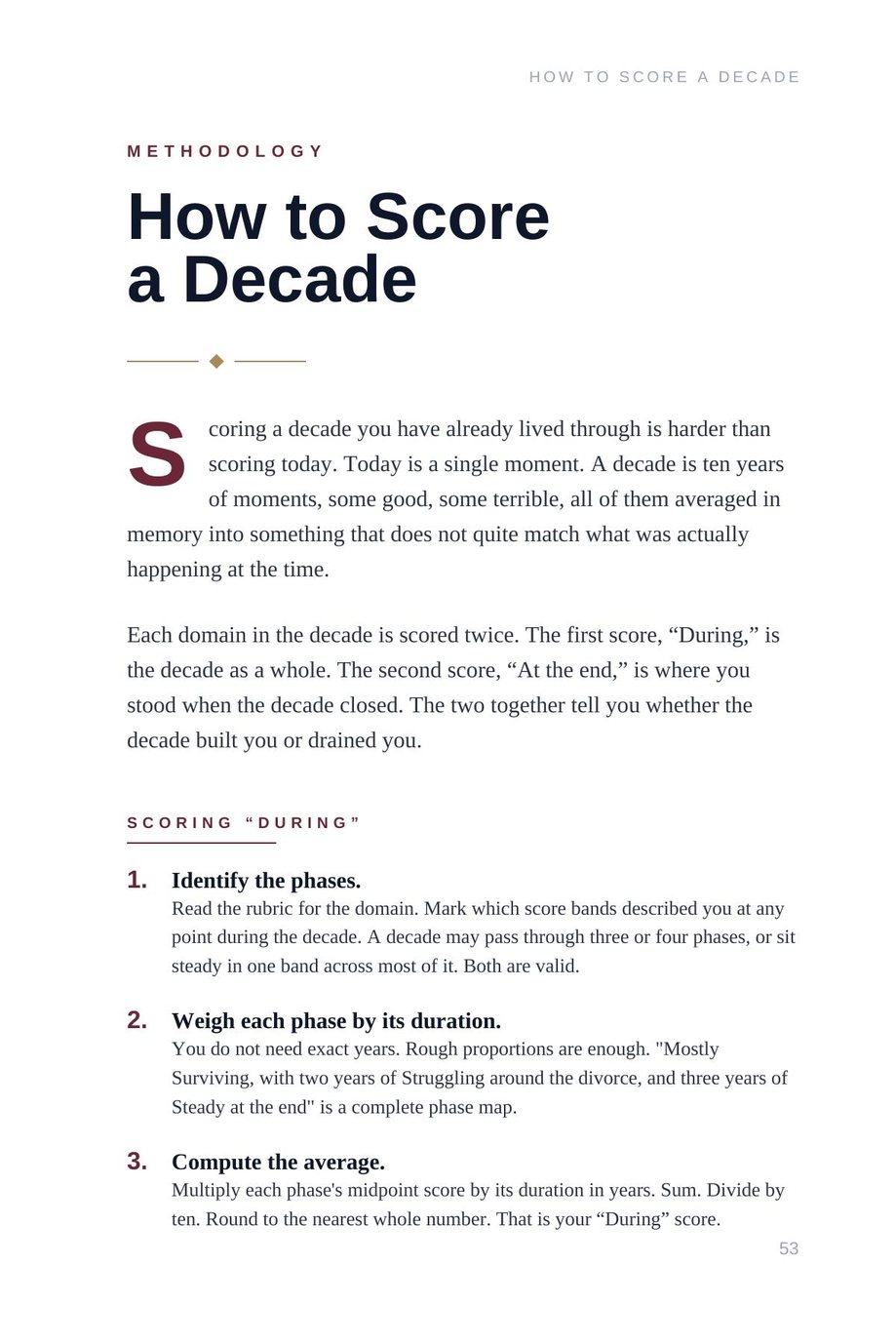
A decade is too big to grade whole; graded whole, the loudest two memories set the number. Split it into the standard domains, health, mind, work, money, the people, the rest, and score each separately with one written line of evidence, because evidence is what separates measurement from mood. The routine surprise: decades are almost never uniform. The twenties that were terrible for money were often quietly excellent for friendships, and the single-adjective version was erasing half your own life.
Correct for hindsight's two standard distortions
Hindsight compresses and it back-fills. Compression makes the decade feel like its three biggest events plus fog, so before scoring, list ten ordinary specifics first, the apartment, the commute, the Tuesday routine, to re-inflate the actual texture. Back-filling projects what you know now onto who you were then, which is how people convict their 25-year-old self with evidence that did not exist yet. The corrective is one deliberate sentence per decade: what I did not know then. It converts the harshest judgments into information.
Write the verdict as a paragraph, not a number
The scores are scaffolding; the deliverable is a short written verdict: what the decade was actually about, which usually differs from what it appeared to be about while running, what it cost, what it built, and the one thing it taught that the next decade spent. A decade summarized honestly in six sentences becomes usable history. Left unsummarized it remains weather, and planning the decades ahead stays guesswork without the ones behind on record.
Do it once per decade, in a place built for it
This is not a journaling habit; it is an audit run a handful of times in a life, which is exactly why it needs a permanent home rather than a notebook that will be lost by the next one. A certain hardcover keeps a chapter per decade, quote, prompts, scored domains, the living-this-decade notes for the one you are in, so the reflection at 40 sits physically beside the one from 30, which is when the compounding starts. It is also the honest version of the ritual people reach for around round birthdays, which is why it pairs with the gift for someone turning 40 and the milestone that has no real name.
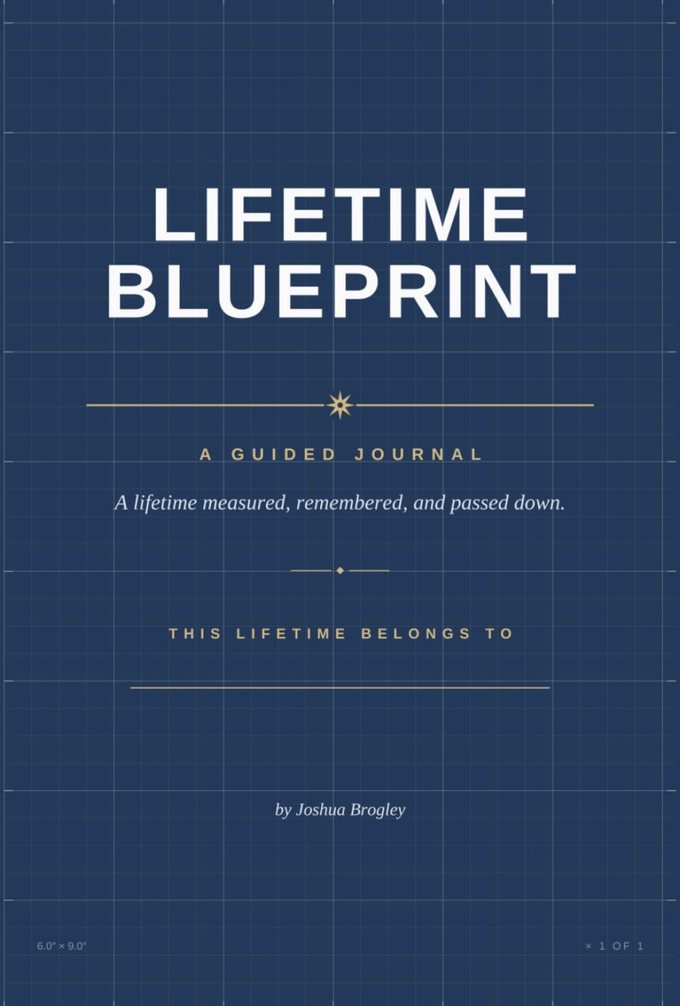
Lifetime Blueprint
The hardcover built to be inherited: eight life domains scored across decades, thirty life-event templates, and letters written forward, ending in a Final Letter.
How do I reflect on my 20s or 30s properly?
Score the decade by domain with one line of evidence each, list ten ordinary specifics before judging, write what you did not know then, and finish with a six-sentence verdict. Domains and evidence prevent the loudest memory from grading the whole thing.
Why do my past decades feel wasted?
Usually hindsight compression: the decade gets remembered as its worst events plus fog. Re-listing ordinary specifics and scoring domains separately almost always recovers value the single-adjective version erased.
More on Lifetime Blueprint
- Your Twenties: The Decade of Compounding Choices
- Your Thirties: The Building Decade, When Time Starts to Feel Finite
- Your Forties Are a Recalibration, Not a Crisis
- Your Fifties: The Distillation Decade, Subtraction Over Addition
- Why Most People Will Never Write Their Life Down
The method behind every book
- Which 365-Day Book Should I Start With? A One-Minute Guide
- What Is a No Zero Day? The Rule That Saves a Bad Week
- What Is a Realistic Morning Routine? Two Minutes, Not Two Hours
All articles about Lifetime Blueprint → · The book page → · All the books →
written by the author, at the kitchen table, after work.