Home / Blog / Lifetime Blueprint
LIFETIME BLUEPRINT
How to Write About Your Teenage Years, and Be Kind to Who You Were
Part of the series How to Reflect on Your Life by Decade: The Complete Method
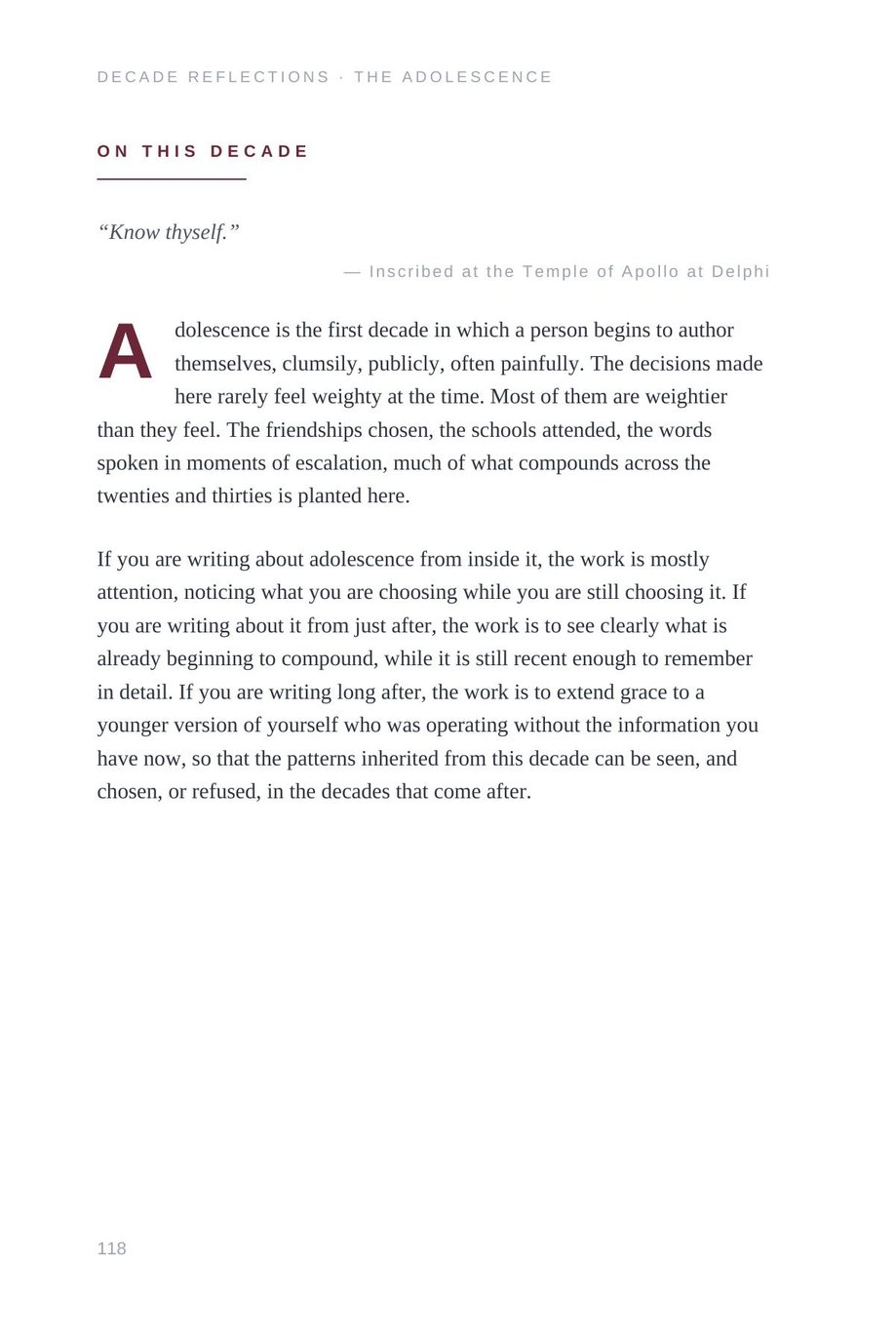
Adolescence is the first decade in which a person begins to author themselves: clumsily, publicly, often painfully. The decisions made there rarely felt weighty at the time, and most were weightier than they felt. The friendships chosen, the schools attended, the words spoken in moments of escalation; much of what compounds across the twenties and thirties was planted here. Writing it honestly requires two things most people find hard to hold at once: seeing clearly what was decided, and extending grace to a younger self who was operating without the information you have now.
The work depends on where you are standing
From inside adolescence, the work is mostly attention: noticing what you are choosing while you are still choosing it, which almost nobody at sixteen does and which changes everything if done. From just after, the work is to see clearly what is already beginning to compound, while it is recent enough to remember in detail. From long after, the work is grace: so that the patterns inherited from this decade can be seen and then chosen or refused in the decades that follow, rather than running unexamined for a lifetime.
What to focus on
The first identity you tried on, and how much of it remains. The friendships that shaped you, the ones that lasted, the ones that ended, and what each taught you. The early ambitions you set down to seem more reasonable, which is one of the quietest losses of the decade and the one most worth recovering. The first relationships, whatever form they took, and what each one revealed about what you expected to be given and to give. The book's instruction is explicit on one point that stops many people: it is acceptable to write about adolescent loves that have since faded. Honesty matters more than current relevance.
The obstacles
The wish to portray the adolescent self as more confident, or more troubled, than they were. The stories you told yourself about yourself in this decade that you stopped questioning at twenty and have carried since. Pain that may still be live, peer rejection, family rupture, early loss, which does not expire on schedule. And the temptation to skip the decade entirely because the person who lived it feels embarrassing, which is the most common reason this chapter stays blank and the worst one, since the embarrassment is itself the data.
How to write it
Specific moments, not general feelings: a single conversation, a single day, a single decision. If you kept journals or letters from the period, read them slowly before writing, and expect them to contradict your memory. And the instruction the book gives more directly than any other in the chapter: be especially kind to whoever you were at fifteen. They were doing the best they could with what they had. The twenties will compound whatever was planted here, and the honest accounting now changes what compounds next. The full decade method holds the chapter; childhood is where the patterns adolescence interprets were first laid down.
Lifetime Blueprint
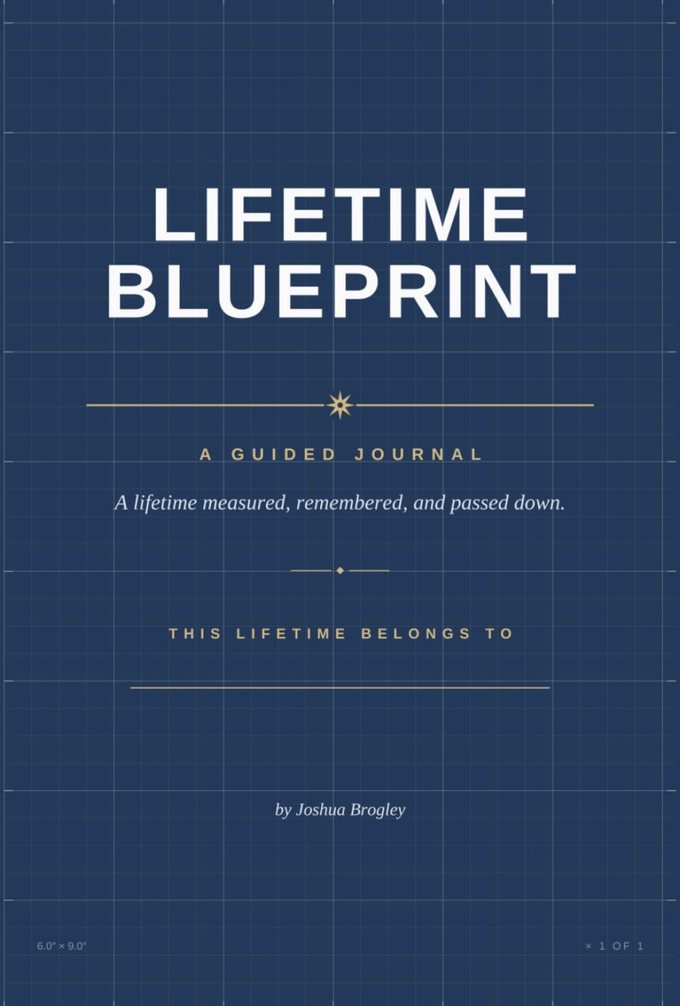
The hardcover built to be inherited: eight life domains scored across decades, thirty life-event templates, and letters written forward, ending in a Final Letter.
How do you write about your teenage years?
Specific moments rather than general feelings: one conversation, one day, one decision. Name the first identity you tried on, the friendships that shaped you, the ambitions you set down, and the first relationships, and extend grace to who you were at fifteen.
Why do my teenage years feel embarrassing to look back on?
Because you now hold information the fifteen-year-old did not. The embarrassment is data, not a reason to skip the decade; the patterns planted there compound through the twenties and thirties whether or not they are examined.
More on Lifetime Blueprint
- Your Twenties: The Decade of Compounding Choices
- Your Thirties: The Building Decade, When Time Starts to Feel Finite
- Your Forties Are a Recalibration, Not a Crisis
- Your Fifties: The Distillation Decade, Subtraction Over Addition
- Why Most People Will Never Write Their Life Down
The method behind every book
- Which 365-Day Book Should I Start With? A One-Minute Guide
- What Is a No Zero Day? The Rule That Saves a Bad Week
- What Is a Realistic Morning Routine? Two Minutes, Not Two Hours
All articles about Lifetime Blueprint → · The book page → · All the books →
written by the author, at the kitchen table, after work.