Home / Blog / Lifetime Blueprint
LIFETIME BLUEPRINT
Your Forties Are a Recalibration, Not a Crisis
Part of the series How to Reflect on Your Life by Decade: The Complete Method
The forties are when many people first ask whether they are still living the life they set up in their twenties, and whether that life is still the one they want. Sometimes the answer is yes, and the decade becomes one of deepening rather than changing. Sometimes the answer is no, and the question becomes what to do about it. The cliché is the midlife crisis. The reality is rarely a crisis; it is a recalibration. What you measured against in your thirties, peers, parents, expectations, gives way to something more interior: the version of yourself you could still become.
What to focus on
Auditing the commitments made in your twenties and thirties, keeping the ones that still serve and releasing the ones that do not, which is a written exercise and not a mood. Investing seriously in the body, because the practices begun now compound for thirty years and the ones neglected now present their bill in the sixties. Strengthening the friendships that will need to outlast the next twenty years, since this is the decade friendship quietly thins if untended. And beginning the work of legacy: what will be passed on, and to whom, asked early enough to shape the answer.
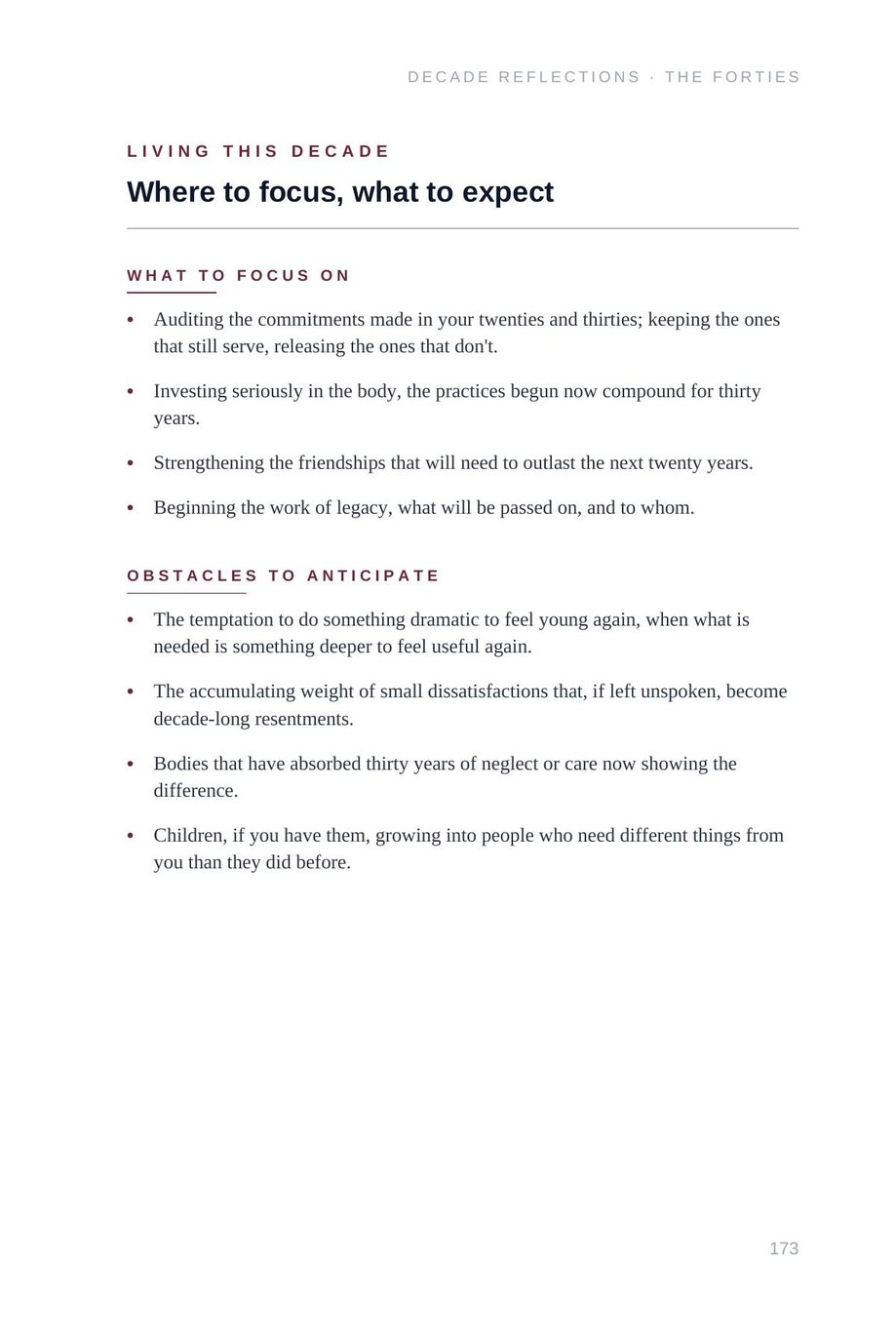
The obstacles, including the famous one
The temptation to do something dramatic to feel young again, when what is needed is something deeper to feel useful again; that single sentence from the chapter is the honest diagnosis of most midlife wreckage. The accumulating weight of small dissatisfactions that, left unspoken, become decade-long resentments. Bodies that have absorbed thirty years of neglect or care now showing the difference, publicly. And children, if you have them, growing into people who need different things from you than they did, often while their adolescence overlaps your forties, which the book calls a unique kind of mirror.
What is coming, and the four tips
Caregiving may replace being cared for. Friends and peers will begin to face their first serious health concerns, and some will not survive them. What you began in your thirties will either compound visibly now or visibly stall. The tips: build at least one new skill that has nothing to do with work; choose carefully what to recalibrate and what to keep, because not everything needs to change; move every day in whatever way the body still allows, since the body that moves through this decade is the one that moves through the next three; and tell the people you love what they mean to you, in words, before circumstances make you wish you had.
Why forty is when the book gets opened
Forty is the age at which the decades behind and the decades ahead are roughly the same size, which is why the whole method finally fits and why this is the most common starting age. The audit the decade demands is exactly what the Origin Snapshot and the decade reflections are: three points and a line, and a written verdict on the decades that drew it. Reflecting on a decade already lived is the natural first sitting at forty; the fortieth-birthday gift is how a lot of people receive the book; the fifties are where the recalibration gets distilled; the full method holds the chapter.
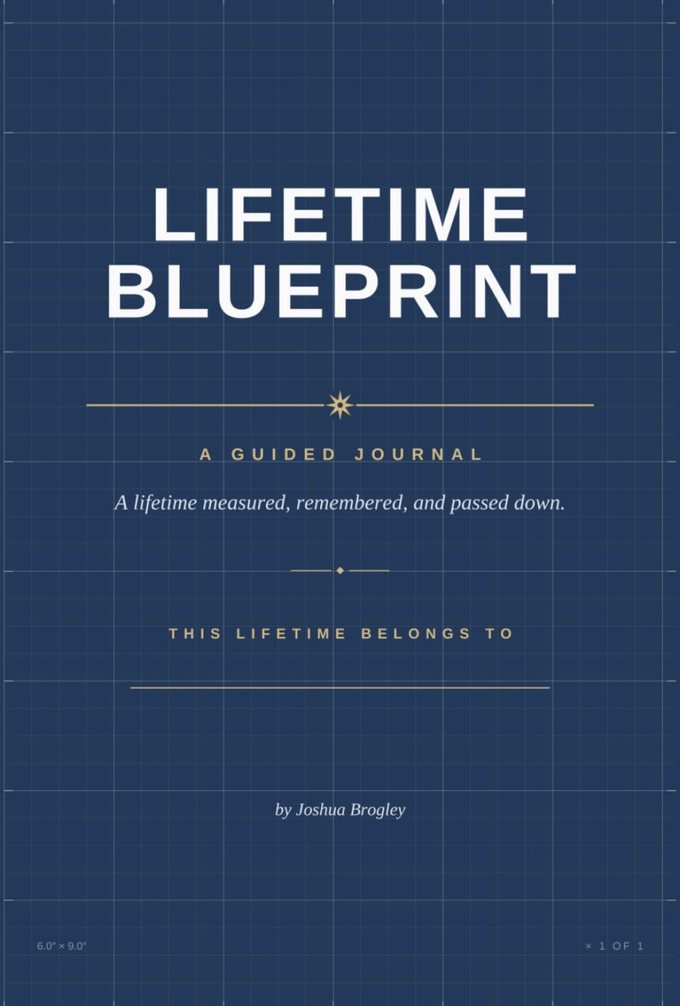
Lifetime Blueprint
The hardcover built to be inherited: eight life domains scored across decades, thirty life-event templates, and letters written forward, ending in a Final Letter.
Is a midlife crisis real?
Rarely as a crisis. The forties are a recalibration: the external measures of the thirties, peers, parents, expectations, give way to an interior one, the person you could still become. The wreckage comes from doing something dramatic to feel young rather than something deeper to feel useful.
What should you focus on in your forties?
Auditing the commitments of your twenties and thirties, serious investment in the body, the friendships that must last twenty more years, and the first work of legacy. Move every day and say what people mean to you while they can hear it.
More on Lifetime Blueprint
- Your Twenties: The Decade of Compounding Choices
- Your Thirties: The Building Decade, When Time Starts to Feel Finite
- Your Fifties: The Distillation Decade, Subtraction Over Addition
- Why Most People Will Never Write Their Life Down
- Who the Lifetime Blueprint Is For: Five Readers, Five Reasons
The method behind every book
- Which 365-Day Book Should I Start With? A One-Minute Guide
- What Is a No Zero Day? The Rule That Saves a Bad Week
- What Is a Realistic Morning Routine? Two Minutes, Not Two Hours
All articles about Lifetime Blueprint → · The book page → · All the books →
written by the author, at the kitchen table, after work.