Home / Blog / Lifetime Blueprint
LIFETIME BLUEPRINT
Life Review Questions for Older Adults: Sixty and Beyond
Part of the series How to Reflect on Your Life by Decade: The Complete Method
Past sixty, the questions change. Not what will I build, but what has been built; not how many years remain, but what the years you have are for. Life review, the practice of looking back across a whole life and making sense of it, is something people at this age often do naturally. It goes better on paper, with questions that are harder than how was your life.
Quick answer: Ask what of your life a younger person should inherit, what you have forgiven and what remains, who needs to hear something from you that you have not said, what you know now that you wish you had known at thirty, and what a good day looks like at this age. Write the answers down, dated, where someone will find them.
Why the questions are different now
The Lifetime Blueprint gives the decades after sixty one chapter instead of one each, because past sixty the unit of meaningful change is less often a decade than a season, a relationship, or a project finished or set aside. The book says the chapter tends to be filled in flashes: a paragraph after a meaningful conversation, a sentence after a loss, a page after watching a young person do something only you could have taught them. The questions below are built for that rhythm. Answer one at a time.

Looking back
- What of your life would you want a younger person to inherit? Not the money: the practices, the beliefs, the way of seeing.
- What have you forgiven that you never thought you would? What remains?
- What do you know now that you wish you had known at thirty? How could it be passed on?
- Of everything you built, what would you protect first if you could protect only one?
Looking at now
- Who needs to hear something from you that you have not yet said?
- What does a good day look like at this age? Is that what your days look like?
- Who is still here that you most want to spend time with? Are you doing it?
- What does caring for your body look like now? What have you let go of, and what have you found?
Looking ahead
The book's questions for this decade end where they should: averages say less about any one person now than they once did, so the question is not how many years remain but what the years you have are for.
- What do you most want to leave, in writing, in money, in story, in conversation, to the people who will outlive you? What is done, and what is still to do?
- Are there reconciliations or apologies still outstanding?
- What is your relationship now with what is larger than yourself?
Where to keep the answers
Somewhere dated and findable, not a notes app no one will open. The Blueprint keeps them in the Sixties and After chapter, beside a scoring page for the decade, a letter forward, a photograph index and three stories, and its reference pages end with instructions for the finished book: keep it where you can find it, tell one person where it is, choose its next reader. The legacy decades covers the chapter; is it too late answers the obvious worry; the Final Letter is the last page of the work.
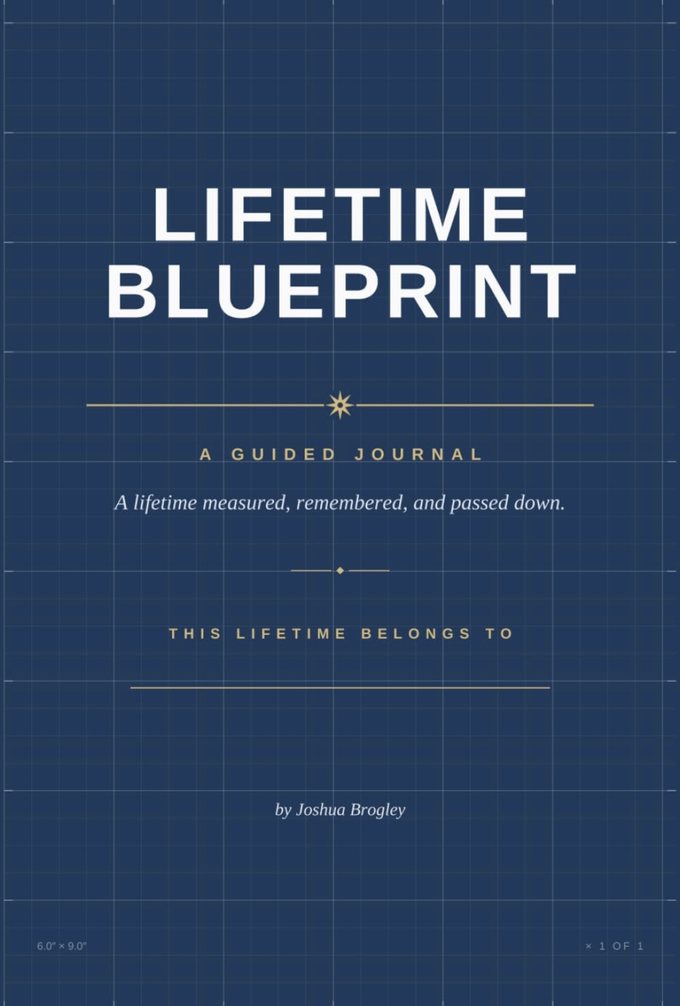
Lifetime Blueprint
The hardcover built to be inherited: eight life domains scored across decades, thirty life-event templates, and letters written forward, ending in a Final Letter.
What are good life review questions for older adults?
What would you want a younger person to inherit, what have you forgiven and what remains, who needs to hear something from you, what you wish you had known at thirty, and what a good day looks like at this age.
What is a life review?
Looking back across a whole life to make sense of it: what happened, what it meant, what you forgive, and what you want to pass on. Writing the answers down, dated, makes them something others can inherit.
Is it too late to start journaling at 70?
No. Past sixty the chapter is written in flashes, a paragraph after a meaningful conversation or a sentence after a loss, and each one is worth more than a blank page.
More on Lifetime Blueprint
- Why Most People Will Never Write Their Life Down
- Your Fifties: The Distillation Decade, Subtraction Over Addition
- Your Forties Are a Recalibration, Not a Crisis
- Your Thirties: The Building Decade, When Time Starts to Feel Finite
- Your Twenties: The Decade of Compounding Choices
The method behind every book
- Which 365-Day Book Should I Start With? A One-Minute Guide
- What Is a No Zero Day? The Rule That Saves a Bad Week
- What Is a Realistic Morning Routine? Two Minutes, Not Two Hours
All articles about Lifetime Blueprint → · The book page → · Group and bulk orders →
written by the author, at the kitchen table, after work.