Home / Blog / Lifetime Blueprint
LIFETIME BLUEPRINT
Questions to Ask Your Grandparents Before It Is Too Late
Part of the series How Many More Times Will You See Your Parents? Do the Math
Every family has a version of the same regret: I never asked. The grandparent who knew where the family came from, what the war was like, why two brothers stopped speaking, is gone, and the answers went with them. The window is shorter than it feels. Grandparents in their eighties have, on average, eight to ten years left. Here are the questions worth asking while it is open, and how to keep what you hear.
Quick answer: Ask about their childhood home, their parents, how they met their partner, the hardest year of their life, what changed most in their lifetime, and what they wish they had known at your age. Write the answers down the same day with who told it and the date, and ask one or two questions per visit, not twenty.
Why now
The Lifetime Blueprint's chapter on childhood ends with a question about exactly this: who from your childhood did you most want to still know as an adult, grandparents, aunts, uncles, mentors, and if they are living, are you close now? Its next question is the practical one: who tells the stories about who you were as a child, are they written down anywhere, and if not, who could record them? For most families the answer is a grandparent, and the recording has not happened.

Their beginning
- Where did you grow up, and what did your house look like inside?
- What were your parents like? What did they do all day?
- What was a normal Sunday when you were ten?
- What did you want to be, and what did your parents want you to be?
- What was the first real job you had, and what did it pay?
Their middle
- How did you meet, and when did you actually decide?
- What was the hardest year of your life, and how did you get through it?
- What did you give up for your family that we never knew about?
- What did you believe at thirty that you no longer believe?
- Who was your closest friend, and what happened to them?
What they know now
- What changed most in the world during your lifetime?
- What do you wish you had known at my age?
- What would you do differently, and what would you never change?
- What do you want us to remember about you that we might not?
- What do you want passed on: not the money, the practices and the way of seeing?
How to ask, and how to keep it
One or two questions per visit, asked over food or a drive rather than across a table with a recorder, get better answers than an interview. Write down what you heard the same day, in their words where you can remember them, with who told it and the date. The Blueprint gives this its own page, Stories You Gathered, next to the inventory of the people whose time with you is limited and the plan for what you will do about it. Starting a family history record covers the bigger project; a six-month plan for time with aging parents covers the visits; writing for grandchildren covers the other direction.
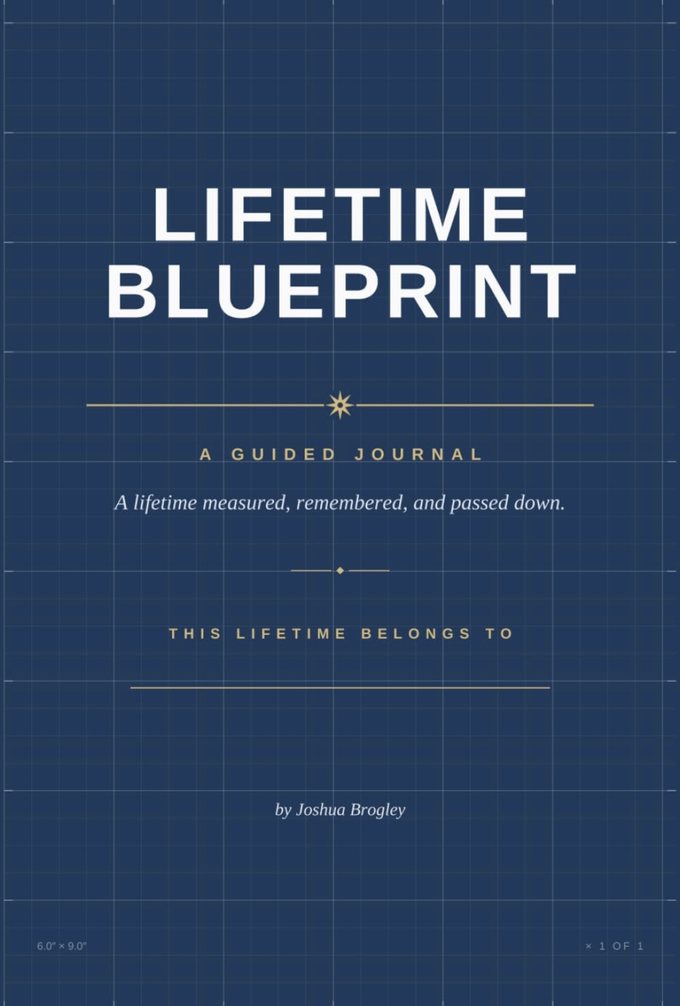
Lifetime Blueprint
The hardcover built to be inherited: eight life domains scored across decades, thirty life-event templates, and letters written forward, ending in a Final Letter.
What should I ask my grandparents?
Ask about their childhood home, their parents, how they met their partner, the hardest year of their life, what changed most in their lifetime, and what they wish they had known at your age.
How do I record my grandparents' stories?
Ask one or two questions per visit, then write the answers down the same day in their words, with who told it and the date. Keep them in one place your family can find.
Is it too late if my grandparents are very old?
No. Even one recorded story is worth more than none. Start with the question you most want answered.
More on Lifetime Blueprint
- Why Most People Will Never Write Their Life Down
- Your Fifties: The Distillation Decade, Subtraction Over Addition
- Your Forties Are a Recalibration, Not a Crisis
- Your Thirties: The Building Decade, When Time Starts to Feel Finite
- Your Twenties: The Decade of Compounding Choices
The method behind every book
- Which 365-Day Book Should I Start With? A One-Minute Guide
- What Is a No Zero Day? The Rule That Saves a Bad Week
- What Is a Realistic Morning Routine? Two Minutes, Not Two Hours
All articles about Lifetime Blueprint → · The book page → · Group and bulk orders →
written by the author, at the kitchen table, after work.