Home / Blog / Lifetime Blueprint
LIFETIME BLUEPRINT
How Do I Start a Family History Record From My Own Life?
Family history starts with the person willing to write the first volume. Instead of researching ancestors, record yourself in a form your descendants can read: your decades scored, the events that shaped you named, and letters written to them by name. Lifetime Blueprint is built as that first volume: measured, dated, hardcover, and designed to be inherited rather than finished, so the next generation continues the record instead of starting from nothing.
You are the ancestor
In two generations someone will wish they knew what you were really like. The genealogy sites will give them your dates. Only you can give them your Health domain at forty, the year the money collapsed, and the letter you wrote them before they were born.
Record in a comparable form
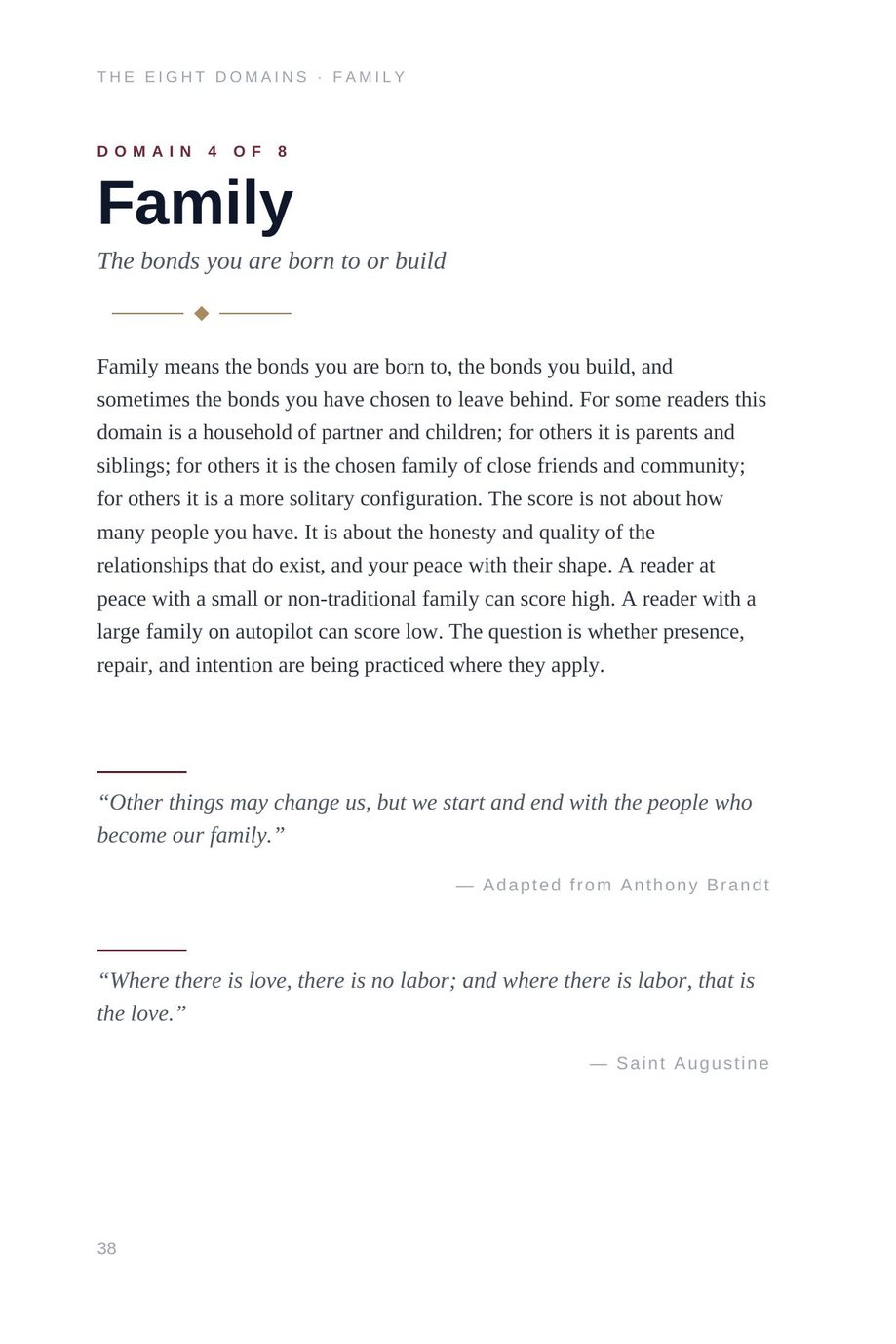
If your children start their own Blueprint, the two books read against each other: your thirties versus theirs, your Faith score at fifty versus theirs. That is a family record with a spine, and it is only possible when the format is shared.
Letters, by name
A letter to a child, to a grandchild, a Final Letter: eleven across the book, addressed and kept in the binding. Family history usually loses the letters. This one keeps them where the record is.
Start the volume, not the archive
Do not begin by researching great-grandparents. Begin by scoring your Origin, and let the archive grow forward. Related: the best legacy journal for parents and writing a letter to your child.
Lifetime Blueprint
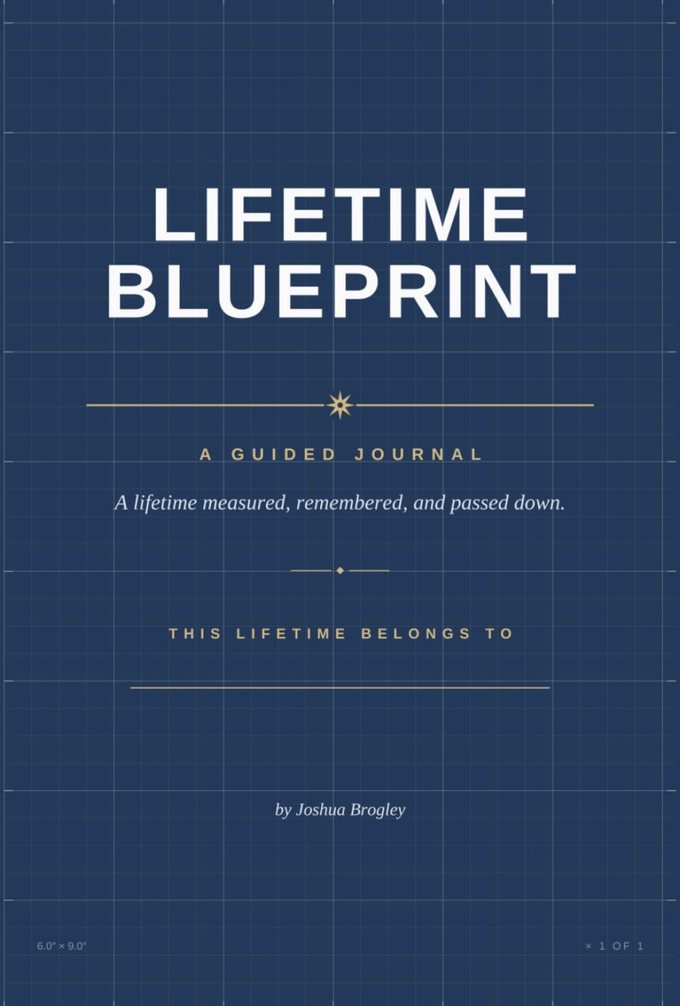
A guided journal built for the long arc of a life: eight domains, seven decades, twelve snapshots, eleven letters, one record honest enough to be inherited.
What should a family history record include?
How the person actually lived: their domains across the decades, the events that turned the story, and what they wanted the next generation to know. Names and dates are the skeleton; the Blueprint’s letters and reflections are the life.
How is Lifetime Blueprint different from an ancestry project?
Ancestry looks backward at people who cannot answer. The Blueprint records the one person who can, in enough detail that the next generation never has to guess.
More on Lifetime Blueprint
- Your Twenties: The Decade of Compounding Choices
- Your Thirties: The Building Decade, When Time Starts to Feel Finite
- Your Forties Are a Recalibration, Not a Crisis
- Your Fifties: The Distillation Decade, Subtraction Over Addition
- Why Most People Will Never Write Their Life Down
The method behind every book
- Which 365-Day Book Should I Start With? A One-Minute Guide
- What Is a No Zero Day? The Rule That Saves a Bad Week
- What Is a Realistic Morning Routine? Two Minutes, Not Two Hours
All articles about Lifetime Blueprint → · The book page → · All the books →
written by the author, at the kitchen table, after work.