Home / Blog / Lifetime Blueprint
LIFETIME BLUEPRINT
Your Twenties: The Decade of Compounding Choices
Part of the series How to Reflect on Your Life by Decade: The Complete Method
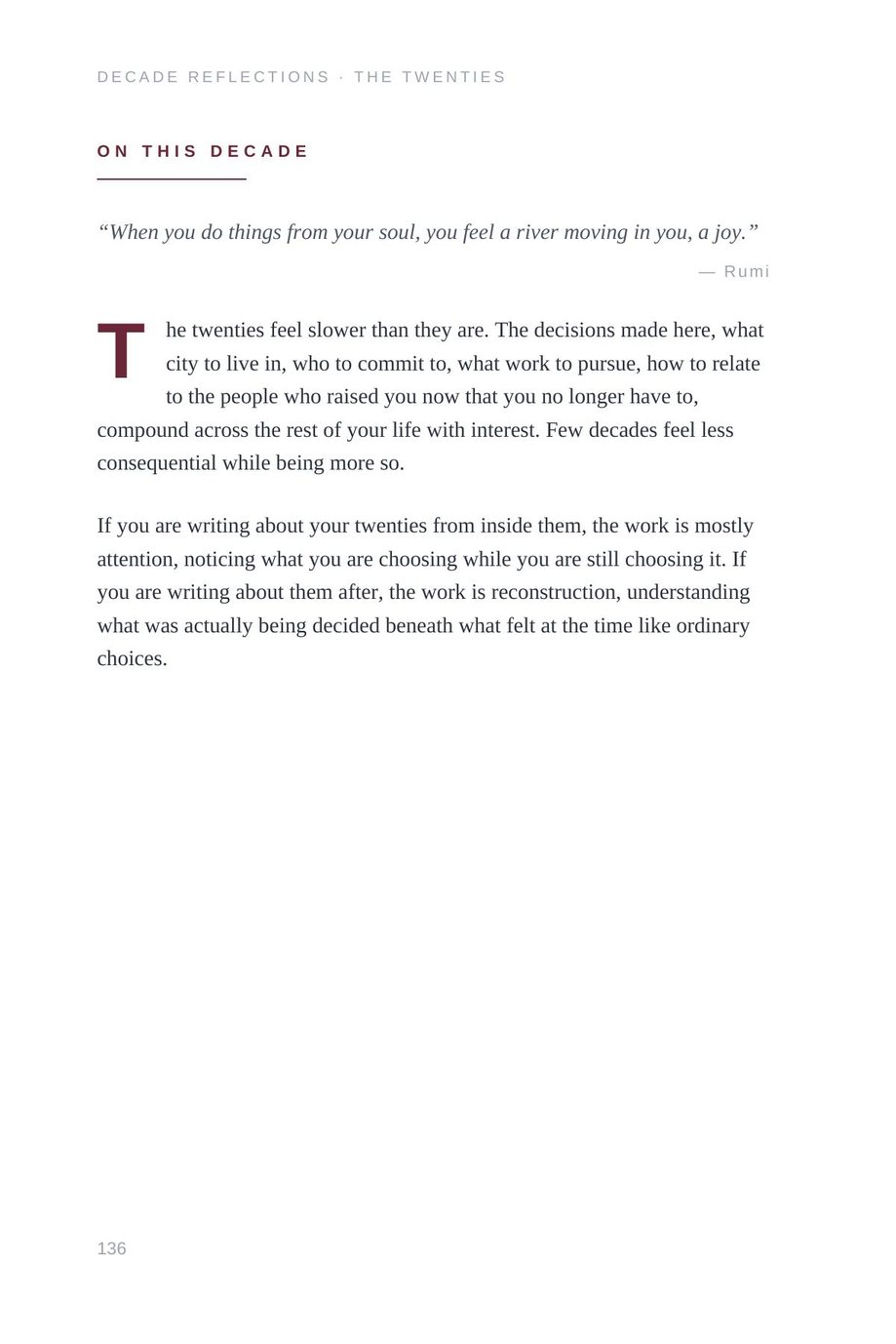
The twenties feel slower than they are. The decisions made in them, what city to live in, who to commit to, what work to pursue, how to relate to the people who raised you now that you no longer have to, compound across the rest of a life with interest. Few decades feel less consequential while being more so, and that mismatch is the whole danger: the sense, while inside the decade, that nothing yet matters is a lie that costs years. From inside, the work is attention. From after, it is reconstruction: understanding what was actually being decided beneath what felt like ordinary choices.
What to focus on
The small commitments that turned out to be large ones: the lease that became a city, the job taken for a year that became a career, the person met at a party. Who you became closer to in this decade and who drifted away, and whether either was chosen. The work you took on and the work you turned down, and what each said about your actual priorities as opposed to your stated ones. And the version of you that existed before the responsibilities began to accumulate, which is worth recovering on the page because it is the version that made the choices.
The obstacles
Four, and they are precise. The belief that nothing yet matters. Comparison to the curated twenties of other people, seen online, which is a comparison against fiction. Choices made primarily to please the previous generation rather than to live your own life, which is the most common source of the thirties' quiet regret. And financial decisions whose consequences will not be felt for ten years and which therefore feel free; the debt taken at twenty-four arrives, with interest, at thirty-four, and so does the saving that was not done.
What is coming, and how to thrive
Bodies that did most things for free begin to ask for maintenance. Friendships from earlier decades begin to require active tending or they thin. If the people who raised you are living, the dynamic shifts; they are no longer the only adults in the room. And what was committed to in the twenties largely sets the shape of the thirties. The book's four tips for the decade are unglamorous and correct: save more than you think you can, because the interest will run for forty years; choose relationships with care, romantic and platonic, since the ones kept will outlast the ones dropped on both sides; build at least one skill outside work that you take seriously; and talk to people two decades older than you, because their hindsight is your foresight.
Scoring the twenties, from inside or after
From inside, the score is a live instrument: eight domains, a Present Snapshot, and the decade chapter's focus list read at twenty-two and again at twenty-six. From after, it is two numbers, During and At the End, and the twenties are the decade where the pair most often diverges, a hard middle and a strong close or the reverse. Either way the entry belongs in a book that will still exist at fifty, because the twenties are the decade the fifty-year-old most wants to re-read and least remembers. The full method; the thirties, which this decade sets up; why the twenties are the best time to start.
Lifetime Blueprint
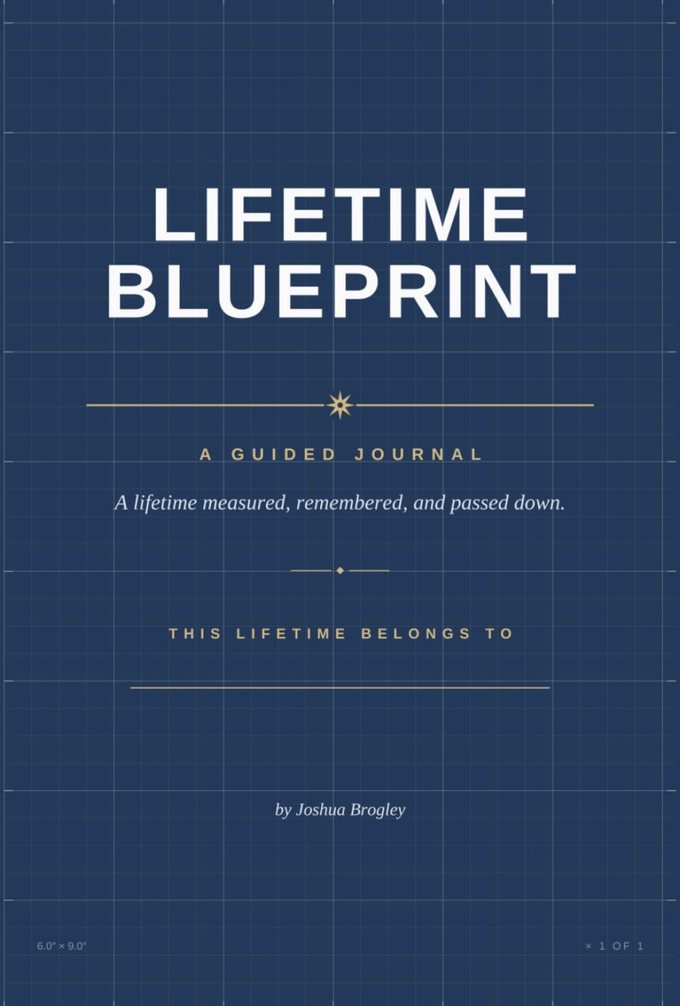
The hardcover built to be inherited: eight life domains scored across decades, thirty life-event templates, and letters written forward, ending in a Final Letter.
What should you focus on in your twenties?
The small commitments that turn out to be large, who you are growing closer to and away from, the work you accept and refuse, and saving more than feels possible. Choose relationships carefully, build one serious skill outside work, and talk to people twenty years older.
Why do your twenties matter so much?
Because the choices compound with interest: the city, the partner, the work and the money decisions of the twenties largely set the shape of the thirties and are felt for decades. The decade feels slower and less consequential than it is.
More on Lifetime Blueprint
- Your Thirties: The Building Decade, When Time Starts to Feel Finite
- Your Forties Are a Recalibration, Not a Crisis
- Your Fifties: The Distillation Decade, Subtraction Over Addition
- Why Most People Will Never Write Their Life Down
- Who the Lifetime Blueprint Is For: Five Readers, Five Reasons
The method behind every book
- Which 365-Day Book Should I Start With? A One-Minute Guide
- What Is a No Zero Day? The Rule That Saves a Bad Week
- What Is a Realistic Morning Routine? Two Minutes, Not Two Hours
All articles about Lifetime Blueprint → · The book page → · All the books →
written by the author, at the kitchen table, after work.