Home / Blog / Lifetime Blueprint
LIFETIME BLUEPRINT
Why Most People Will Never Write Their Life Down
Most people will never write their life down, and the reason is not that they are busy or unsentimental. It is that a complete, honest record of a life would show where the life is actually going, and most people already suspect the answer. Looking is the risk. Not because the truth is unbearable, but because once it is on a page it can no longer be managed with the dinner-party version, and the dinner-party version is load-bearing for a lot of adults. The avoidance is protective. It is also the single most expensive habit a person can keep.
Numb is a strategy, not an accident
The modern default is a life on autopilot: the feed, the commute, the calendar that fills itself, weeks that pass without a single decision that felt like one. That numbness is not a malfunction; it is an anesthetic that works, because a person who never measures anything never has to feel the gap between where they are and where they meant to be. A book that asks you to score eight domains of your life, honestly, and to write what each decade cost, is a book that turns the anesthetic off. People decline it for the same reason they keep the television on in an empty room.
What people are actually afraid of
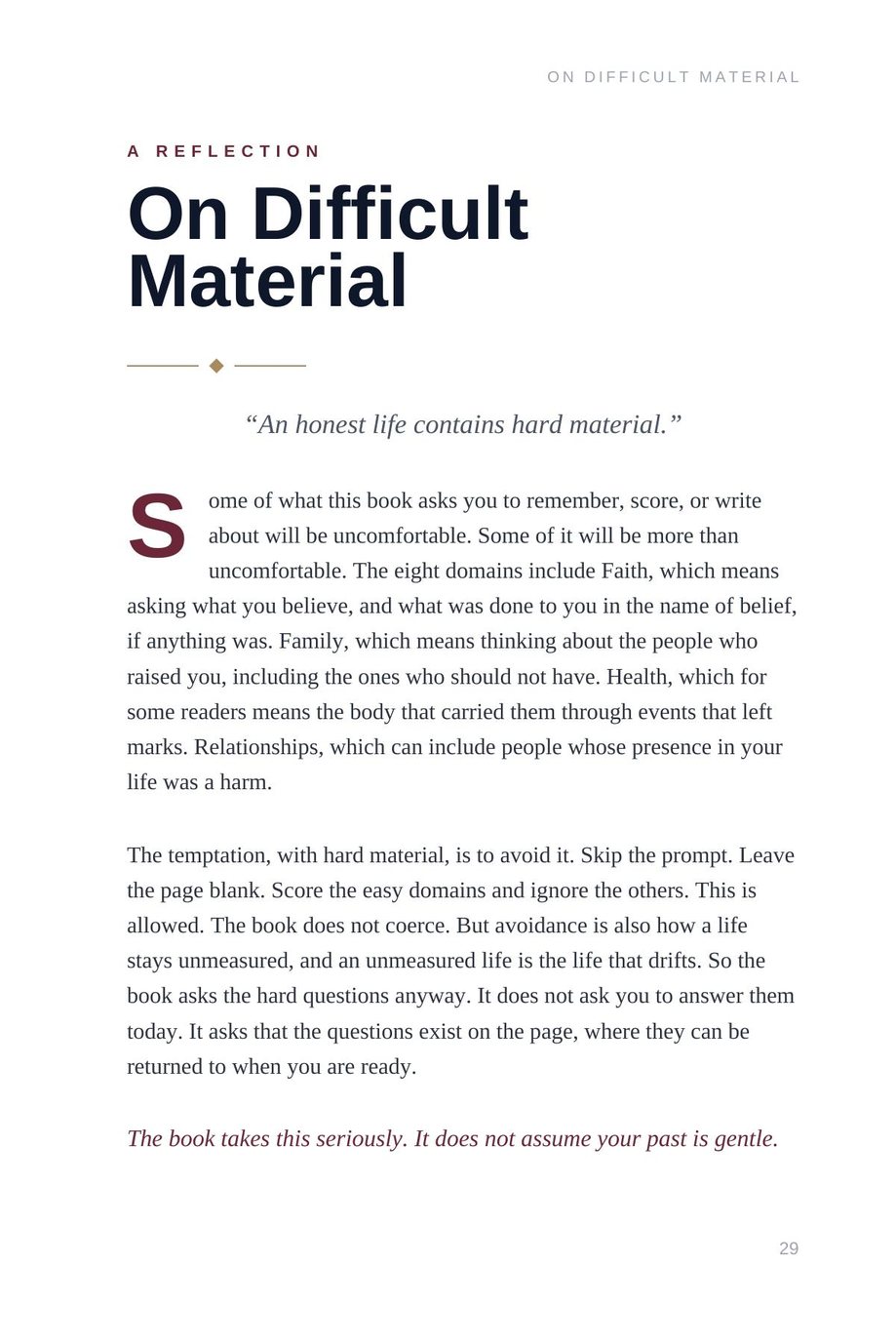
Ask directly and the answers cluster. Fear that the scores will be low. Fear that the decade will read as wasted. Fear of the people section, because the arithmetic of remaining visits is louder on paper than in the head. Fear of the hard material, the loss or the harm that has never been written anywhere because writing it makes it real. And underneath all of it, a more specific fear: that they already know what an honest record would say, and have been organizing their attention for years to avoid reading it. The book's own reflection on difficult material begins with the line that answers this: an honest life contains hard material. All of them do. The hard material is not evidence of a failed life; it is evidence of a lived one.
The cost of not looking is paid in decades
Unmeasured lives drift. Not from one wrong turn but from a thousand small unmade decisions, each defensible alone, compounding into a life the person would not have chosen if it had been offered whole. The cruelty is that drift is invisible while it happens; you notice it in your forties, if you notice at all, when the person in the mirror is not the person you meant to become. Avoiding the record does not avoid the drift. It only removes the instrument that would have caught it fifteen years earlier, at a point where the correction was small. What drift is and how to measure it is the mechanism underneath this whole argument.
What the people who do it report
Not catharsis, mostly. Relief of a stranger kind: the thing they had been avoiding turns out to be a number and a paragraph, finite and survivable, instead of the formless dread it was in the head. Then clarity, which the book promises plainly and which is the actual reward: three points, a line, a trajectory, and a decision about whether the line goes where they want. Then, for the ones who keep going, a book their family will keep, which is the part they did not expect to care about and end up caring about most. What actually changes is the honest accounting of that; who this is for is the list of readers who stop avoiding it, and why.
Lifetime Blueprint
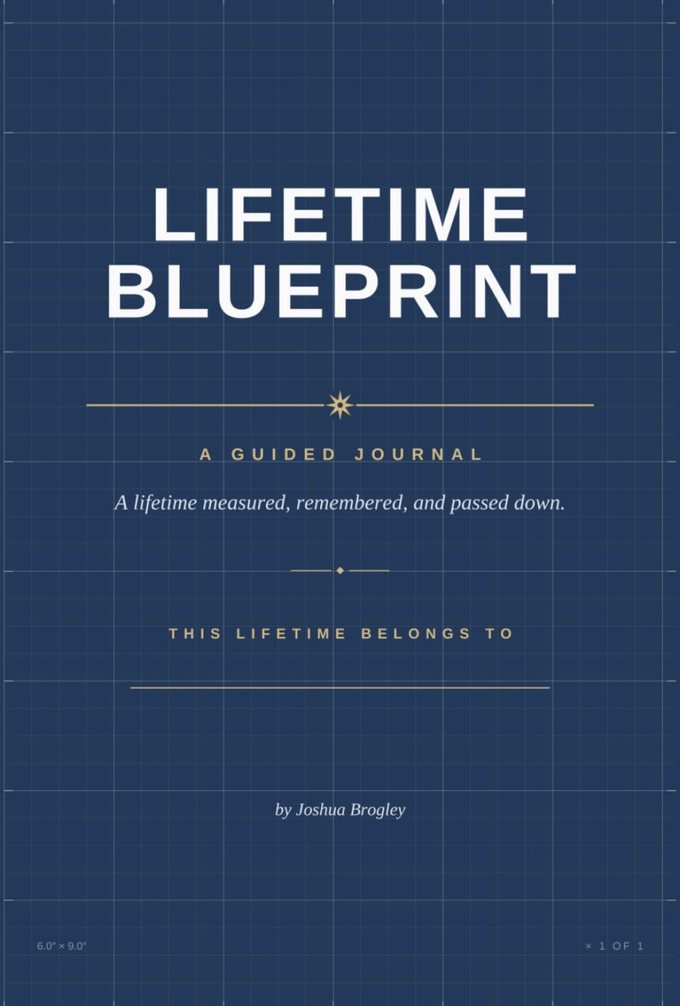
The hardcover built to be inherited: eight life domains scored across decades, thirty life-event templates, and letters written forward, ending in a Final Letter.
Why do people avoid journaling about their life?
Because an honest record would show where the life is actually going, and most people suspect the answer. Numbness and autopilot are protective; a book that scores the whole life turns the anesthetic off, which is exactly why it is avoided and exactly why it works.
Is it bad to be afraid to look at your life honestly?
It is universal, not shameful. An honest life contains hard material; the fear is of the formless version in the head, and the written version turns out to be a number and a paragraph, finite and survivable.
More on Lifetime Blueprint
- Your Twenties: The Decade of Compounding Choices
- Your Thirties: The Building Decade, When Time Starts to Feel Finite
- Your Forties Are a Recalibration, Not a Crisis
- Your Fifties: The Distillation Decade, Subtraction Over Addition
- Who the Lifetime Blueprint Is For: Five Readers, Five Reasons
The method behind every book
- Which 365-Day Book Should I Start With? A One-Minute Guide
- What Is a No Zero Day? The Rule That Saves a Bad Week
- What Is a Realistic Morning Routine? Two Minutes, Not Two Hours
All articles about Lifetime Blueprint → · The book page → · All the books →
written by the author, at the kitchen table, after work.