Home / Blog / Lifetime Blueprint
LIFETIME BLUEPRINT
Who the Lifetime Blueprint Is For: Five Readers, Five Reasons
Part of the series Why Most People Will Never Write Their Life Down
A book that scores a whole life is not for everyone, and pretending otherwise would be the first dishonest thing about it. It is for five kinds of reader, who arrive through five different doors and want, underneath, the same thing: to stop guessing where their life is going. If you recognize yourself in one of the five, the book was written with you at the table. If you recognize yourself in none of them, it will sit on a shelf, and it is better to know that now.
The mid-career parent choosing a peak
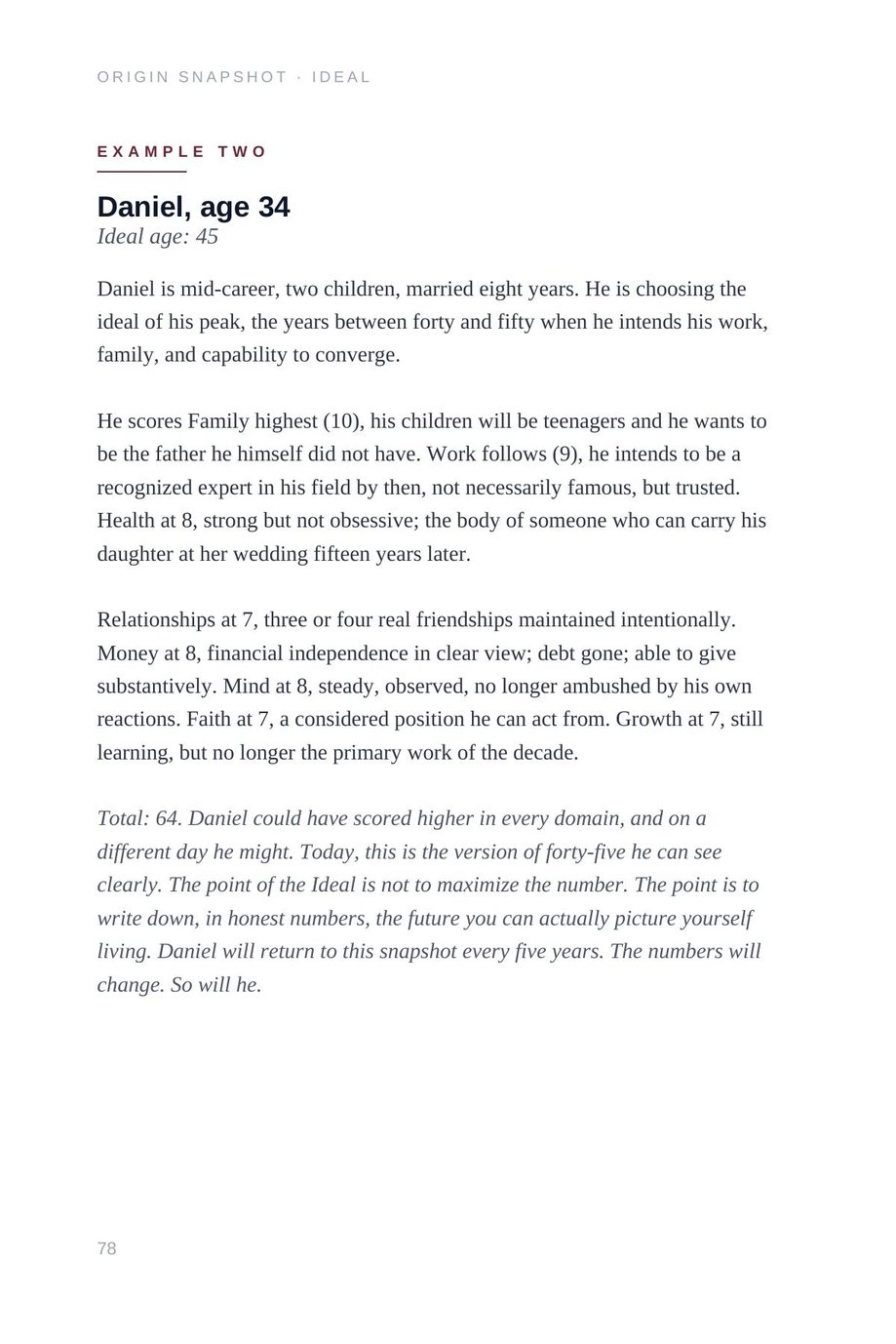
Thirty-four, married eight years, two children, the years between forty and fifty coming into view. This reader is one of the book's worked examples, scoring an ideal not for a single year but for the decade he intends to be his peak, work, family, body, faith, all of it, and then naming the gap: the habits the future him cannot afford, the habits the future him does daily, the people not yet in his life. He does not want inspiration. He wants a plan with numbers on it, taken from a version of himself he has decided to become. The Origin Snapshot is his door.
The reader at forty who just noticed the drift
Nothing is wrong exactly. The job is fine, the marriage is fine, the body is mostly fine, and one ordinary evening it arrives: the person in the mirror is not quite the person they meant to become, and no single decision explains it. This is the drift reader, the book's most common one, and what they need is not a resolution but an instrument: three points, a line, a small correction taken now instead of a large one at fifty-five. Forty is also the age where backfill and future are the same size, which is why the whole method finally fits. Drift is their post; the decade reflection is their first serious sitting.
The retiree, the bereaved, and the one who wants a book their family keeps
Sixty-three, retired, children grown, parents gone, choosing an ideal for the whole rest of life rather than a year, and holding six decades of material nobody else can record: the book's third worked example, and its most productive reader. Beside her, the one who just lost someone and needs a page that says write when you can, the first attempt will be wrong, and means it. And the reader who does not think of themselves as a journaler at all but wants one honest book in the house that a child will open in thirty years, which is the reason the cover is hardback and the pages are made for ink. Not too late, writing about loss, and the inherited book are their doors.
Who it is not for, said plainly
Not for anyone wanting a daily habit; the book says on its early pages that it is not for tracking what you did on Tuesday, and readers who want a daily engine should buy one, which is a different book and a different job. Not for resolution-making, which it explicitly refuses. Not for anyone unwilling to score honestly, because a flattering snapshot is worse than no snapshot: it poisons every comparison that follows. And not, yet, for the reader who wants to be told what to do; the book measures and records, and the deciding stays with you. Why most people avoid it is the honest counterpart to this list; what changes is what the five readers above got for their trouble.
Lifetime Blueprint
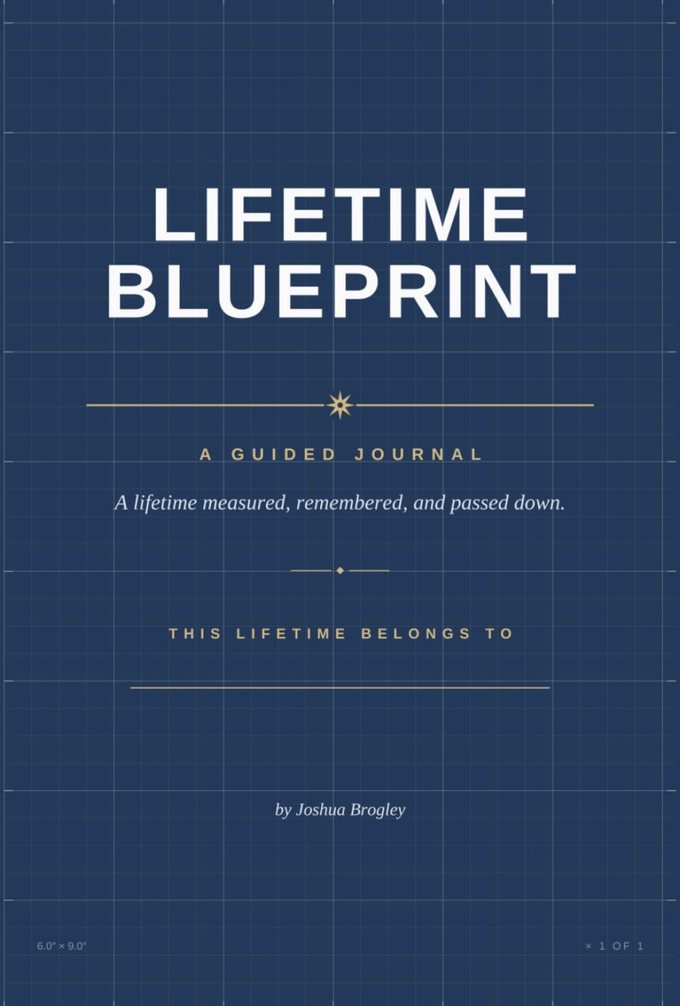
The hardcover built to be inherited: eight life domains scored across decades, thirty life-event templates, and letters written forward, ending in a Final Letter.
Who should use a lifetime journal?
Five readers especially: the mid-career parent planning a peak decade, the reader at forty who just noticed the drift, the retiree with decades to record, someone who has lost a person and needs a place to write it, and anyone who wants one honest book their family keeps.
Who is a lifetime journal not for?
Anyone wanting a daily habit or a resolution system, and anyone unwilling to score honestly. It is a slow measurement and record, not a planner, and a flattering snapshot poisons every later comparison.
More on Lifetime Blueprint
- Your Twenties: The Decade of Compounding Choices
- Your Thirties: The Building Decade, When Time Starts to Feel Finite
- Your Forties Are a Recalibration, Not a Crisis
- Your Fifties: The Distillation Decade, Subtraction Over Addition
- Why Most People Will Never Write Their Life Down
The method behind every book
- Which 365-Day Book Should I Start With? A One-Minute Guide
- What Is a No Zero Day? The Rule That Saves a Bad Week
- What Is a Realistic Morning Routine? Two Minutes, Not Two Hours
All articles about Lifetime Blueprint → · The book page → · All the books →
written by the author, at the kitchen table, after work.