Home / Blog / Lifetime Blueprint
LIFETIME BLUEPRINT
Life After Sixty: The Legacy Decades, Written in Flashes
Part of the series How to Reflect on Your Life by Decade: The Complete Method
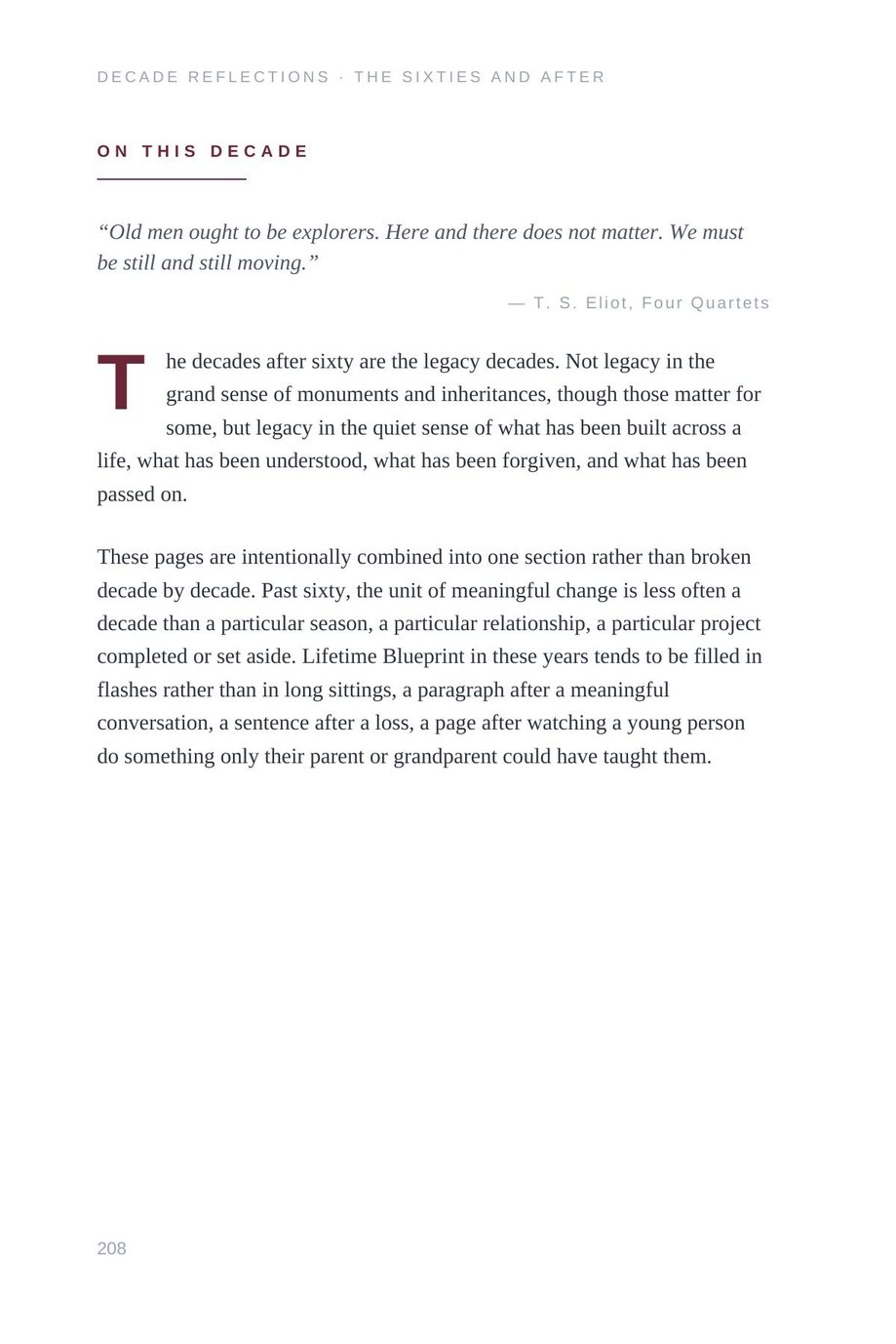
The decades after sixty are the legacy decades. Not legacy in the grand sense of monuments and inheritances, though those matter to some, but in the quiet sense: what has been built across a life, what has been understood, what has been forgiven, and what has been passed on. The book combines these years into one section on purpose, because past sixty the unit of meaningful change is less often a decade than a particular season, a relationship, a project completed or set aside. The record in these years fills in flashes rather than long sittings: a paragraph after a meaningful conversation, a sentence after a loss, a page after watching a young person do something only you could have taught them.
What to focus on
Articulating, in writing, what you want the next generations to know, which is the whole purpose of the letters forward and the reason this chapter sits beside them. Saying what is unsaid to the people who most matter. Continuing to learn, because the brain that stops learning ages faster than the brain that does not, and because being a learner is what keeps an elder interesting to the young. And distilling, from a long life, the small number of lessons that turned out to be true, which is a shorter list than it seems and worth writing exactly.
The obstacles
The instinct to retreat from the world rather than continue to engage with it. Grief that compounds as more people you love leave before you; the chapter says plainly that there is no way to avoid this, only to meet it with what has been built. Health limits that arrive faster than emotional acceptance of them. And the temptation to stop being a learner because you have, in fact, learned a great deal, which is the one obstacle that only the accomplished face.
What is coming, and the four tips
More loss. Less physical capacity, met, if it was built, by more interior capacity. The chance, if taken, to be the kind of older person younger people seek out. And the eventual close of the journal, whenever that comes, which the chapter treats as a practical matter: build toward leaving the pages where someone may find them. The tips are the plainest in the book. Tell the stories, often, to the people you love; they will not remember them if you do not. Keep walking, keep reading, keep one practice that is not negotiable. Forgive yourself for what you would have done differently; the path was longer than you knew. Be the elder you would have wanted to know at twenty-five.
Where the book goes next
These are the years the book's second job begins: the inside cover inscribed to whoever finds it, one person told where it is, the next reader chosen at a moment of your choosing, and the Final Letter written while it can be written well. The reader who starts at sixty-three is one of the book's own worked examples, scoring an ideal for the whole of the rest of life rather than a year. Not too late; the inherited book; the letter opened after you die; the full decade method.
Lifetime Blueprint
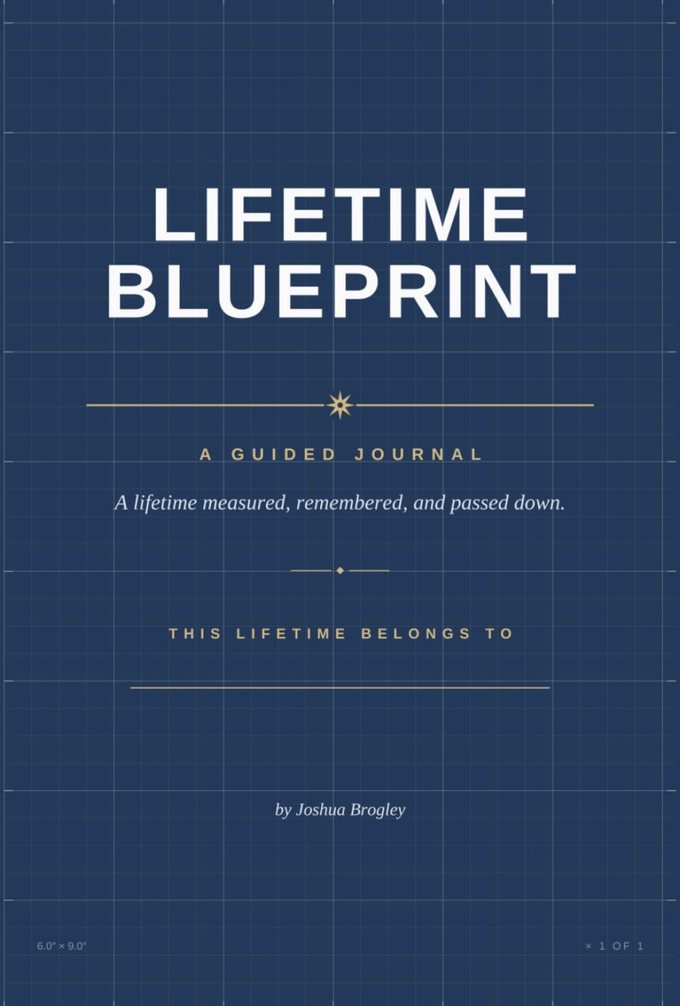
The hardcover built to be inherited: eight life domains scored across decades, thirty life-event templates, and letters written forward, ending in a Final Letter.
What is the meaning of the legacy years after 60?
Legacy in the quiet sense: what has been built, understood, forgiven and passed on. Past sixty the unit of change is a season rather than a decade, and the record fills in flashes, a paragraph after a conversation, a sentence after a loss.
How do you thrive after 60?
Tell the stories often, keep walking and reading, keep one non-negotiable practice, keep learning, forgive yourself for what you would have done differently, say what is unsaid, and be the elder you would have wanted to know at twenty-five.
More on Lifetime Blueprint
- Your Twenties: The Decade of Compounding Choices
- Your Thirties: The Building Decade, When Time Starts to Feel Finite
- Your Forties Are a Recalibration, Not a Crisis
- Your Fifties: The Distillation Decade, Subtraction Over Addition
- Why Most People Will Never Write Their Life Down
The method behind every book
- Which 365-Day Book Should I Start With? A One-Minute Guide
- What Is a No Zero Day? The Rule That Saves a Bad Week
- What Is a Realistic Morning Routine? Two Minutes, Not Two Hours
All articles about Lifetime Blueprint → · The book page → · All the books →
written by the author, at the kitchen table, after work.