Home / Blog / Lifetime Blueprint
LIFETIME BLUEPRINT
How to Write a Letter to Be Opened After You Die
Part of the series Letters Forward: The Eleven Letters Everyone Should Write
A letter to be opened after you die is the most valuable document most people never write, and the method is smaller than the subject: date it, write witness rather than advice, seal it, and tell one person where it is. The cruel arithmetic of the thing is that it can only be written while it is not yet needed. Written in health, it is a gift. Left for later, later has a habit of not existing.
Write witness, not instructions
The instinct is to write advice, and advice is the weakest thing a letter can carry: circumstances change, and counsel from a vanished world can weigh on the living like a debt. What survives is witness. What you saw in them, specifically, with the afternoon named. What you loved, in detail small enough to prove it. What you hope for them, held loosely, wished rather than assigned. A reader can outgrow instructions. Nobody outgrows being seen.
The mechanics: date and seal
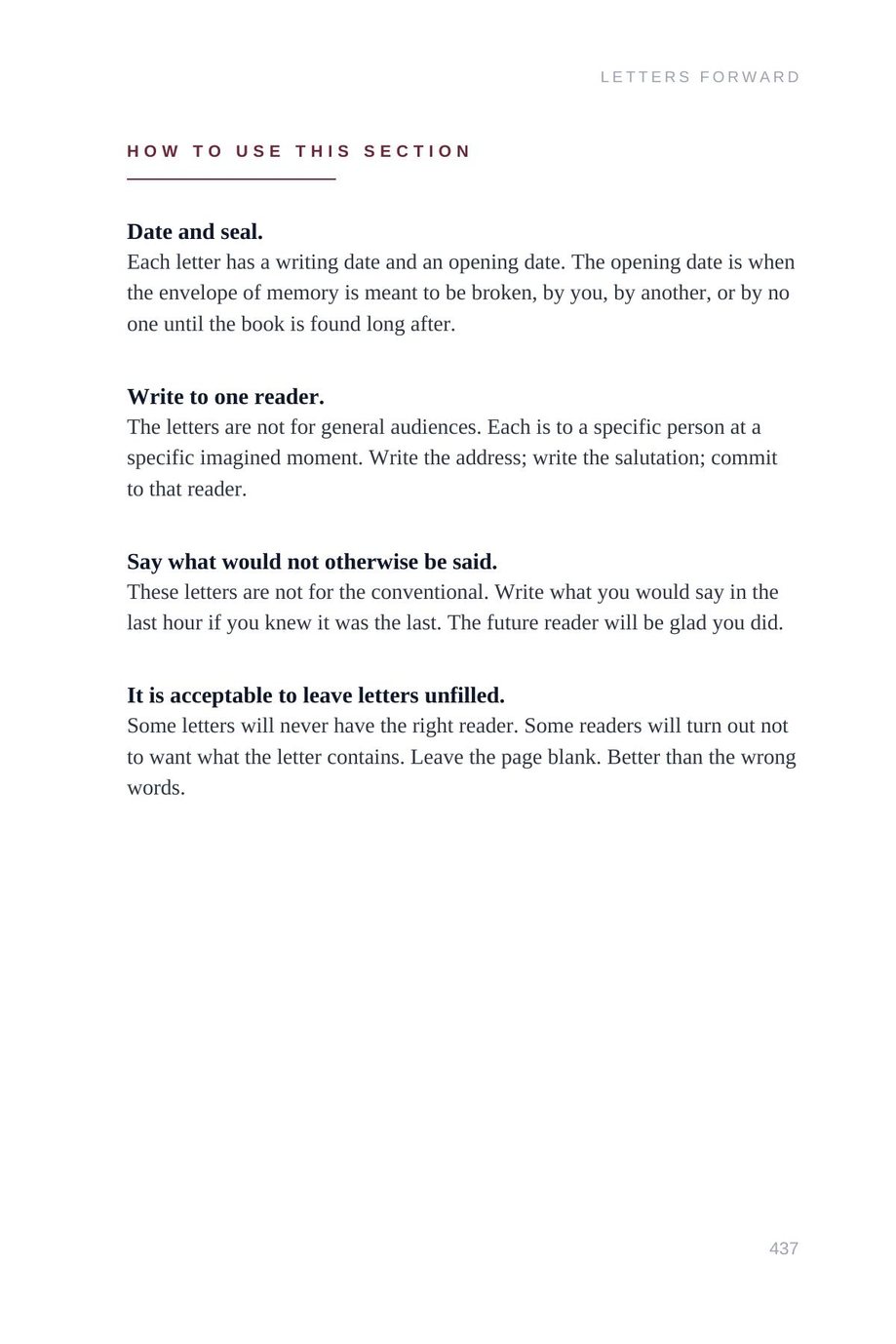
Give the letter two dates: the day you wrote it and the day it may be opened. The writing date matters more than people expect, because it tells the reader who you were when you said it, which decade, which chapter, and turns the letter from a voice from nowhere into a fixed point they can stand on. Seal it. Sealed words wait properly; loose pages get skimmed early and lose their weight. Then the step everyone skips: one named person knows it exists and where. An unfindable letter is a diary.
What to do about the freeze
Most people who sit down for this write nothing, because the occasion feels like it demands final words, and no one has final words on a Tuesday. Lower the bar until it moves: one paragraph is a complete letter. Even one sentence, dated and sealed, I want you to know I saw how hard you tried, and it was enough, outperforms the perfect letter that stayed theoretical. You can add letters later; the sealed shelf can grow. The unwritten one stays at zero forever.
Or write eleven, on a schedule
There is a stronger version of this practice: not one letter but a series, written across years, each with its writing date and its opening date, to your future self at five and ten years, to your partner, to a child, to a grandchild or young descendant, to whoever reads this after you, ending in a Final Letter, which is the last thing the whole system asks of anyone. That structure exists as the closing section of a certain hardcover built to be inherited, with the hard parts, the addresses, the prompts, the seal, already engineered. The letter to your child and the letter to your future self are the two entries most people start with.
Lifetime Blueprint
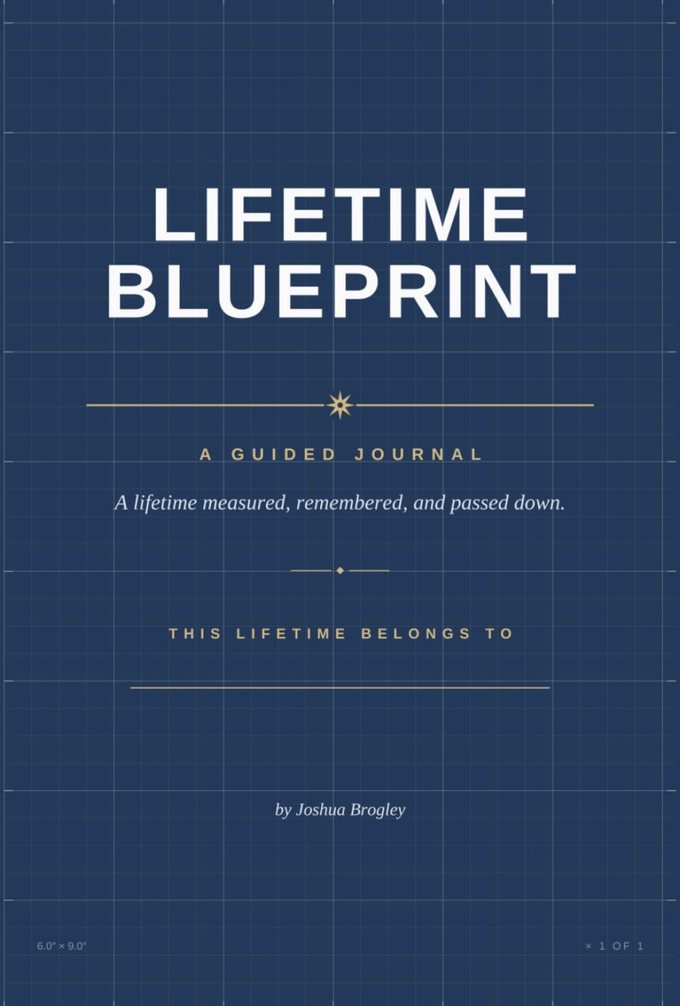
The hardcover built to be inherited: eight life domains scored across decades, thirty life-event templates, and letters written forward, ending in a Final Letter.
What do you write in a letter to be opened after death?
Witness, not instructions: what you saw in the person, what you loved with specifics, what you hope for them held loosely. Date it, seal it, and make sure one person knows where it is.
When should you write a letter to be opened after you die?
While it is not needed, which means now. The letter can only be written in health; one dated, sealed paragraph today beats the perfect letter that never gets written.
More on Lifetime Blueprint
- Your Twenties: The Decade of Compounding Choices
- Your Thirties: The Building Decade, When Time Starts to Feel Finite
- Your Forties Are a Recalibration, Not a Crisis
- Your Fifties: The Distillation Decade, Subtraction Over Addition
- Why Most People Will Never Write Their Life Down
The method behind every book
- Which 365-Day Book Should I Start With? A One-Minute Guide
- What Is a No Zero Day? The Rule That Saves a Bad Week
- What Is a Realistic Morning Routine? Two Minutes, Not Two Hours
All articles about Lifetime Blueprint → · The book page → · All the books →
written by the author, at the kitchen table, after work.