Home / Blog / Lifetime Blueprint
LIFETIME BLUEPRINT
How to Write a Letter to Your Younger Self (Not to Fix the Past)
Part of the series Letters Forward: The Eleven Letters Everyone Should Write
The letter to your younger self asks you to pick a specific earlier age, twenty-two, fifteen, thirty-five, and write to that person with the knowledge you have now. The instruction is precise about what the letter is not for: not to fix the past. It is to be a friend to them across time. This is the letter most often written badly on the internet, as a list of advice the younger person could not have used, and the template's four questions are designed to stop that and produce something the writer actually needs.
The four questions
What did they not know that you would tell them? Not advice; information, the one fact that would have changed the year. What were they getting right that they did not realize? This is the question that makes the letter, because most people cannot see what their younger self was getting right until they are asked to name it. What would you not change, even knowing what came after? And what grace would you extend to them that you have struggled to extend to yourself? The last question is the letter's real subject.
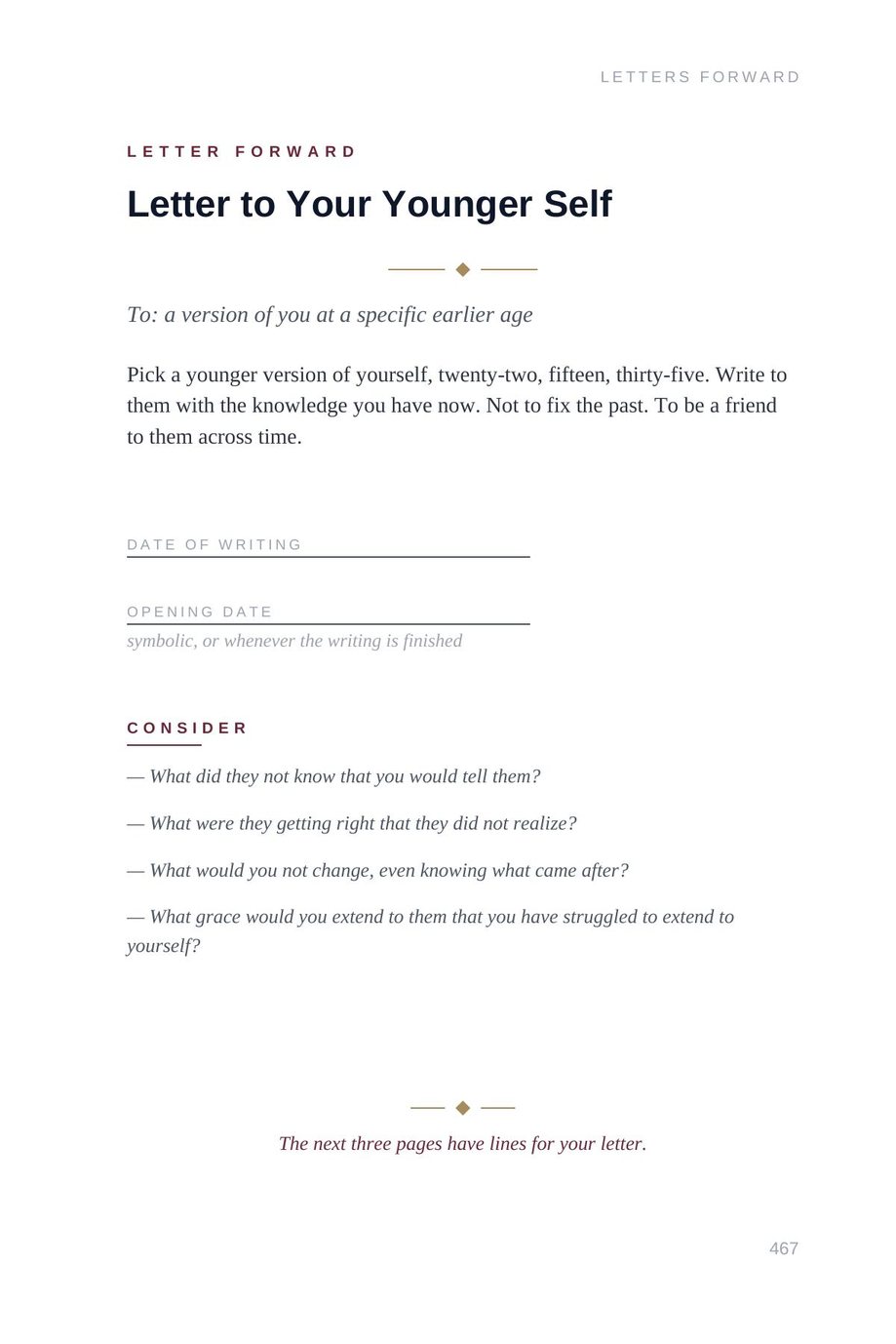
Choose the age by the wound, not the milestone
The instinct is a round number: eighteen, twenty-one, thirty. The better choice is the age you still argue with: the year of the decision you have never forgiven, the year before the loss, the year you were most alone. Write to that person, at that age, and the letter stops being a greeting card and becomes something that changes how the decades chapter about that year gets written. Readers often write two, to different ages, and find that the second is kinder than the first because the first taught them how.
Why grace is the mechanism
The book returns to this in the decade chapters: be especially kind to whoever you were at fifteen, they were doing the best they could with what they had. The letter to a younger self is where that kindness is practiced in writing, and it has an effect the writer does not expect: extending grace to a past self, in ink, dated, makes it measurably easier to extend it to the present one. The opening date is symbolic, or whenever the writing is finished, because the reader is the writer, and the letter is opened as it is sealed.
Where it sits, and what it feeds
The letter to your younger self is the eighth of the eleven letters forward, and it feeds directly into the decade reflections: the chapter for the decade you chose reads differently after the letter is written, and the failure template in Turnings almost always concerns the same year. All eleven letters; the adolescence chapter and the twenties, where most of these letters are addressed; the failure that taught you. The page, with its symbolic opening date, sits in a certain hardcover among them.
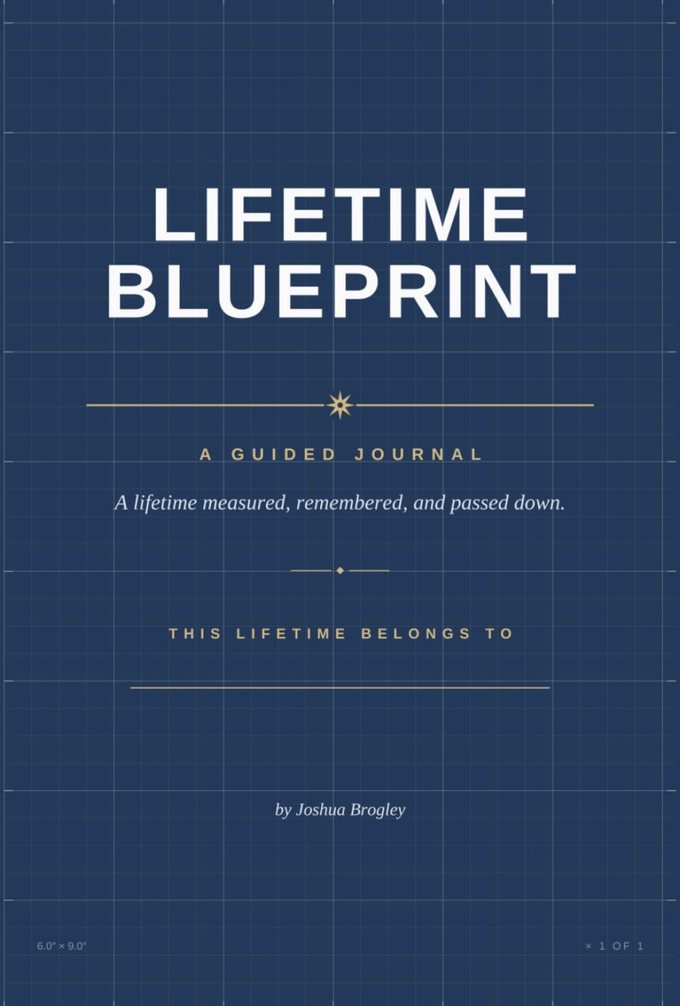
Lifetime Blueprint
The hardcover built to be inherited: eight life domains scored across decades, thirty life-event templates, and letters written forward, ending in a Final Letter.
What do you write in a letter to your younger self?
The one thing they did not know, what they were getting right without realizing it, what you would not change even knowing what came after, and the grace you would extend to them that you struggle to extend to yourself. Not advice; friendship across time.
What age should you write to your younger self at?
The age you still argue with, not a round number: the year of the unforgiven decision, the year before the loss, the loneliest year. Many people write two, and the second is kinder.
More on Lifetime Blueprint
- Your Twenties: The Decade of Compounding Choices
- Your Thirties: The Building Decade, When Time Starts to Feel Finite
- Your Forties Are a Recalibration, Not a Crisis
- Your Fifties: The Distillation Decade, Subtraction Over Addition
- Why Most People Will Never Write Their Life Down
The method behind every book
- Which 365-Day Book Should I Start With? A One-Minute Guide
- What Is a No Zero Day? The Rule That Saves a Bad Week
- What Is a Realistic Morning Routine? Two Minutes, Not Two Hours
All articles about Lifetime Blueprint → · The book page → · All the books →
written by the author, at the kitchen table, after work.