Home / Blog / Lifetime Blueprint
LIFETIME BLUEPRINT
Letters Forward: The Eleven Letters Everyone Should Write
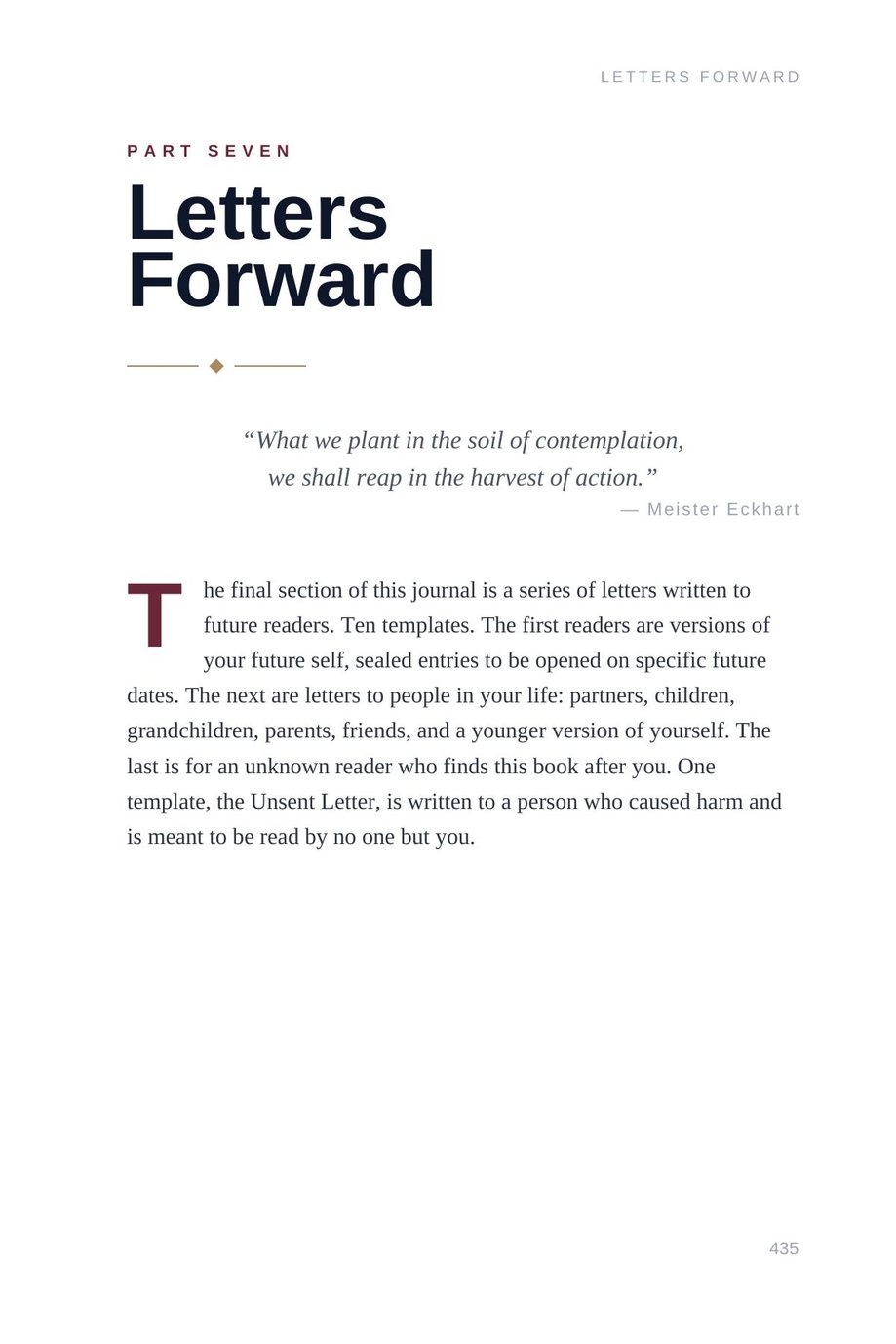
The last layer of a lifetime record is addressed to readers across time. Ten letter templates, each to a specific future reader, and then the Final Letter: to your future self at five years and at ten, to your partner, your children, your grandchildren, your parents, a friend who has left, your younger self, a reader you may never name, and the person who caused harm and will never read it. Each carries a date of writing, an opening date, and a short list of questions to consider. Write them when you are ready. There is no required order and no required age, but there is a pattern to which ones get written first, and why.
The eleven, in the order most people write them
First, usually, one of three: the letter to a future self, at five years or ten; the letter to a child; or the letter to whoever reads this after you, the safest audience there is. Then the ones with a living reader and a cost: to your partner, what is hardest to say in person; to a parent or caregiver, living or not; to grandchildren who may not exist. Then the ones written for the writer: to a friend who has left, to your younger self, and the unsent letter to someone who caused harm. And last, the Final Letter, to the people you most loved, to be opened after.
What makes a letter forward different from a journal entry
Four things, and the templates enforce all of them. An address: the letter names its reader, even an unknown one, and that single line changes the voice from recording to speaking. Two dates: when written, and when it may be opened, which for some letters is a birthday and for some is never. A seal, by instruction if not by glue, because sealed words wait properly and loose pages get skimmed early. And witness before advice: the questions to consider ask what you saw, what you loved, what you regret and what you hope, and keep instruction to a minimum, because instruction ages like technology and witness does not.
Why they are in a book that will outlive you
A letter written on loose paper needs a system: a drawer, an executor, a memory that it exists. A letter written into the same hardcover that holds the scored decades and the recorded events needs nothing; whoever inherits the book inherits the letters, in the order they were written, beside the life they were written from. That is the design argument for the whole section, and it is why the book's own page on the finished volume says to tell one person where it is. The inherited book makes the case; the first letter is where to start; the letter opened after you die is the method at its most serious.
A note on readiness
Some of these letters take a decade to be ready to write, and the book expects that. The letter to a parent who is gone. The unsent letter. The Final Letter, which some people write in their fifties as an exercise in clarity, some in their seventies across many sittings, and some in the last weeks of life, and the book says all three are correct. The pages wait, which is the one thing paper does better than anything else. Skipping and returning applies to letters more than to any other section of a certain hardcover built for exactly this kind of waiting.
Lifetime Blueprint
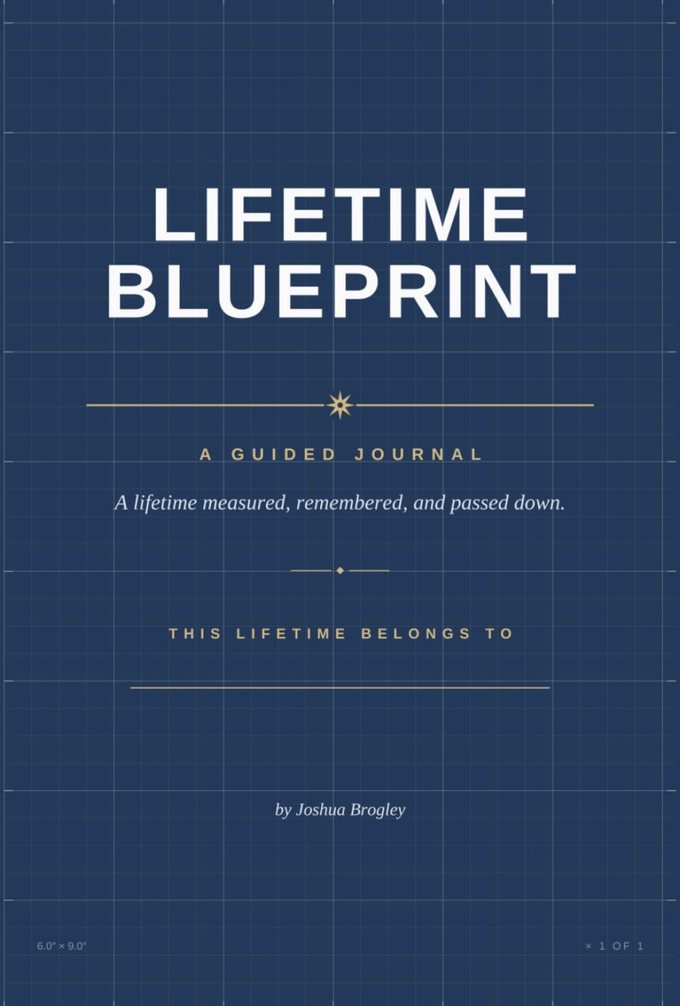
The hardcover built to be inherited: eight life domains scored across decades, thirty life-event templates, and letters written forward, ending in a Final Letter.
What letters should you write before you die?
In this method, eleven: to your future self at five and ten years, your partner, your children, your grandchildren, your parents, a friend who has left, your younger self, whoever reads this after you, an unsent letter to someone who caused harm, and a Final Letter to the people you most loved.
How is a letter forward different from a diary?
It is addressed to a named future reader, carries a writing date and an opening date, is sealed, and leads with witness rather than advice. The address alone changes the voice from recording to speaking.
More on Lifetime Blueprint
- Your Twenties: The Decade of Compounding Choices
- Your Thirties: The Building Decade, When Time Starts to Feel Finite
- Your Forties Are a Recalibration, Not a Crisis
- Your Fifties: The Distillation Decade, Subtraction Over Addition
- Why Most People Will Never Write Their Life Down
The method behind every book
- Which 365-Day Book Should I Start With? A One-Minute Guide
- What Is a No Zero Day? The Rule That Saves a Bad Week
- What Is a Realistic Morning Routine? Two Minutes, Not Two Hours
All articles about Lifetime Blueprint → · The book page → · All the books →
written by the author, at the kitchen table, after work.