Home / Blog / Lifetime Blueprint
LIFETIME BLUEPRINT
How to Write Your First Letter Forward (Pick One of Three)
Part of the series Letters Forward: The Eleven Letters Everyone Should Write
For some readers, nothing in a lifetime journal can be scored until something has been said to someone. The early gesture that unlocks the book for them is a first letter forward: dated, addressed, sealed, opened years later. There are eleven to choose from, and the first one is nearly always one of three: to your future self, to a child, or to whoever reads this after you. Which of the three depends on what you are avoiding.
Pick the letter by what you are avoiding
Write to your future self if the thing you cannot face is a decision; a letter to five-years-on forces you to say what you hope the decision produced, which is frequently the decision itself made in disguise. Write to a child if the thing you cannot face is time, because there is no more honest clock than a person who will be ten years older when the envelope opens. Write to whoever reads this after you if the thing you cannot face is being seen at all; addressing an unknown reader is the safest possible audience and it teaches the voice the other letters need.
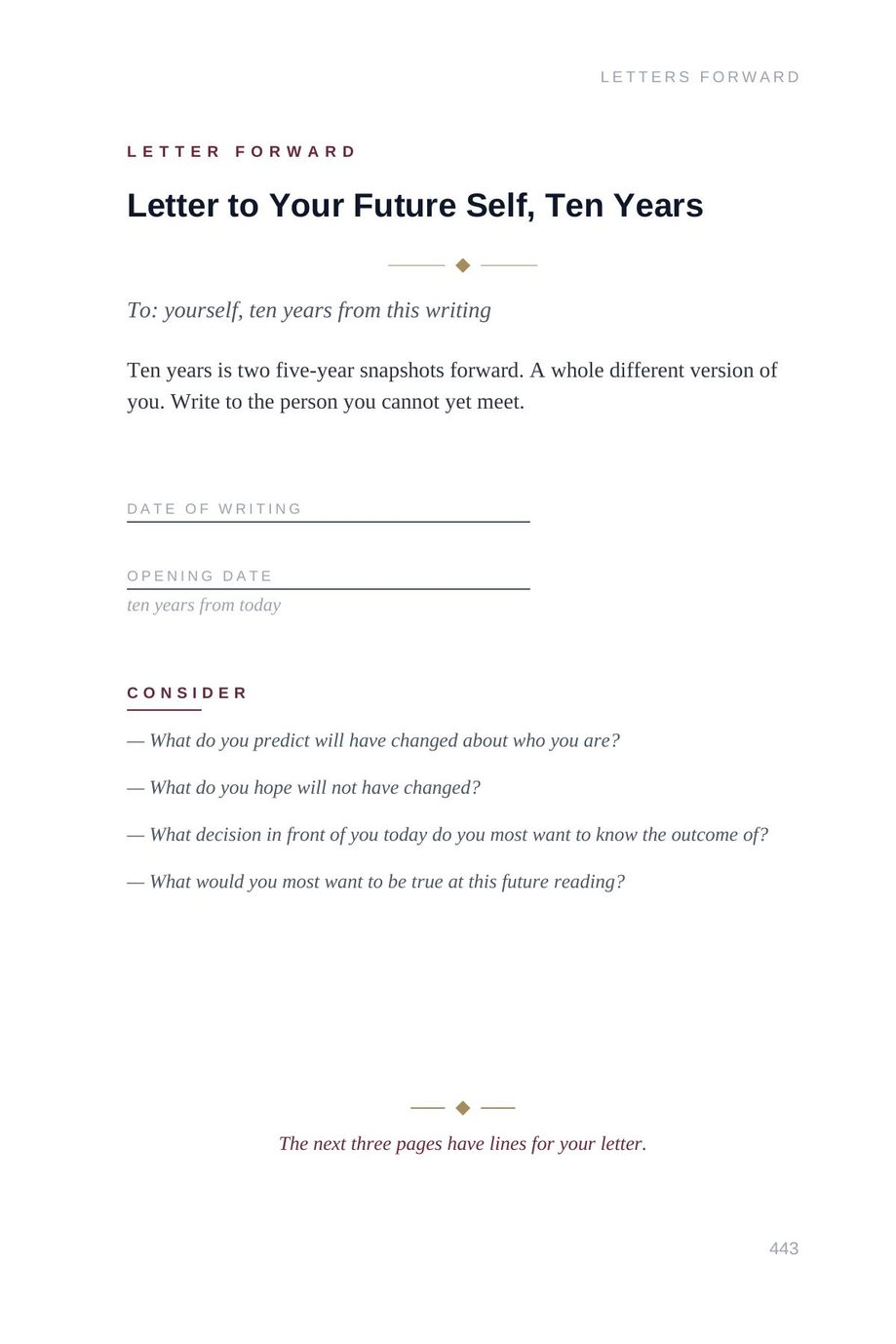
The mechanics that make it a letter and not a diary entry
Two dates: when written and when it may be opened. An address line naming the reader, even an unknown one. Witness before advice: what you saw, what you loved, what you hope, held loosely, with instructions kept to a minimum because instructions age like technology. And a seal, by instruction if not by glue, because sealed words wait properly and loose pages get skimmed early and lose their weight. The letter opened after you die covers the method at its most serious; the first letter is the rehearsal.
One paragraph counts
The first letter dies from the same disease as every first attempt: the occasion feels like it demands final words, and nobody has final words on a Tuesday. Lower the bar until it moves. One paragraph is a complete letter. One dated, sealed sentence beats the perfect page that stayed theoretical, and the shelf of sealed letters can grow for the rest of your life; the unwritten one stays at zero. Readers who write a short first letter report the second comes within weeks. Readers who wait for the right first letter report nothing, because there was nothing to report.
Where the eleven live
The letters section of the book is built so that each addressed reader has its own template: future self at five years and at ten, partner, child, grandchild or young descendant, parent or caregiver, a friend who has left, your younger self, whoever reads this after you, the unsent letter to someone who caused harm, and finally the Final Letter to the people you most loved. The letter to your child and the letter to your future self are the two written most often first; where to begin places the first letter fourth in the opening sequence.
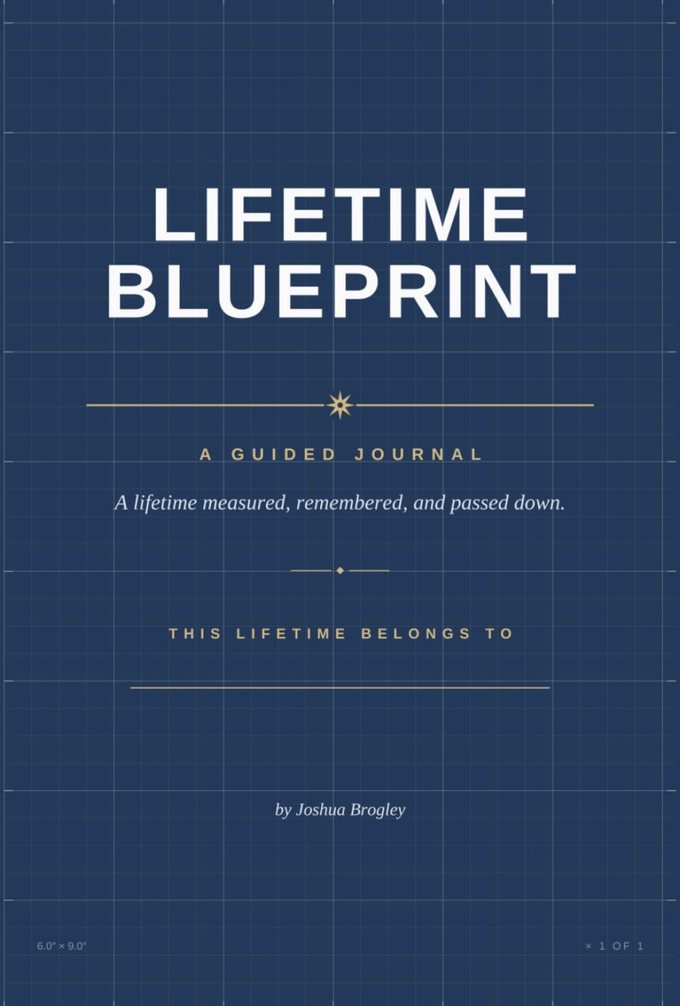
Lifetime Blueprint
The hardcover built to be inherited: eight life domains scored across decades, thirty life-event templates, and letters written forward, ending in a Final Letter.
Which letter should I write first in a lifetime journal?
One of three: to your future self if you are avoiding a decision, to a child if you are avoiding time, or to whoever reads this after you if you are avoiding being seen. Dated, addressed, one paragraph is enough.
How do you write a letter to be opened in the future?
Give it a writing date and an opening date, name the reader, write what you saw and loved and hope rather than instructions, keep it short, and seal it so it waits properly.
More on Lifetime Blueprint
- Your Twenties: The Decade of Compounding Choices
- Your Thirties: The Building Decade, When Time Starts to Feel Finite
- Your Forties Are a Recalibration, Not a Crisis
- Your Fifties: The Distillation Decade, Subtraction Over Addition
- Why Most People Will Never Write Their Life Down
The method behind every book
- Which 365-Day Book Should I Start With? A One-Minute Guide
- What Is a No Zero Day? The Rule That Saves a Bad Week
- What Is a Realistic Morning Routine? Two Minutes, Not Two Hours
All articles about Lifetime Blueprint → · The book page → · All the books →
written by the author, at the kitchen table, after work.