Home / Blog / Lifetime Blueprint
LIFETIME BLUEPRINT
How to Backfill the Decades You Have Already Lived
Part of the series Where to Begin a Lifetime Journal: Five Ways In, and Who Each Is For
Backfilling is the work of writing the decades you have already lived into a record that did not exist while you were living them. It is the door most readers with real road behind them want to walk through first, and the rules are few: open the decade that pulls hardest, not the earliest; expect many sittings rather than one; log the date of every entry so future readers can see the layers; and watch for the two distortions that hindsight brings to every decade it touches.
Start with the decade that pulls, not with childhood
The instinct is chronological, and chronology is how backfill dies at age nine. Open instead the decade that still aches or still glows, usually the one that changed everything, and write that first; momentum comes from significance, not sequence. The other decades follow more easily once one is on the page, because writing one decade teaches you the shape of the exercise. Childhood, oddly, is often best done last: it is the decade before you chose anything, and it reads differently once you have written the decades where you did.

Many sittings, one log
A decade cannot be written in an evening and is not meant to be. Each chapter carries a decade log: the date of every entry made into that section, across months or years, so the chapter is built up in layers rather than delivered whole. Future readers use that log to find the layers, and you use it to see how your account of your twenties changed between forty and fifty, which is itself information. Fifteen minutes on a Sunday, dated, is a legitimate sitting. Waiting for the free weekend that does the whole decade properly is how the decade stays blank.
The two traps: compression and back-filling
Hindsight compresses a decade to its three biggest events plus fog, so before writing, list ten ordinary specifics, the flat, the commute, the friends, the Tuesday routine, to re-inflate the texture. And hindsight back-fills, projecting what you know now onto who you were then, which convicts your 25-year-old self with evidence that did not exist yet. The corrective is one deliberate sentence per decade, what I did not know then, and the scoring method itself, which breaks the decade into phases and scores each by domain rather than granting the whole ten years one adjective. How to reflect on a decade covers the scoring in full.
Backfill the events alongside the decades
Decades hold the arc; the events hold the pivots. As you write a decade, the births, endings, moves, turnings and healings that fell inside it each have their own template, and the two record systems cross-reference each other: the decade chapter says what the years were about, the event page says what the moment was. Readers who backfill both report that the events are where the writing gets honest, because an event cannot be summarized into an adjective. The six kinds of life events is the sorting system; where to begin places backfill third in the sequence, after the snapshot and the people.
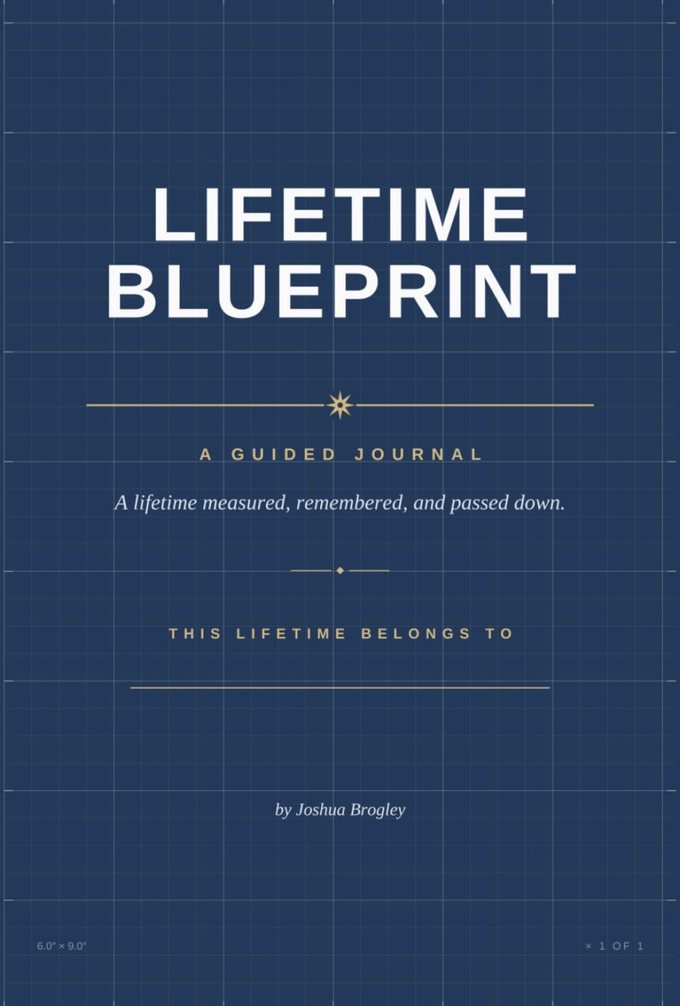
Lifetime Blueprint
The hardcover built to be inherited: eight life domains scored across decades, thirty life-event templates, and letters written forward, ending in a Final Letter.
Which decade should I write about first?
The one that pulls hardest, usually the decade that changed everything, not the earliest. Momentum comes from significance. Childhood is often best written last, once the decades where you made choices are on the page.
How long does it take to write up a past decade?
Many sittings across months, logged by date in the chapter's decade log. Fifteen dated minutes is a real sitting; waiting for a free weekend to do the whole decade is how it stays blank.
More on Lifetime Blueprint
- Your Twenties: The Decade of Compounding Choices
- Your Thirties: The Building Decade, When Time Starts to Feel Finite
- Your Forties Are a Recalibration, Not a Crisis
- Your Fifties: The Distillation Decade, Subtraction Over Addition
- Why Most People Will Never Write Their Life Down
The method behind every book
- Which 365-Day Book Should I Start With? A One-Minute Guide
- What Is a No Zero Day? The Rule That Saves a Bad Week
- What Is a Realistic Morning Routine? Two Minutes, Not Two Hours
All articles about Lifetime Blueprint → · The book page → · All the books →
written by the author, at the kitchen table, after work.