Home / Blog / Lifetime Blueprint
LIFETIME BLUEPRINT
How Often Should You Journal? Slower Than You Think
Part of the series Where to Begin a Lifetime Journal: Five Ways In, and Who Each Is For
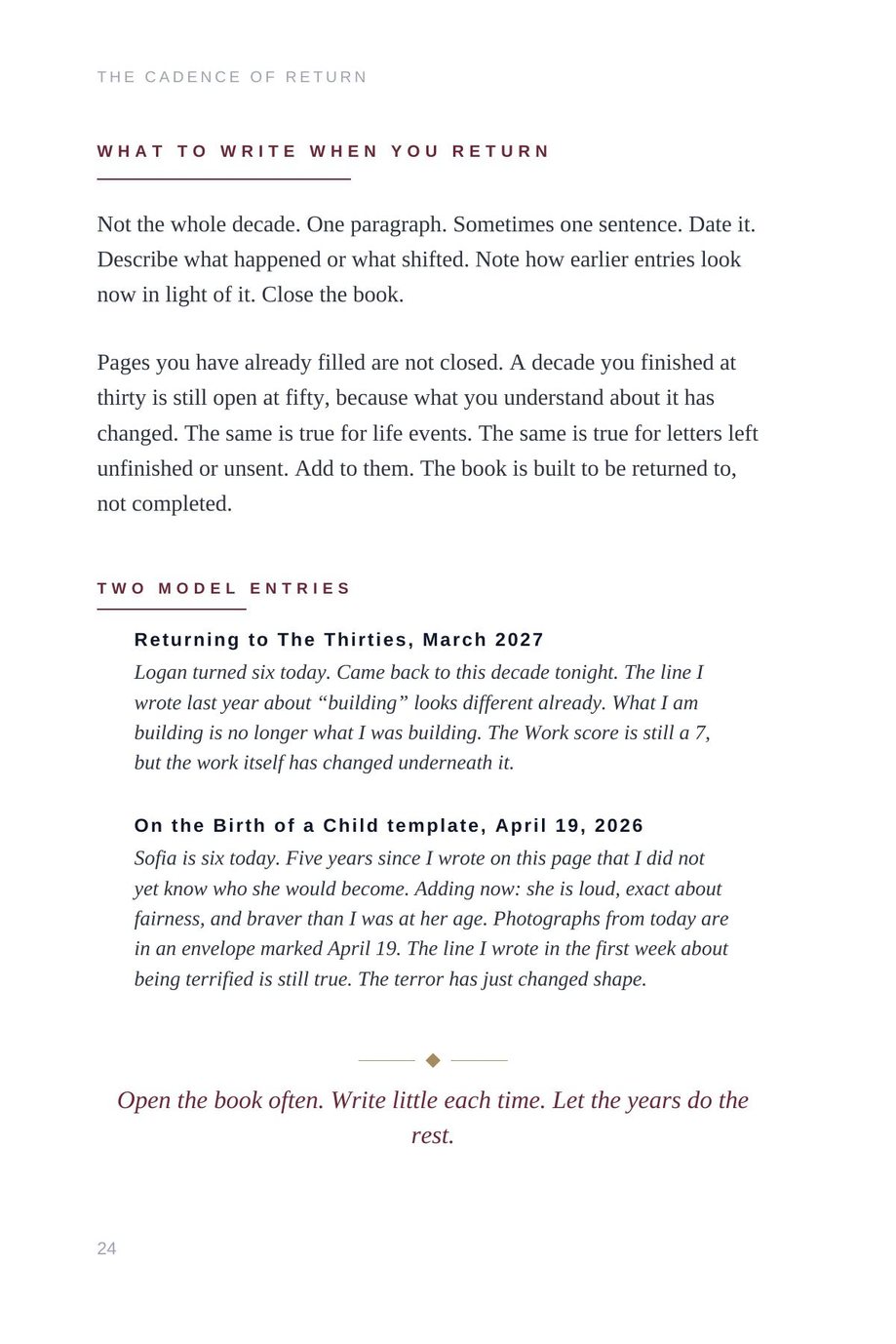
The question assumes daily is the gold standard and everything else is failure, and the assumption deserves to be retired. Daily journaling suits processing, working through what today felt like. For reflection, the kind of writing that measures a life rather than ventilates a day, the honest cadence is dramatically slower: when something happens, plus a scheduled return once or twice a year. Not the whole decade. One paragraph. Sometimes one sentence. Dated.
Match the cadence to the writing's job
Processing writing has a short half-life on purpose: today's anxiety, tomorrow's meeting, this week's argument. Daily suits it, and rereading it is optional. Reflection writing is the opposite instrument: where things stand, what this year was about, what the event meant, and its value comes precisely from being rare, because rarity is what makes entries comparable. A daily record of moods averages into noise. Ten dated annual paragraphs are a visible life.
Why slower is more honest, not less committed
Daily reflection forces manufacturing: nothing measurable changed since Tuesday, so the entry inflates small weather into significance and the record fills with noise that later reading cannot use. A slower clock waits until there is signal. This inverts the usual guilt math, and the inversion is the liberating part: the person who writes four honest dated paragraphs a year is keeping a better record than the person grinding out three hundred entries and abandoning the practice each March. Frequency was never the metric. Returnability is.
The event-driven trigger beats the calendar
The best cadence is mostly not scheduled at all: write when life produces an entry, the birth, the move, the diagnosis, the decision that resized everything, while it is still true and before memory begins its sanding. Between events, one scheduled return, a year-end or birthday snapshot, keeps the thread. That pair, events plus an annual pulse, is the entire realistic commitment, and it survives contact with actual decades in a way daily never does. Recording the big events covers the trigger half; the year in review covers the pulse.
Slow journals need a permanent address
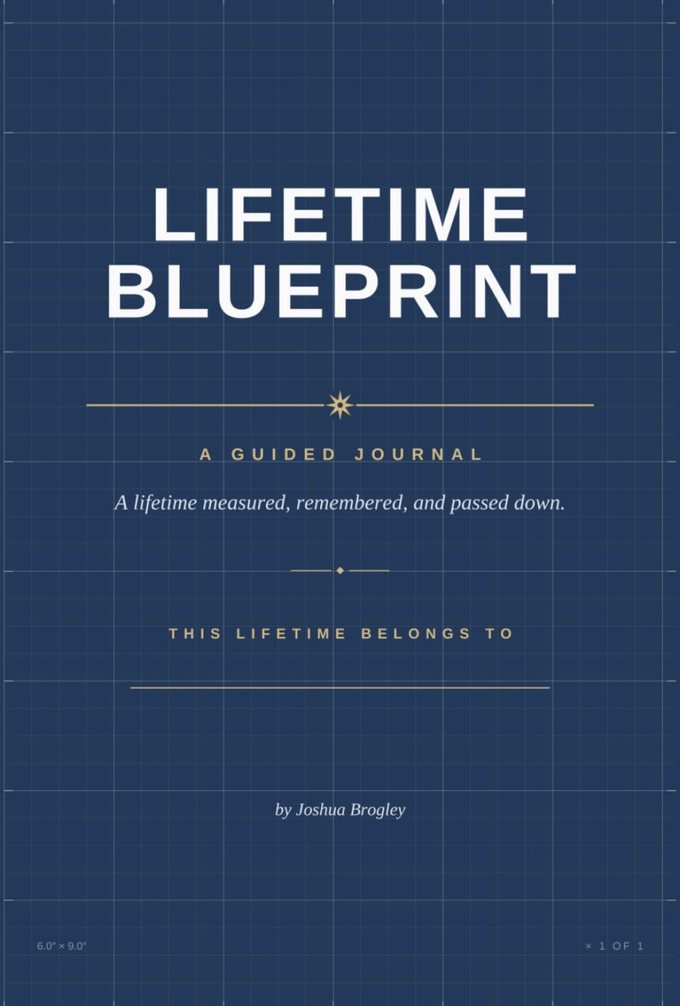
A cadence measured in years cannot live in a spiral notebook that will be misplaced by the third entry; the practice only compounds if 2031's paragraph lands physically beside 2026's. That is the design brief of a certain hardcover on the slow clock: snapshots, decades and events, each with its dated place, built so that returning is the default rather than an archaeology project. If you have never kept any journal, start smaller than feels romantic; if the daily kind keeps dying on you, the diagnosis was never discipline. It was cadence.
Lifetime Blueprint
The hardcover built to be inherited: eight life domains scored across decades, thirty life-event templates, and letters written forward, ending in a Final Letter.
Is it OK to not journal every day?
For reflection it is better: rare, dated entries stay comparable and honest, while forced daily reflection manufactures significance out of noise. Daily suits processing; measuring a life runs on a slower clock.
What is a realistic journaling schedule?
Event-driven entries when something genuinely happens, plus one scheduled snapshot a year, each one paragraph, sometimes one sentence, dated. Four honest dated paragraphs a year outperform a daily habit abandoned every March.
More on Lifetime Blueprint
- Your Twenties: The Decade of Compounding Choices
- Your Thirties: The Building Decade, When Time Starts to Feel Finite
- Your Forties Are a Recalibration, Not a Crisis
- Your Fifties: The Distillation Decade, Subtraction Over Addition
- Why Most People Will Never Write Their Life Down
The method behind every book
- Which 365-Day Book Should I Start With? A One-Minute Guide
- What Is a No Zero Day? The Rule That Saves a Bad Week
- What Is a Realistic Morning Routine? Two Minutes, Not Two Hours
All articles about Lifetime Blueprint → · The book page → · All the books →
written by the author, at the kitchen table, after work.