Home / Blog / Lifetime Blueprint
LIFETIME BLUEPRINT
How to Start Journaling When You Never Have
Part of the series Where to Begin a Lifetime Journal: Five Ways In, and Who Each Is For
The blank page is why most people never start journaling: an empty notebook is a demand for content you do not have at 10 p.m. Start with structure instead. Score where you are, in a few areas of life, honestly, once. Answer one written prompt. And pick a cadence you can actually keep, which for most adults is weekly or slower, not the daily diary everyone quits by February.
Blank pages are for people who already journal
Freeform writing is an advanced skill wearing a beginner's costume. The people filling blank notebooks happily have years of practice deciding what matters. A beginner needs the decision made for them: a question to answer, a scale to score, a template to fill. Structure is not cheating; it is scaffolding, and every writer you admire started on some version of it.
Start with a snapshot, not a diary
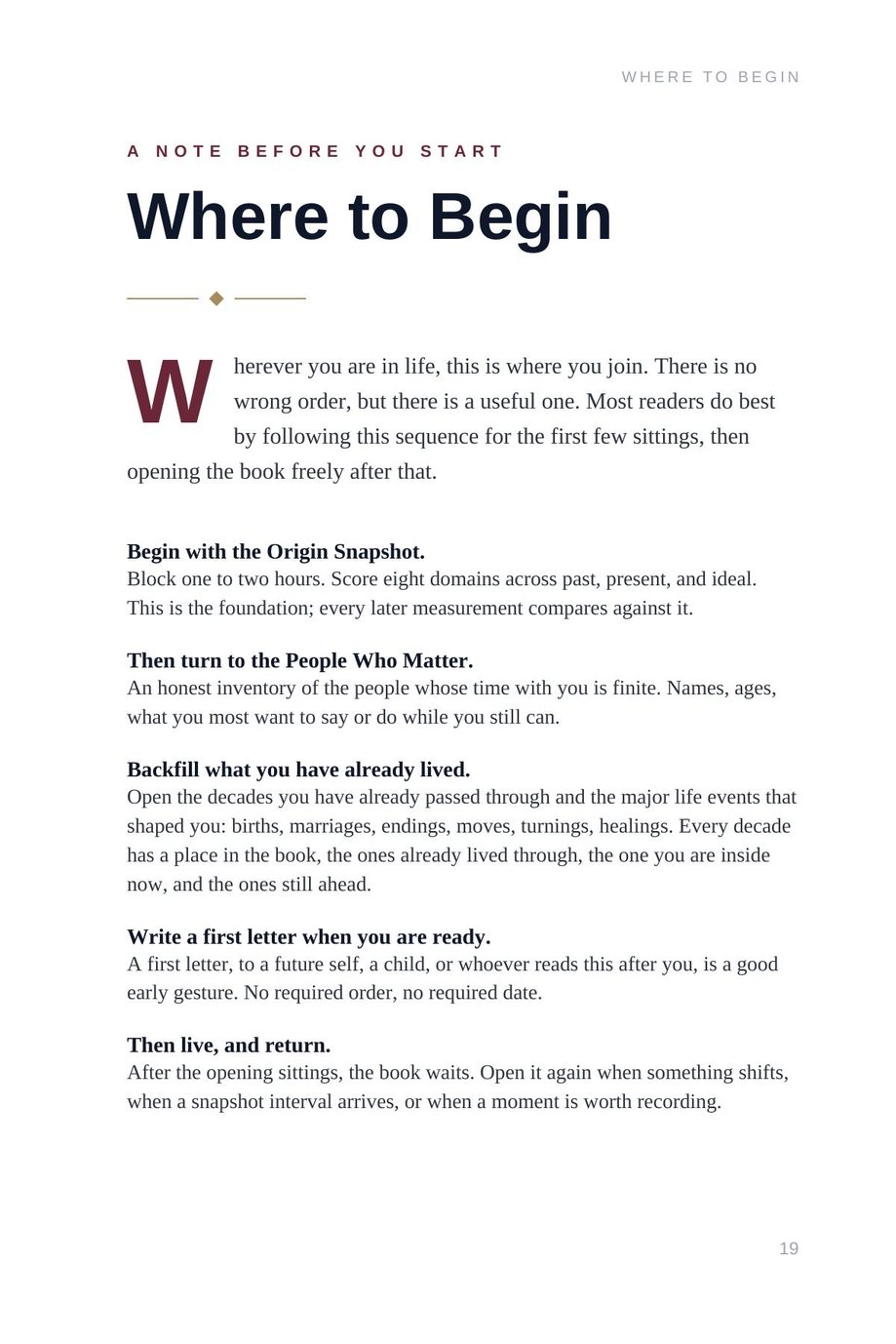
The highest-value first entry is not what happened today, it is where things stand: the main areas of your life, each given an honest score and a sentence. Twenty minutes, done once, and it becomes the baseline every later entry gets measured against. The main areas of life covers the standard set, and the life audit is the deeper version when you are ready.
Pick a cadence you will actually keep
Daily journaling is the default advice and the main reason people quit. Wherever you are in life, you can join at a slower clock: weekly for reflection, monthly for review, and a handful of times a year for the big snapshot. A journal you write in twelve times a year for thirty years beats a diary abandoned in six weeks, by roughly thirty years.
Decide who it is for
A private processing journal and a record meant to outlast you are different tools. The second kind, scored life areas, recorded events, letters to people who are not born yet, is the one most beginners secretly want and nobody tells them exists. That is what a lifetime journal is, and if the reader you imagine is your kids, the legacy version is the place to start.
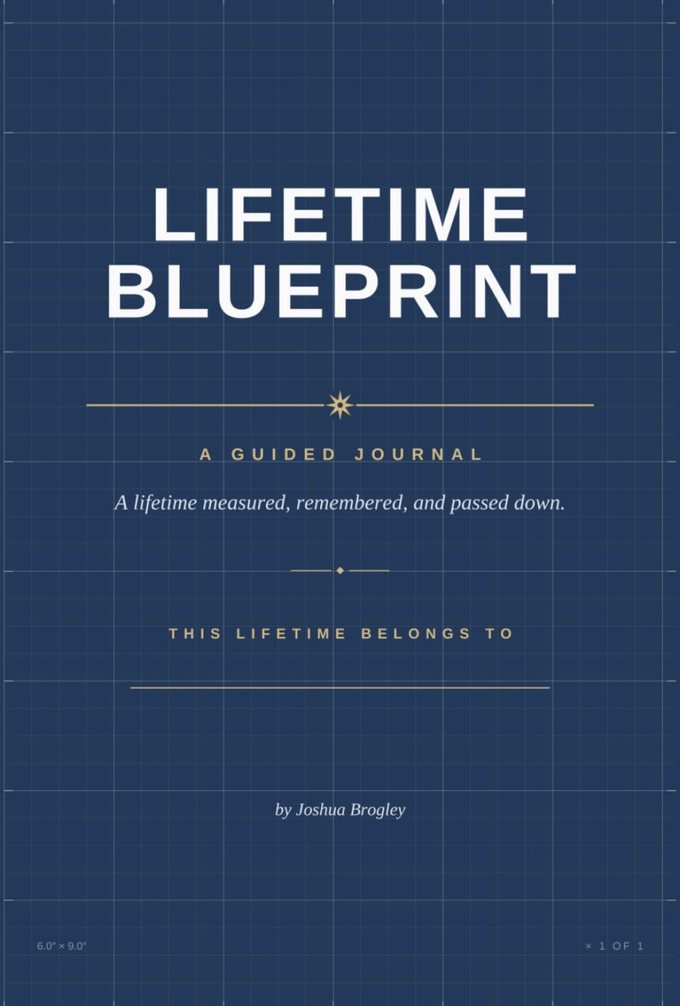
Lifetime Blueprint
The hardcover built to be inherited: eight life domains scored across decades, thirty life-event templates, and letters written forward.
How do I start journaling as a beginner?
Skip the blank notebook. Use structure: score the main areas of your life once as a baseline, answer one written prompt, and commit to a weekly or monthly cadence rather than daily.
What should I write in my first journal entry?
A snapshot of where things stand: each main area of life, an honest score, one sentence why. It takes twenty minutes and gives every future entry something to be compared against.
More on Lifetime Blueprint
- Your Twenties: The Decade of Compounding Choices
- Your Thirties: The Building Decade, When Time Starts to Feel Finite
- Your Forties Are a Recalibration, Not a Crisis
- Your Fifties: The Distillation Decade, Subtraction Over Addition
- Why Most People Will Never Write Their Life Down
The method behind every book
- Which 365-Day Book Should I Start With? A One-Minute Guide
- What Is a No Zero Day? The Rule That Saves a Bad Week
- What Is a Realistic Morning Routine? Two Minutes, Not Two Hours
All articles about Lifetime Blueprint → · The book page → · All the books →
written by the author, at the kitchen table, after work.