Home / Blog / Lifetime Blueprint
LIFETIME BLUEPRINT
How Do I Record Major Life Events So They Are Not Forgotten?
Part of the series The Six Kinds of Life Events Worth Writing Down
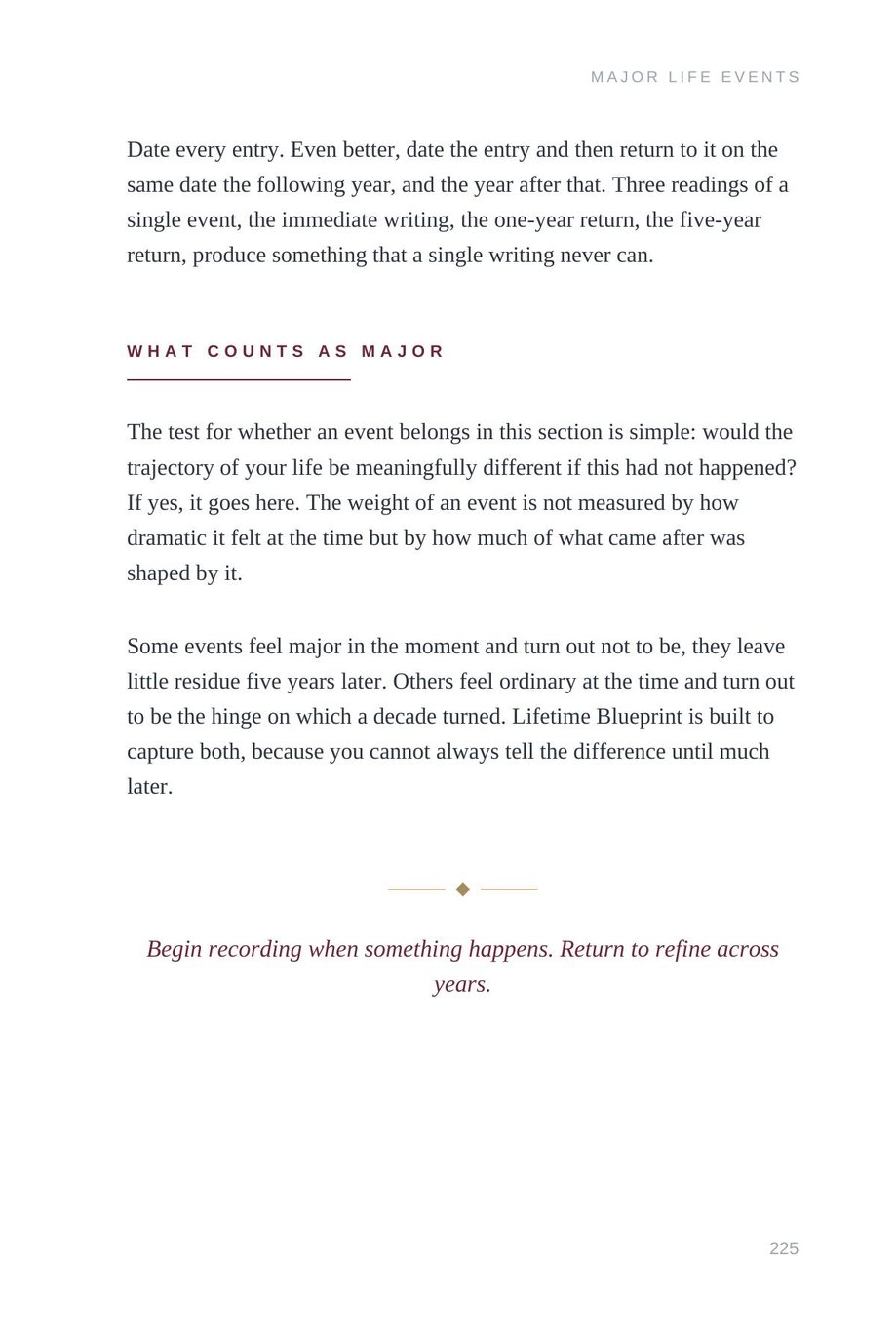
Use a template, and use it the same week. Date, what happened, who was there, what it changed in you, and one line to your future self. Free-writing about a big event produces three pages the first time and nothing the second; a template produces a comparable record every time. Lifetime Blueprint has thirty life-event templates across six categories, births, losses, moves, career, health, faith, so the moments that shape a life get recorded in a form you can read across decades.
Memory rewrites; paper does not
You will not remember what you felt the week your father died or the day the job ended. You will remember a story about it. A dated template, filled that week, keeps the original.
The template beats the essay
A structure asks the same five questions of every event, so a birth in your twenties and a loss in your fifties are recorded in a comparable shape. That is what lets you read them together later, and it is why the Blueprint uses templates instead of blank pages.
Six categories, thirty pages
Family, loss, home, work, health, faith. Enough slots for a full life, laid out next to the decade reflections so an event and its decade sit in the same book. The event pages are where the numbers on the domain scores get their explanation.
One line to the future
Every template ends by asking what you would tell your future self about this. Ten of those lines across a life is a letter you did not know you were writing. Related: planning and reviewing by decades.
Lifetime Blueprint
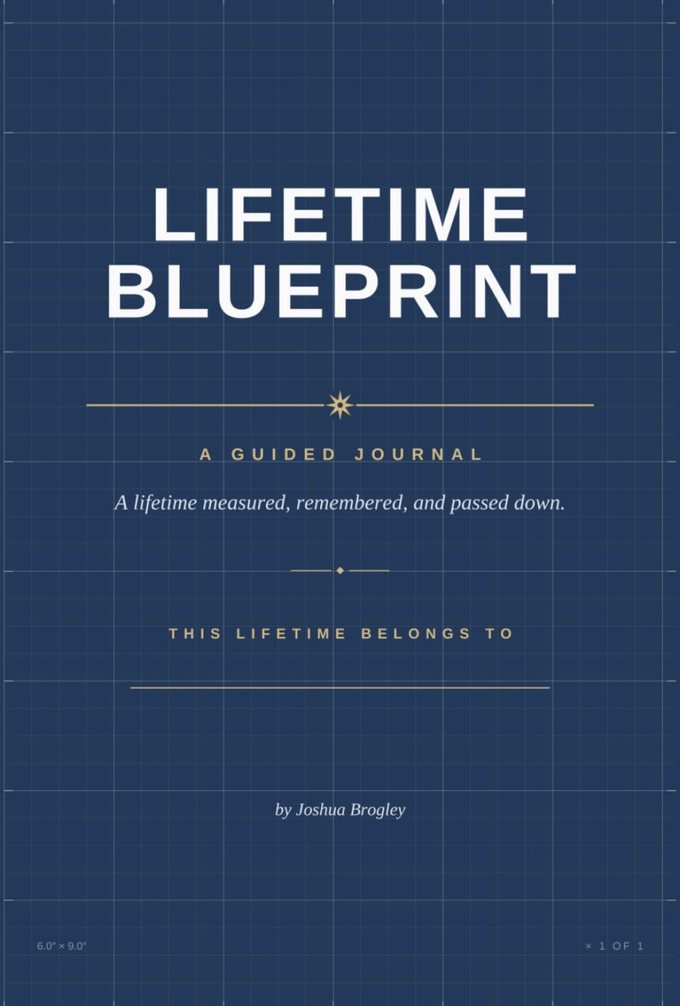
A guided journal built for the long arc of a life: eight domains, seven decades, twelve snapshots, eleven letters, one record honest enough to be inherited.
Which life events should I record?
The ones that changed you: births, deaths, marriages, moves, career turns, serious illness, faith shifts. Not the calendar. The Blueprint’s thirty templates cover the categories most lives pass through.
Should I record bad events too?
Especially those. The Blueprint’s decade scoring shows again and again that hard events score differently at the end of a decade than during it. Recording them honestly is what makes the record worth inheriting.
More on Lifetime Blueprint
- Your Twenties: The Decade of Compounding Choices
- Your Thirties: The Building Decade, When Time Starts to Feel Finite
- Your Forties Are a Recalibration, Not a Crisis
- Your Fifties: The Distillation Decade, Subtraction Over Addition
- Why Most People Will Never Write Their Life Down
The method behind every book
- Which 365-Day Book Should I Start With? A One-Minute Guide
- What Is a No Zero Day? The Rule That Saves a Bad Week
- What Is a Realistic Morning Routine? Two Minutes, Not Two Hours
All articles about Lifetime Blueprint → · The book page → · All the books →
written by the author, at the kitchen table, after work.