Home / Blog / Lifetime Blueprint
LIFETIME BLUEPRINT
How to Write About the Birth of Your Child (Before the Old You Is Gone)
Part of the series The Six Kinds of Life Events Worth Writing Down
The day a child arrives is the day a different version of you arrives with them, and the new version begins, immediately, to forget the old one. That is why this entry has a deadline the others do not: write before the person who walked into the hospital is gone, because within weeks you will not be able to remember what you were afraid of, what you thought life was, or who you were when you were nobody's parent. The photograph will survive. The person holding the camera will not, and this is their only chance to speak.
What to write in the first week
The room, in detail: light, sound, who was there, what was on the wall. The half-hour before, which is the part of every birth story that gets dropped and is often the truest: what was said, what you were doing, the last ordinary moment. The first thought, unedited, which is rarely the one people tell at parties. The thing nobody else would have noticed. And one paragraph on who you were the day before, written as if introducing a stranger, because in five years that is what they will be.
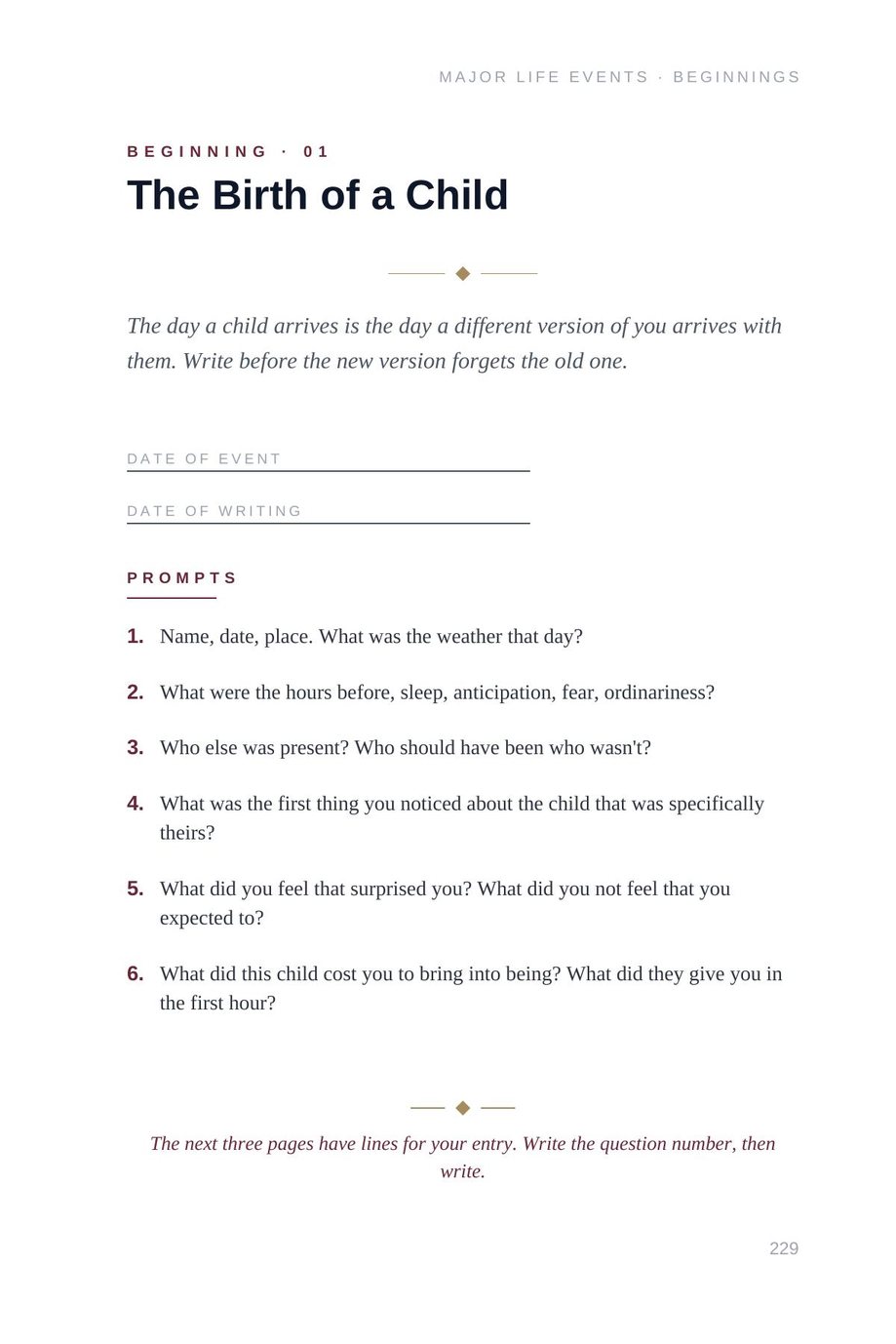
What the template asks over time
Date of event. Date of writing, which may be days later and should not be months. Then the prompts, which move from what happened to what it changed to what you know now, and the last of those is written later: at the first birthday, at ten, at eighteen, under the original in different ink. A birth entry with four dated layers is a record of a parent becoming one, which is a thing children turn out to want to read more than almost anything else their parent leaves them.
Write the fear as well as the wonder
The pressure on this entry is to be beautiful, and beauty edits. The honest first-week account includes the fear, the exhaustion, the moment of not feeling what you expected to feel, the thought you would never say aloud; and the honest account is the one the child, at thirty, will trust, because it will match the parent they actually knew. The book's whole argument for honesty is inheritance: the impressive version will be skipped, the true version read twice.
Where it goes, and what sits beside it
The Birth of a Child is the first of the thirty event templates, in the Beginnings category, and it is usually the first entry written by readers who start the book mid-life. It pairs naturally with the Letter to a Child in the letters section, written to be opened at a chosen age, and with the family history the child will one day ask about. Beginnings is the category; the letter to your child is the companion; first-time dad advice is the daily side of the same week. All of it sits in a certain hardcover built to still be legible when the child is the one reading.
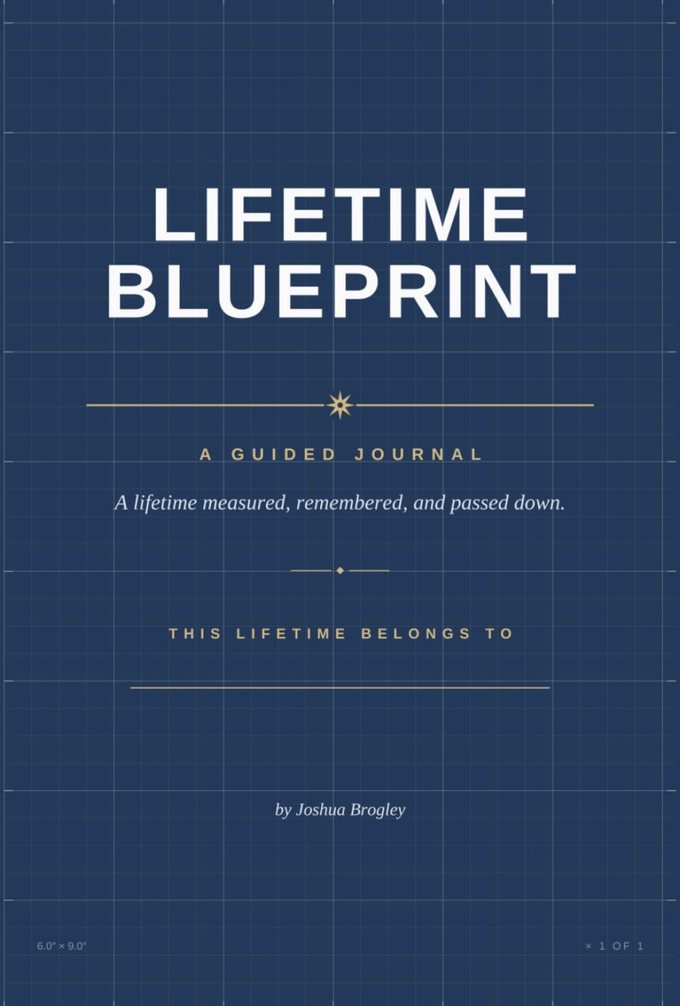
Lifetime Blueprint
The hardcover built to be inherited: eight life domains scored across decades, thirty life-event templates, and letters written forward, ending in a Final Letter.
What should I write about my child's birth?
The room, the half-hour before, the unedited first thought, the thing nobody else saw, and one paragraph on who you were the day before. Write within the first week, before the new version of you forgets the old one.
When should you write about becoming a parent?
In the first days, dated, and again at the first birthday, at ten and at eighteen, under the original. Layers written years apart are the record a child most wants.
More on Lifetime Blueprint
- Your Twenties: The Decade of Compounding Choices
- Your Thirties: The Building Decade, When Time Starts to Feel Finite
- Your Forties Are a Recalibration, Not a Crisis
- Your Fifties: The Distillation Decade, Subtraction Over Addition
- Why Most People Will Never Write Their Life Down
The method behind every book
- Which 365-Day Book Should I Start With? A One-Minute Guide
- What Is a No Zero Day? The Rule That Saves a Bad Week
- What Is a Realistic Morning Routine? Two Minutes, Not Two Hours
All articles about Lifetime Blueprint → · The book page → · All the books →
written by the author, at the kitchen table, after work.