Home / Blog / Lifetime Blueprint
LIFETIME BLUEPRINT
Turnings: The Quiet Decisions That Changed the Direction
Part of the series The Six Kinds of Life Events Worth Writing Down
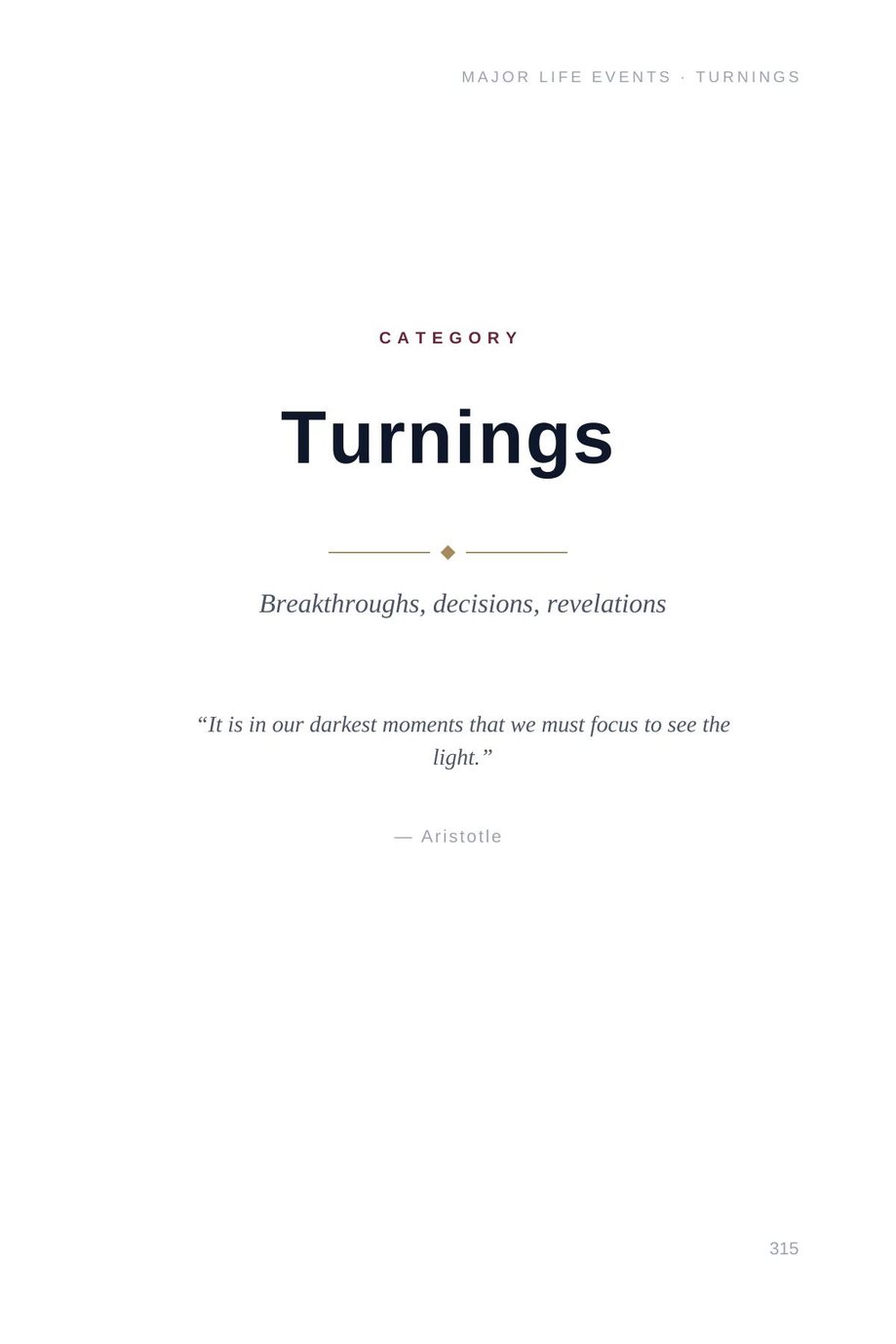
Turnings are the events where a decision was made, sometimes consciously, sometimes only visible in retrospect, that changed the direction of what came next. Not every turning is dramatic. Many of the most consequential are quiet conversations, single sentences, days when nothing visible happened but inside everything moved. Turnings are where what was being chosen becomes visible, and they are recorded because the gap between what you thought you were choosing and what you were actually choosing is where the most important learning lives. Write the turning. Then return to it in five years and write what you now see about what was actually being decided.
The five templates
The Decision That Changed the Decade, because every decade tends to have one you can later point to and say: that; after that, everything was different. A Breakthrough in Understanding, the day a long-confusing thing made sense or a long-believed thing was revealed to be wrong. A Confrontation That Mattered, where you said something that needed saying or someone said something you could not afterward un-hear. A Failure That Taught You Something, among the most valuable pages in the whole book, because the pretty version of a failure teaches nothing and the accurate version teaches everything. And A Moment of Grace, the turning that was not earned: someone showed up, someone forgave, something was given that was not asked for.
The five-year return is the method
Every template in the book can be returned to, but Turnings are built around the return: the prompts split between what happened then and what you know now, and the instruction is explicit about the interval. Five years is long enough for the consequences to declare themselves and short enough that the original observations are still legible. The turning written at thirty-two and reinterpreted at thirty-seven is the single most educational pair of pages a person can own, because it shows, in their own handwriting, how much of what they thought they were deciding was something else.
Why people can name only three
Ask someone for the turning points of their life and they produce two or three, all dramatic. The record of a person who keeps this category shows a turning roughly every eighteen months, most of them quiet. The difference is not the lives; it is the slot. Without a category for quiet turnings they file themselves under ordinary time and dissolve, and the person is left with a life that seems to have been decided in three moments by fate, when it was decided in forty by them. Recognizing a turning while inside it is the skill; this category is the place.
The template that pays the most
A failure that taught you something is a guided post and the entry the book flags as most valuable, because honest failure is the rarest record anyone keeps. Turnings are the fifth of the six kinds of life events; the templates, with their two dates and their split prompts, sit in the events section of a certain hardcover designed for exactly the five-year return, and the career pivot is often a turning and a movement at once.
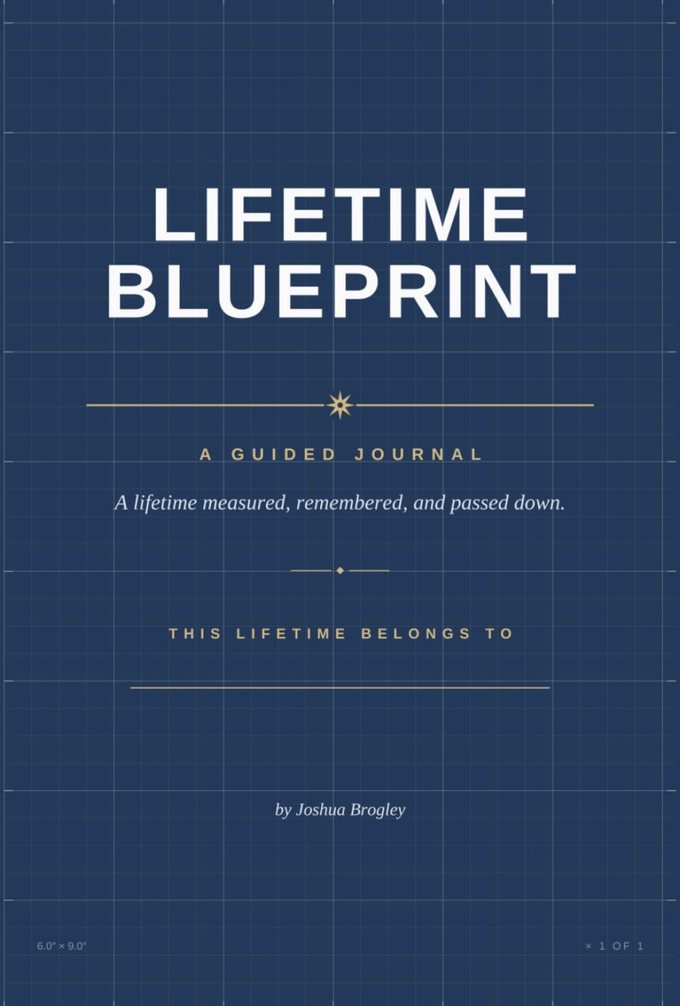
Lifetime Blueprint
The hardcover built to be inherited: eight life domains scored across decades, thirty life-event templates, and letters written forward, ending in a Final Letter.
What is a turning point in life?
A decision, conscious or only visible later, that changed the direction of what came next. Most are quiet: a conversation, a sentence, a day when nothing visible happened. The record is written twice, then and five years on.
How do you identify turning points in your life?
Give them a category and write them as they happen: the decision of the decade, a breakthrough in understanding, a confrontation, a failure that taught, a moment of grace. People who keep the category find one roughly every eighteen months.
More on Lifetime Blueprint
- Your Twenties: The Decade of Compounding Choices
- Your Thirties: The Building Decade, When Time Starts to Feel Finite
- Your Forties Are a Recalibration, Not a Crisis
- Your Fifties: The Distillation Decade, Subtraction Over Addition
- Why Most People Will Never Write Their Life Down
The method behind every book
- Which 365-Day Book Should I Start With? A One-Minute Guide
- What Is a No Zero Day? The Rule That Saves a Bad Week
- What Is a Realistic Morning Routine? Two Minutes, Not Two Hours
All articles about Lifetime Blueprint → · The book page → · All the books →
written by the author, at the kitchen table, after work.