Home / Blog / Lifetime Blueprint
LIFETIME BLUEPRINT
How to Write Your Immigration Story: The Move Across a Border
Part of the series The Six Kinds of Life Events Worth Writing Down
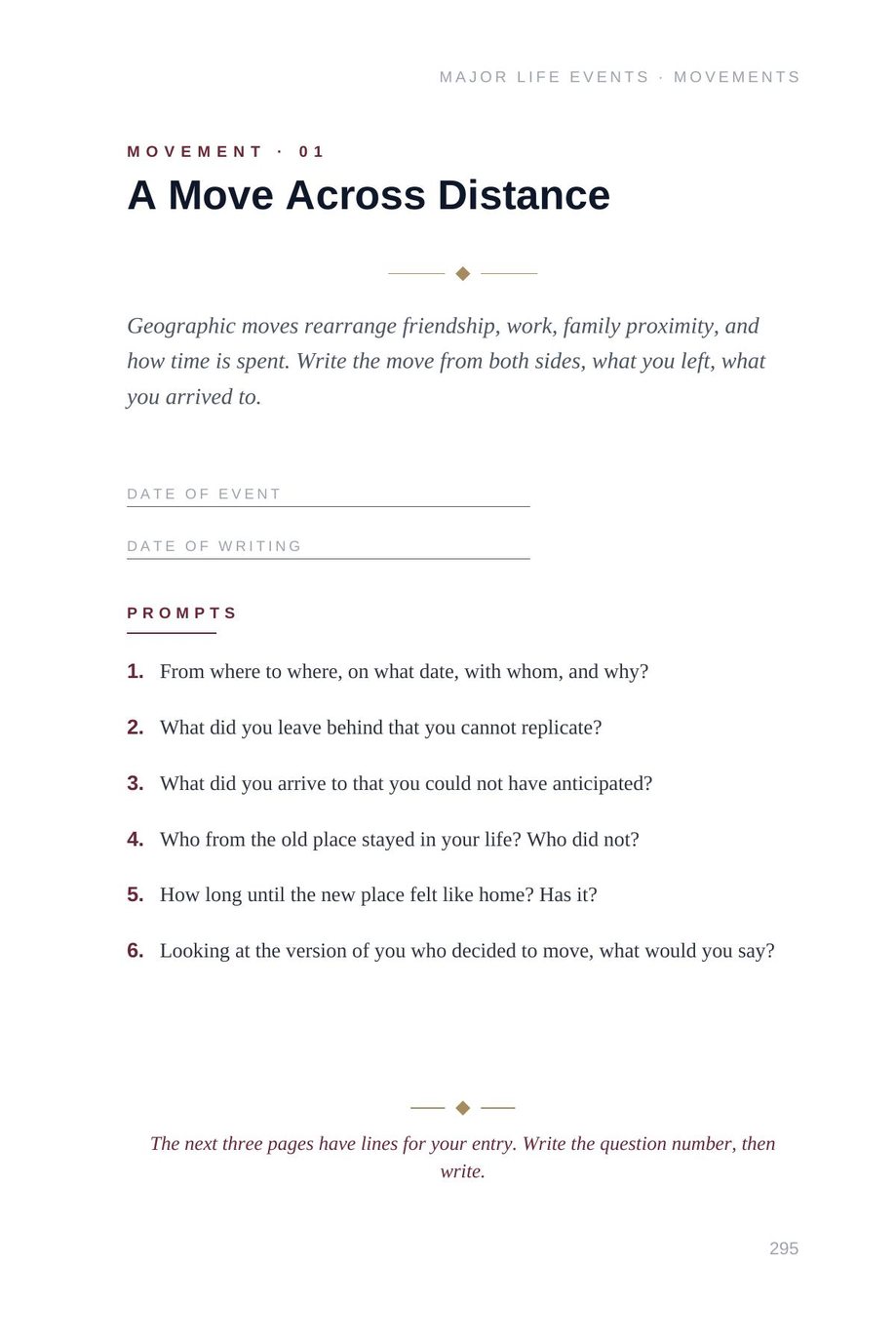
A move across a border is the largest Movement most people ever make, and the template for it, A Move Across Distance, gives the instruction that applies to all of them at greater force: write the move from both sides, what you left and what you arrived into. Geographic moves rearrange friendship, work, family proximity and how time is spent, and the immigrant's record has a particular hazard: the leaving side is loud, the arriving side is quiet, and within a few years the story has become entirely about what was left, told by someone who chose to leave it.
The leaving side, at its true weight
Write what was left as specifically as it was: the people, the language spoken without effort, the food, the competence of knowing how everything works, the standing you had among people who had known you for decades, the family events that will now happen without you. The leaving usually weighs more than the arriving, the category essay says, and the honest account gives it that weight, because an immigrant who pretends the loss was small is writing a brochure, and their children will know.
The arriving side, which nobody counts
Then the second account, separate, and this is the one that goes unwritten: what you walked toward, and what it turned out to give. The version of yourself that could not have existed at home. The skills learned from being bad at everything again. The people who would never have been in your life. The children who are of the new place in a way you never will be, and what that is like to watch. Gains are quiet and go uncounted unless the template forces the count, and it does. Readers who write both sides say the second half changed the story they had been telling for twenty years.
Two homes, two dates, and the return
Date of event, which for a border crossing is usually exact, and date of writing, which is often years later; that is fine, and the gap is itself part of the entry. Then the return: five years on, under the original, what the move turned out to be, and whether it was also a Turning, which most immigrations are. The children's version of the same event belongs in the same book, in the Childhood or Adolescence chapter, written by them or recorded from them, because a family history that crosses a border is the record a family most needs and least often has.
Where it sits, and what it connects to
A Move Across Distance is the first Movements template, and it links to almost everything else: the Work and Money domains scored before and after, the People Who Matter inventory with its visits-per-year arithmetic now multiplied by airfare, the letters to parents who stayed. Movements is the category; the family history is where the border becomes a chapter; the remaining-visits math is the immigrant's hardest page; the inherited book is the reason to write it at all. The template, with its two dates, sits in a certain hardcover that will cross the next border too.
Lifetime Blueprint
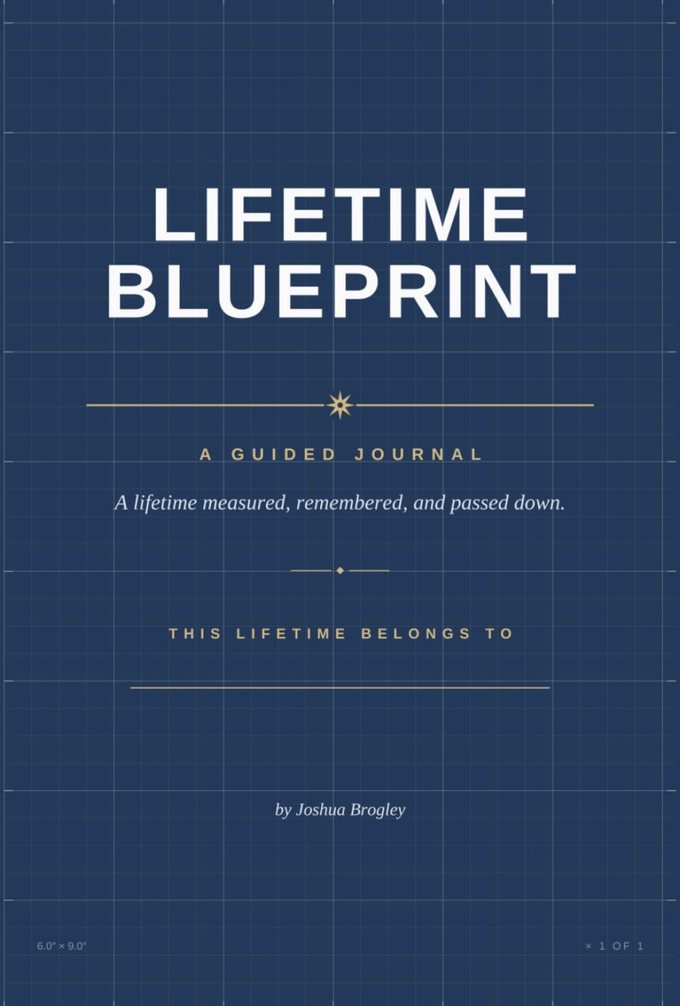
The hardcover built to be inherited: eight life domains scored across decades, thirty life-event templates, and letters written forward, ending in a Final Letter.
How do you write about immigrating?
From both sides, as two separate accounts: what you left, at its true weight, and what you arrived into, which is the half that goes uncounted. Date the crossing and the writing, and return five years later to write what the move turned out to be.
Why should immigrants write their story down?
Because within a few years the story becomes entirely about what was left, and because a family history that crosses a border is the record a family most needs and least often has. The children's version belongs in the same book.
More on Lifetime Blueprint
- Your Twenties: The Decade of Compounding Choices
- Your Thirties: The Building Decade, When Time Starts to Feel Finite
- Your Forties Are a Recalibration, Not a Crisis
- Your Fifties: The Distillation Decade, Subtraction Over Addition
- Why Most People Will Never Write Their Life Down
The method behind every book
- Which 365-Day Book Should I Start With? A One-Minute Guide
- What Is a No Zero Day? The Rule That Saves a Bad Week
- What Is a Realistic Morning Routine? Two Minutes, Not Two Hours
All articles about Lifetime Blueprint → · The book page → · All the books →
written by the author, at the kitchen table, after work.