Home / Blog / Lifetime Blueprint
LIFETIME BLUEPRINT
Endings: Why the Events Most Worth Writing Go Unwritten
Part of the series The Six Kinds of Life Events Worth Writing Down
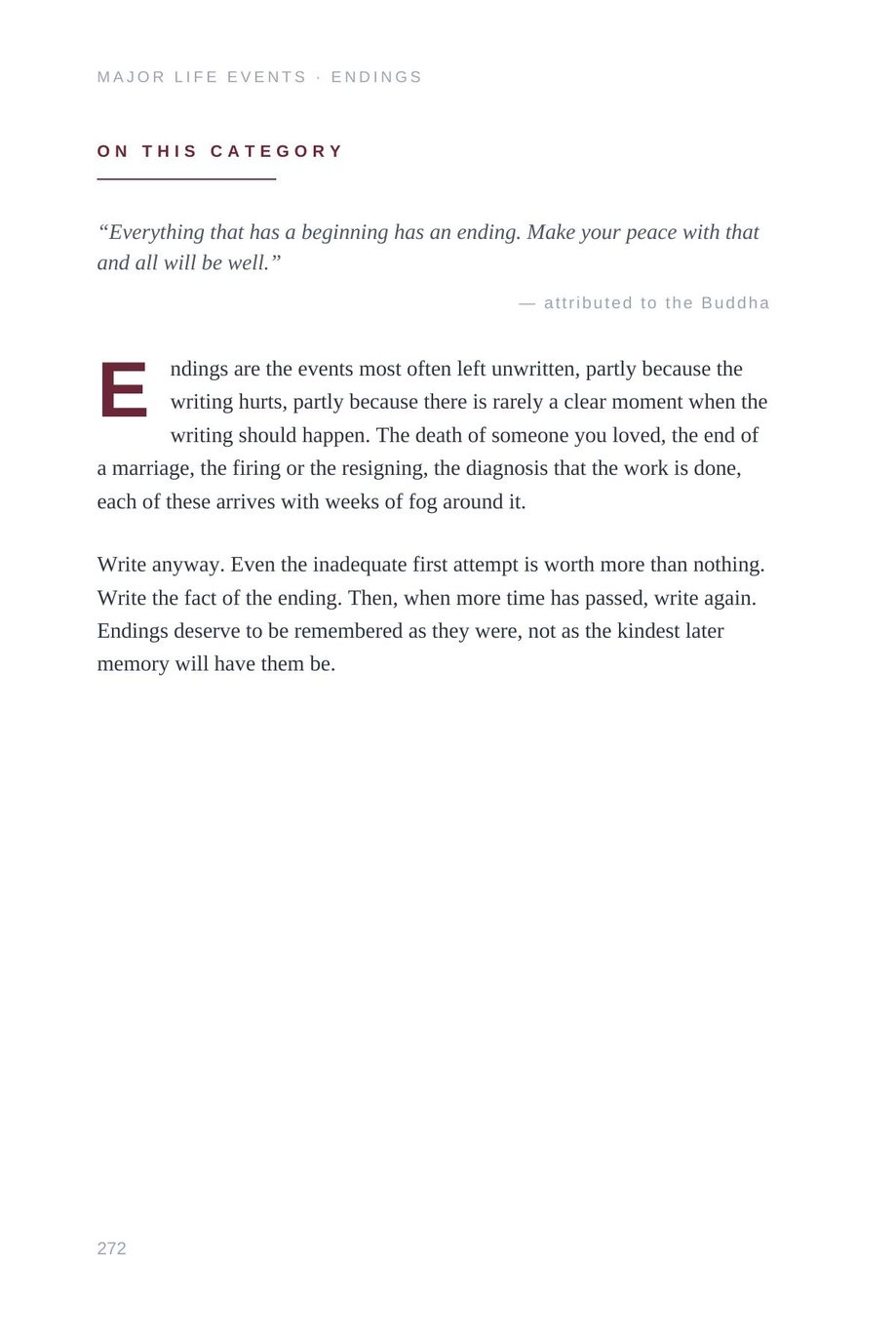
Endings are the events most often left unwritten, partly because the writing hurts and partly because there is rarely a clear moment when the writing should happen. The death of someone you loved, the end of a marriage, the firing or the resigning, the diagnosis that the work is done: each arrives with weeks of fog around it. The category's instruction is two words long. Write anyway. Even the inadequate first attempt is worth more than nothing. Write the fact of the ending. Then, when more time has passed, write again. Endings deserve to be remembered as they were, not as the kindest later memory will have them be.
The five templates
The Death of Someone You Loved, with its merciful opening line: write when you can, the first attempt will be the most inadequate, write it anyway. The End of a Marriage or Long Partnership, which is rarely a single day; write the long ending, not just the legal one. Leaving a Work that defined a decade, by quitting, firing, retiring or finishing. Estrangement, the ending that is a withdrawal, from a family member, a long friendship, a community, which deserves writing even when no one else knows it happened. And A Diagnosis or Loss of Health, the day you received the news, even when what is being recorded is also the beginning of something else.
The kindest later memory is the enemy
Time is merciful with endings, and mercy is a form of editing. Within a few years the divorce becomes a clean story, the firing becomes a blessing in disguise, the death becomes a peaceful passing, and the record, if it was never written, holds only the edited version. The point of writing the fact while it is a fact is not to preserve pain; it is to preserve accuracy, so that the later mercy can be seen as mercy rather than mistaken for what happened. A future reader who finds only the kind version learns nothing about how you got through the true one.
The fact first, the meaning later, the return always
The method for every ending is the same one used for grief: facts first, because facts consent to being written while feelings are still weather; dated; and returned to, with the second entry written under the first rather than replacing it. The two-layer record is the honest shape of an ending, because an ending is not finished when it happens. It is finished when you have written it twice and the second version is calmer, and that takes as long as it takes. Writing about losing someone is the full method on the hardest template.
Where the endings live, and what follows them
Endings are the third of the six kinds of life events, and in the book they are placed deliberately before Movements, Turnings and Healings, because that is the order most endings actually run: something ends, something moves, a decision follows, and much later something mends. The end of a marriage, leaving a work and a diagnosis are guided posts. All five templates, with the merciful instructions printed at the top, sit in the events section of a certain hardcover built to be returned to for decades.
Lifetime Blueprint
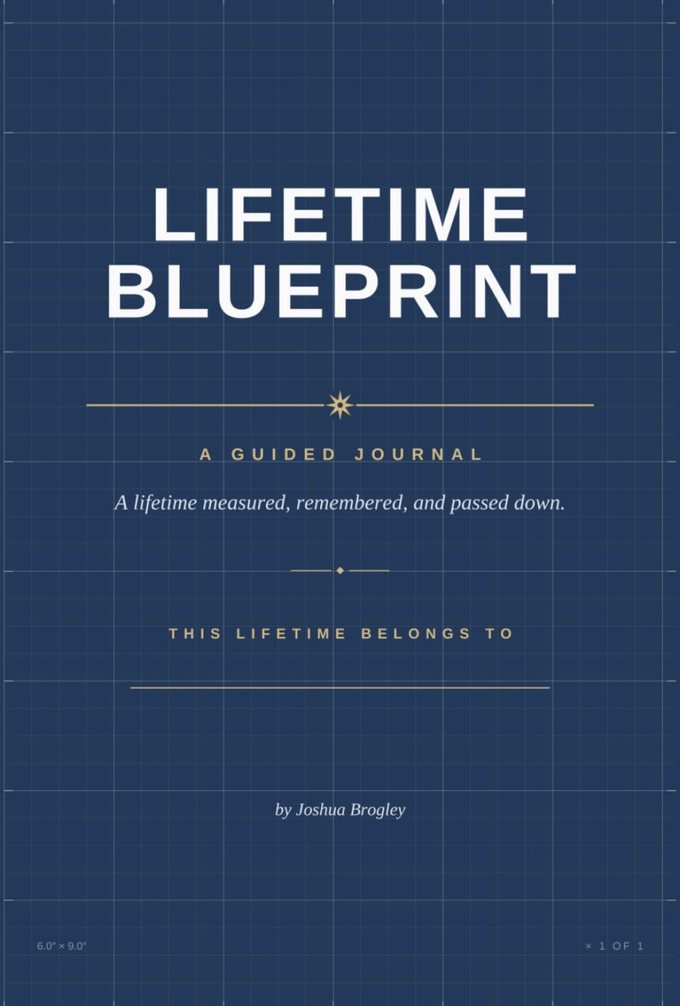
The hardcover built to be inherited: eight life domains scored across decades, thirty life-event templates, and letters written forward, ending in a Final Letter.
Why is it hard to write about the end of something?
Because the writing hurts and there is no clear moment for it; endings arrive inside weeks of fog. The instruction is to write the fact anyway, inadequately, then return later and write again.
What endings should you record in a life journal?
A death, the end of a marriage or long partnership, leaving a work, an estrangement, and a diagnosis or loss of health. Each is written twice: the fact while true, and the meaning later.
More on Lifetime Blueprint
- Your Twenties: The Decade of Compounding Choices
- Your Thirties: The Building Decade, When Time Starts to Feel Finite
- Your Forties Are a Recalibration, Not a Crisis
- Your Fifties: The Distillation Decade, Subtraction Over Addition
- Why Most People Will Never Write Their Life Down
The method behind every book
- Which 365-Day Book Should I Start With? A One-Minute Guide
- What Is a No Zero Day? The Rule That Saves a Bad Week
- What Is a Realistic Morning Routine? Two Minutes, Not Two Hours
All articles about Lifetime Blueprint → · The book page → · All the books →
written by the author, at the kitchen table, after work.