Home / Blog / Lifetime Blueprint
LIFETIME BLUEPRINT
How to Write About Reconciliation, One Dinner at a Time
Part of the series The Six Kinds of Life Events Worth Writing Down
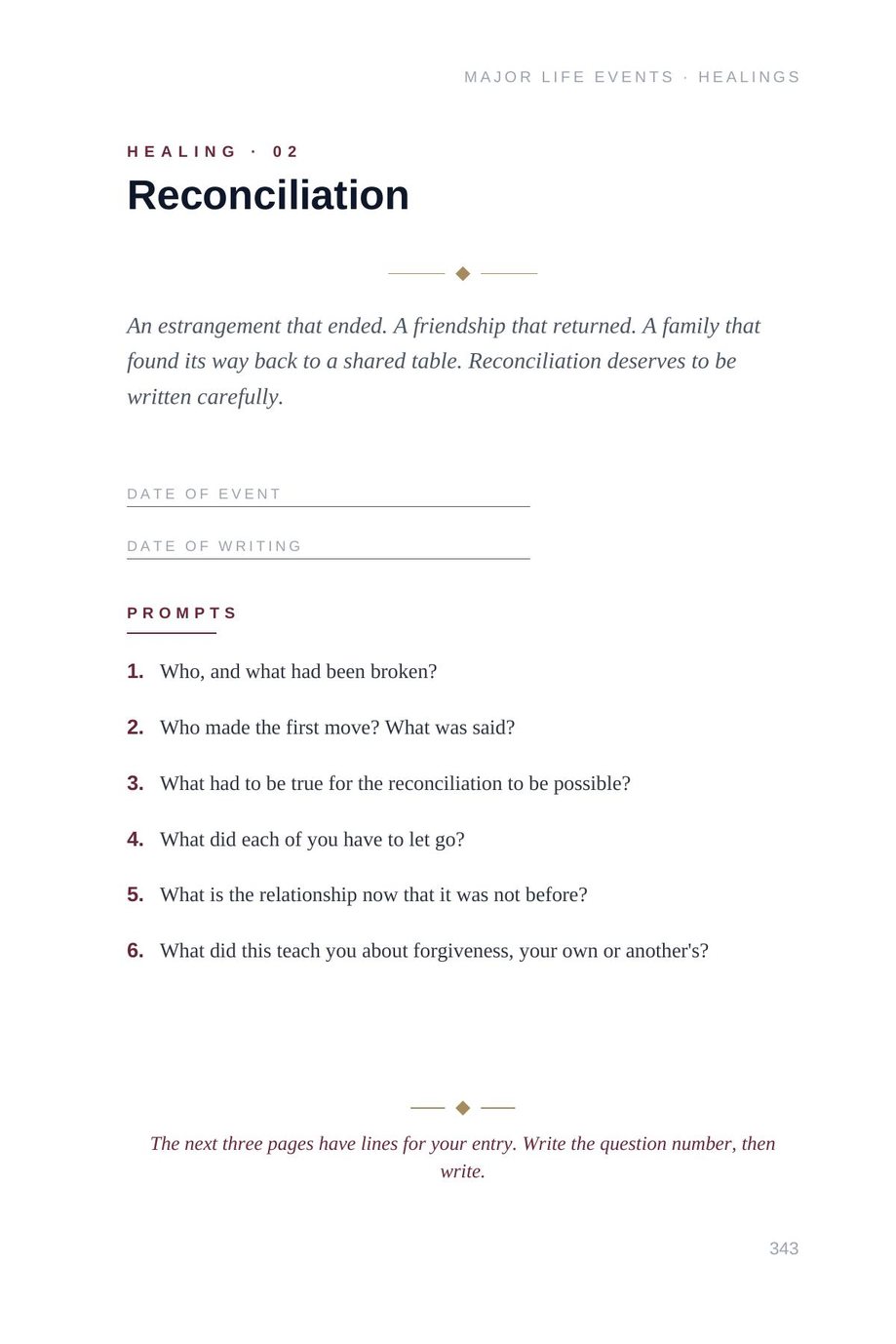
An estrangement that ended. A friendship that returned. A family that found its way back to a shared table. Reconciliation is one of the five Healings, which means it is slow, visible mostly in retrospect, and almost never complete on the day it seems to happen. The instruction for the category is to record it imperfectly, while ongoing, and for reconciliation the imperfect record has a natural shape: the first meal, dated; the second Christmas, dated; the day it stopped being remarkable, which is the day it was finished, and which nobody notices unless the earlier entries are there to notice it against.
Write the ending first, if it was never written
Most reconciliations are recorded without the estrangement that preceded them, which makes them unreadable: a reunion with no separation is a dinner. If the Estrangement template in the Endings category was never filled in, fill it in now, from the far side, with the perspective the reconciliation has given you. What ended, when, what your part was, what it cost. The healing entry then has something to heal from, on the page as well as in life.
The first meal, in detail
Who reached out, and how. What was said in the first ten minutes, which is where reconciliations are decided. What was not said, by agreement or by cowardice, and whether it will need saying later. What the other person looked like after the years. And the feeling afterward, at the size it actually was, which is often smaller and stranger than the imagined version. Write it within days. The imagined version will replace it otherwise.
Layers, until it is ordinary
Then the returns: the second meeting, the first holiday, the first argument survived on the new footing, the first time you forgot you had ever been estranged. Each under the last, dated. The entry is finished when the reconciliation is ordinary, and the finished entry is a record of how a family or a friendship rebuilds itself in practice, which is a thing almost no family has written down and every family eventually needs.
Where it sits, and the note that goes with it
Reconciliation is the second Healings template, beside Recovery from an Illness, Recovery from Addiction, Coming Home to Yourself and A Letting Go, and the book's note on the category applies: some healings are too large to be written alone, and the page is a companion to people and professional support, not a substitute. Healings is the category; Endings holds the estrangement it answers; apologizing properly is very often the first ten minutes; the letter to a parent is the version written when the meal cannot happen. All of it in a certain hardcover with room for the second Christmas.
Lifetime Blueprint
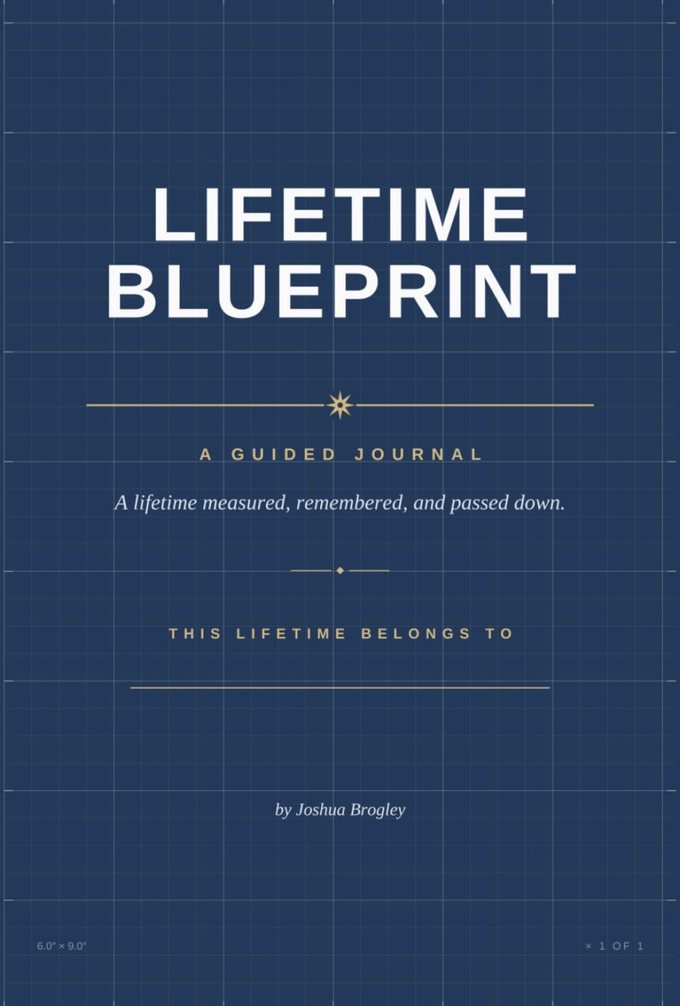
The hardcover built to be inherited: eight life domains scored across decades, thirty life-event templates, and letters written forward, ending in a Final Letter.
How do you write about reconciling with someone?
Record the estrangement first if it never was, from the far side. Then the first meal in detail within days, and the returns in dated layers, the second meeting, the first holiday, the first argument survived, until the reconciliation is ordinary.
Is reconciliation a single event?
No. It is a slow healing visible mostly in retrospect, finished on the day it stops being remarkable. A record kept in layers shows how a family or friendship actually rebuilds.
More on Lifetime Blueprint
- Your Twenties: The Decade of Compounding Choices
- Your Thirties: The Building Decade, When Time Starts to Feel Finite
- Your Forties Are a Recalibration, Not a Crisis
- Your Fifties: The Distillation Decade, Subtraction Over Addition
- Why Most People Will Never Write Their Life Down
The method behind every book
- Which 365-Day Book Should I Start With? A One-Minute Guide
- What Is a No Zero Day? The Rule That Saves a Bad Week
- What Is a Realistic Morning Routine? Two Minutes, Not Two Hours
All articles about Lifetime Blueprint → · The book page → · All the books →
written by the author, at the kitchen table, after work.