Home / Blog / Lifetime Blueprint
LIFETIME BLUEPRINT
Healings: The Slowest Events, Recorded Unfinished
Part of the series The Six Kinds of Life Events Worth Writing Down
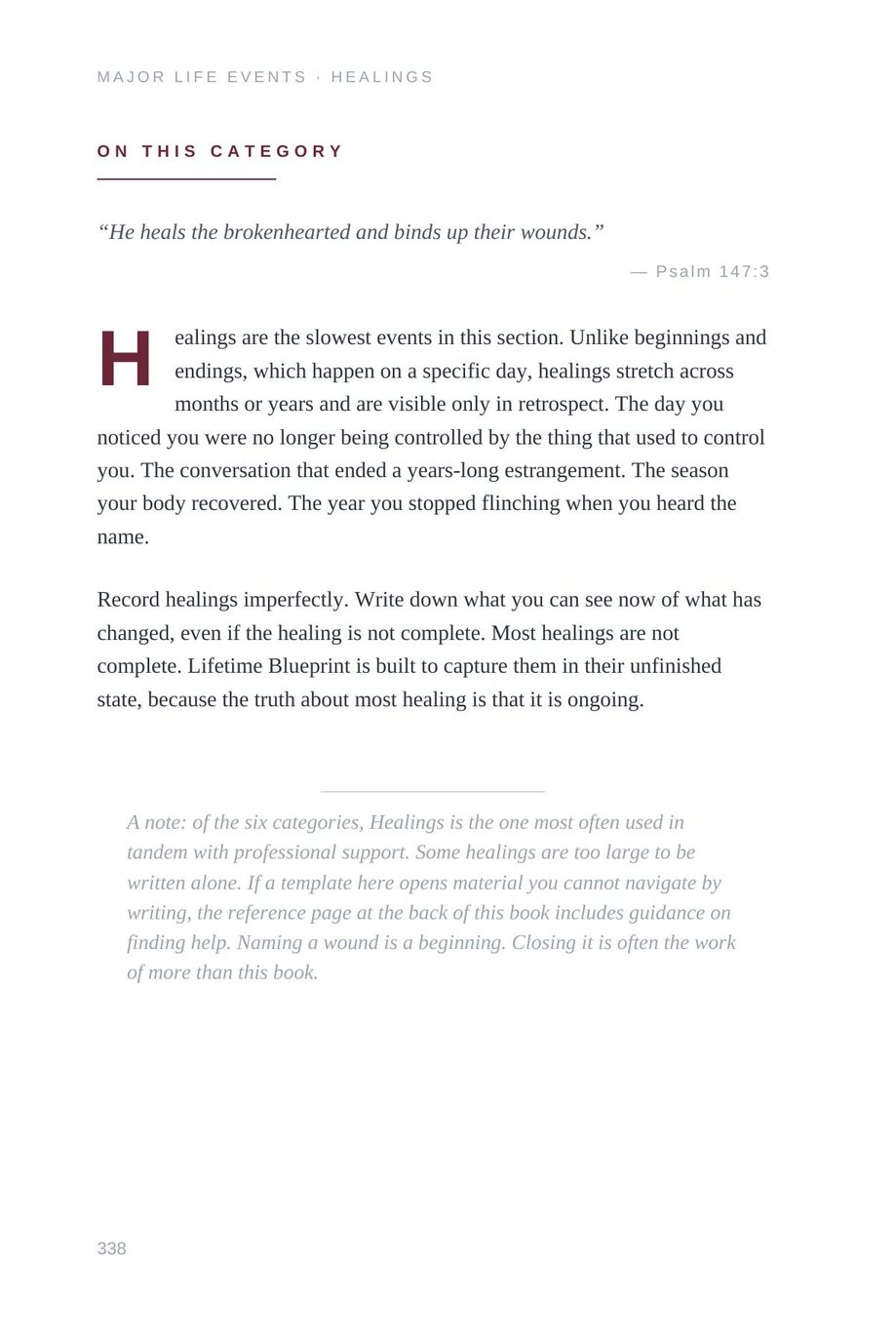
Healings are the slowest events in the record. Unlike beginnings and endings, which happen on a day, healings stretch across months or years and are visible only in retrospect. The day you noticed you were no longer controlled by the thing that used to control you. The conversation that ended a years-long estrangement. The season your body recovered. The year you stopped flinching when you heard the name. The instruction is to record them imperfectly: write what you can see now of what has changed, even if the healing is not complete. Most healings are not complete. The category is built to hold them in their unfinished state, because the truth about most healing is that it is ongoing.
The five templates
Recovery from an Illness, written from both ends, the day you knew you were sick and the season you knew you were well. Reconciliation: an estrangement that ended, a friendship that returned, a family that found its way back to a shared table. Recovery from Addiction or Compulsion, among the most important records the book can hold, for the writer and for whoever reads it after. Coming Home to Yourself, the healing not from a single wound but from a long period of being someone you were not. And A Letting Go, the healing that is permission: the resentment, the regret, the hope that was never going to be met, set down after years of carrying.
Why this is the category people did not know they needed
Nobody buys a book to record their healings. They buy it to record births and deaths, and then, a year or two in, they discover an entry they cannot place anywhere else: the estrangement that quietly ended, the compulsion that lost its grip, the morning the grief had a bottom. Readers say this is the category that surprised them, and the reason is that most people have never had a place to write that something got better. Endings are recorded everywhere; healings almost nowhere. The imbalance produces a record, and a self-image, that is more damaged than the life.
Unfinished is the correct state
The temptation is to wait until the healing is complete before writing it, and healings are rarely complete, so the wait is forever. The category's design refuses the wait: write what you can see now, dated; write again in a year, under it; let the entry accumulate the way the healing did. A reconciliation recorded at the first shared dinner, and again at the second Christmas, and again when it stopped being remarkable, is the true shape of a reconciliation. The single triumphant entry, written years later, would have been a fiction.
A note the book prints, and this post repeats
Of the six categories, Healings is the one most often used alongside professional support, and the book says so plainly: some healings are too large to be written alone, and if a template opens material you cannot navigate by writing, carry it to a person as well as a page. Reconciliation and the sober binding that often precedes recovery are guided posts; Healings are the sixth and last of the six kinds of life events, placed last because that is where, in most lives, they arrive.
Lifetime Blueprint
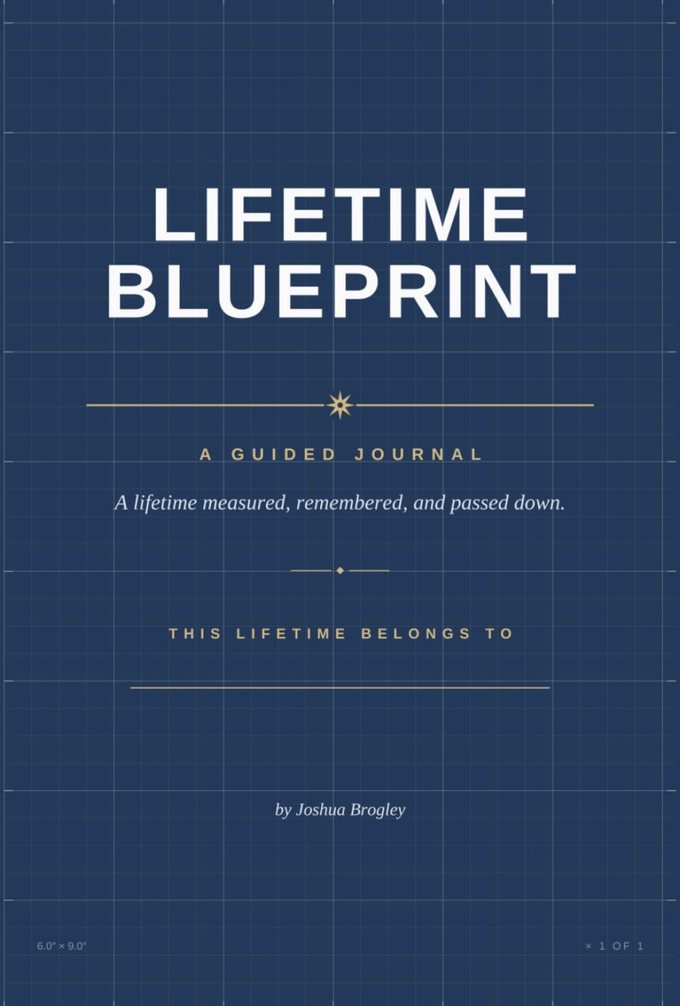
The hardcover built to be inherited: eight life domains scored across decades, thirty life-event templates, and letters written forward, ending in a Final Letter.
What is a healing in a life story?
A slow event, visible only in retrospect: recovery from illness, reconciliation, recovery from addiction, coming home to yourself, or a letting go. Recorded imperfectly and repeatedly while it is still ongoing, because most healings are never complete.
Should you write about healing before it is finished?
Yes. Write what you can see now, dated, and add to it over years. Waiting for completion means never writing it, and the accumulated entries are the true shape of the healing.
More on Lifetime Blueprint
- Your Twenties: The Decade of Compounding Choices
- Your Thirties: The Building Decade, When Time Starts to Feel Finite
- Your Forties Are a Recalibration, Not a Crisis
- Your Fifties: The Distillation Decade, Subtraction Over Addition
- Why Most People Will Never Write Their Life Down
The method behind every book
- Which 365-Day Book Should I Start With? A One-Minute Guide
- What Is a No Zero Day? The Rule That Saves a Bad Week
- What Is a Realistic Morning Routine? Two Minutes, Not Two Hours
All articles about Lifetime Blueprint → · The book page → · All the books →
written by the author, at the kitchen table, after work.